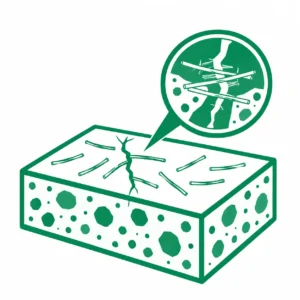
Plastic Shrinkage Cracking
Rapid surface moisture loss can cause fresh concrete and mortar to crack before sufficient strength develops.
Recommended:
Length: 6–12 mm

POLYVIA™ PP Micro Fiber is a fine monofilament polypropylene fiber for concrete and mortar, engineered for uniform dispersion throughout the cementitious matrix. It helps control plastic shrinkage cracking and early-age microcracking, while providing distributed micro-reinforcement without corrosion risk.
Designed for concrete, precast products, dry-mix mortar and other cement-based systems, it provides a practical fiber solution for improved crack control and matrix integrity.
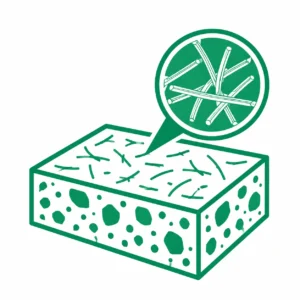

PP Micro Fiber is a fine monofilament polypropylene fiber used for distributed micro-reinforcement in concrete, mortar and other cementitious materials.
Its fine filaments disperse throughout the matrix to help control plastic shrinkage cracking and early-age microcracking, providing multidirectional crack control without corrosion risk.
Rapid surface moisture loss can cause fresh concrete and mortar to crack before sufficient strength develops.
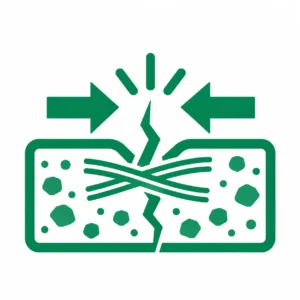
Plaster, render, screed and mortar can develop fine cracks during drying and early dimensional movement.
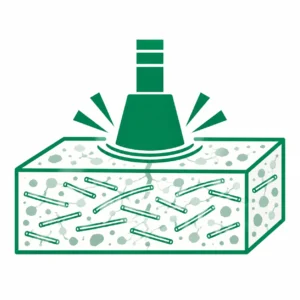
Temperature variation, settlement and restrained movement can initiate small cracks during the early stages of concrete hardening.
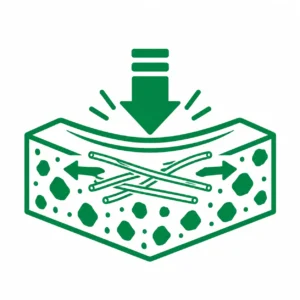
Early microcracks can reduce matrix integrity and provide additional pathways for moisture and aggressive substances.
From Fiber Dispersion to Crack Control Performance
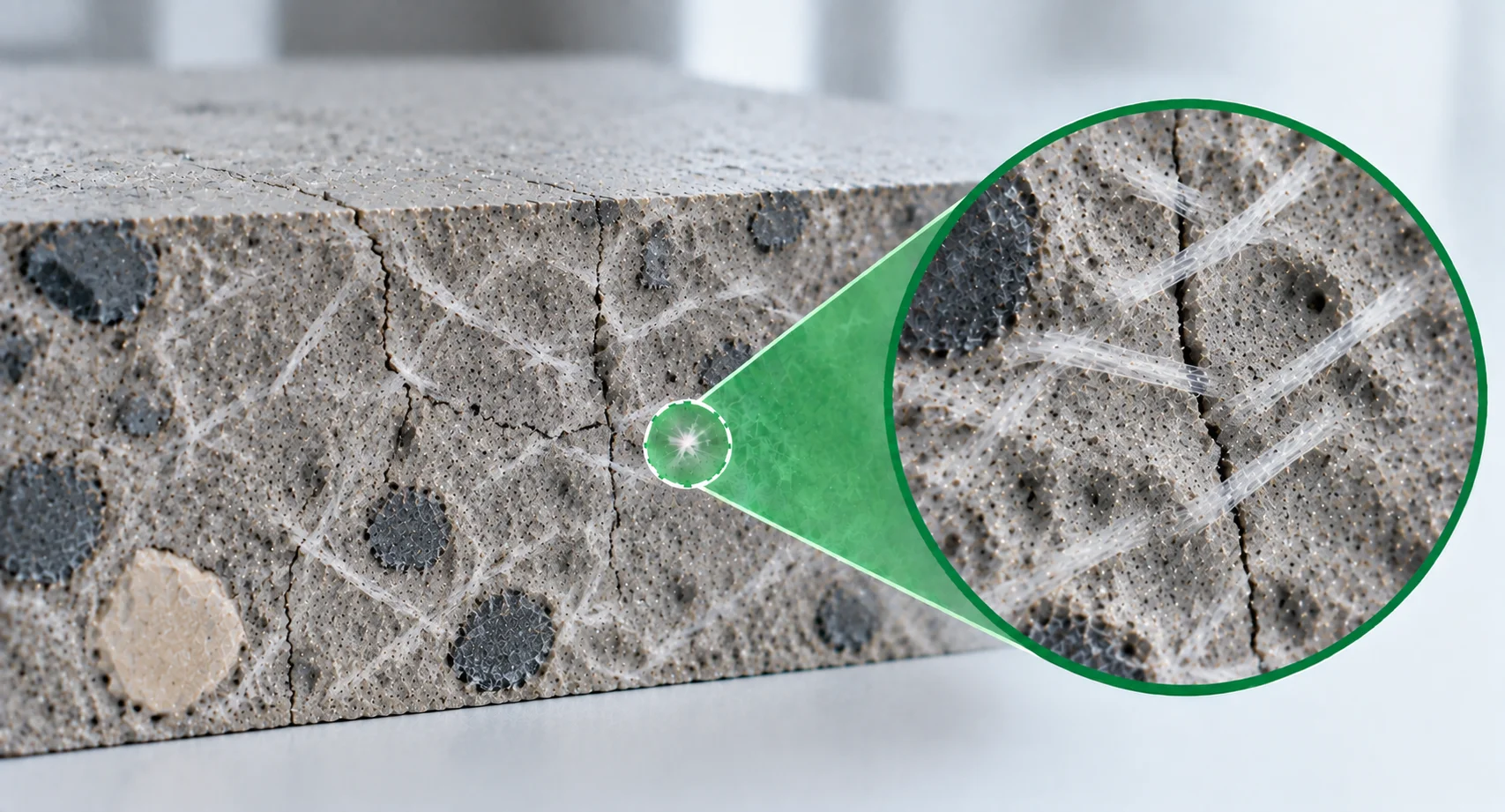
PP fibers disperse throughout fresh concrete and mortar, creating a three-dimensional reinforcement effect within the cementitious matrix.
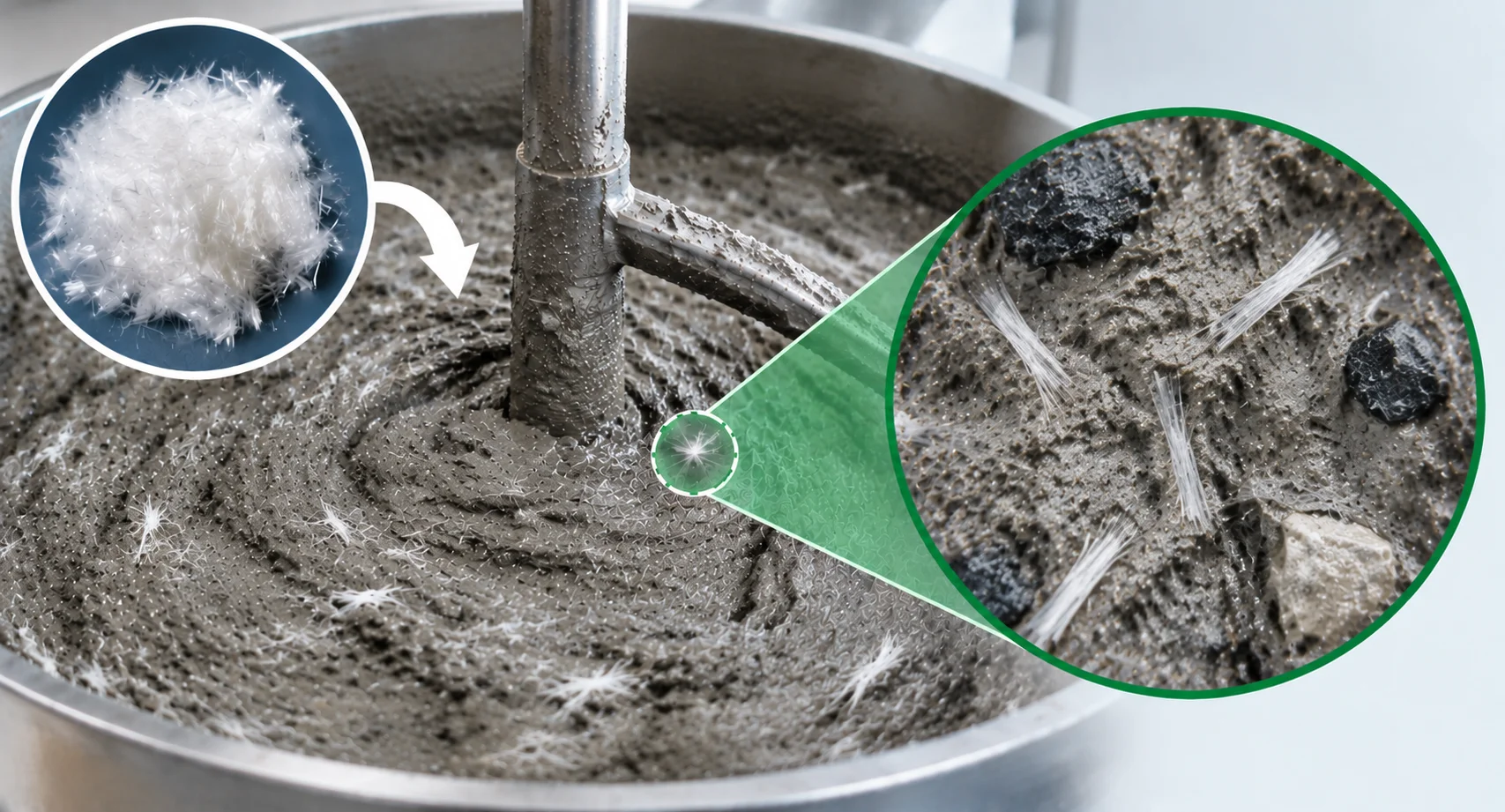
Randomly distributed fibers form a three-dimensional network that helps control internal stress development and improves crack resistance.
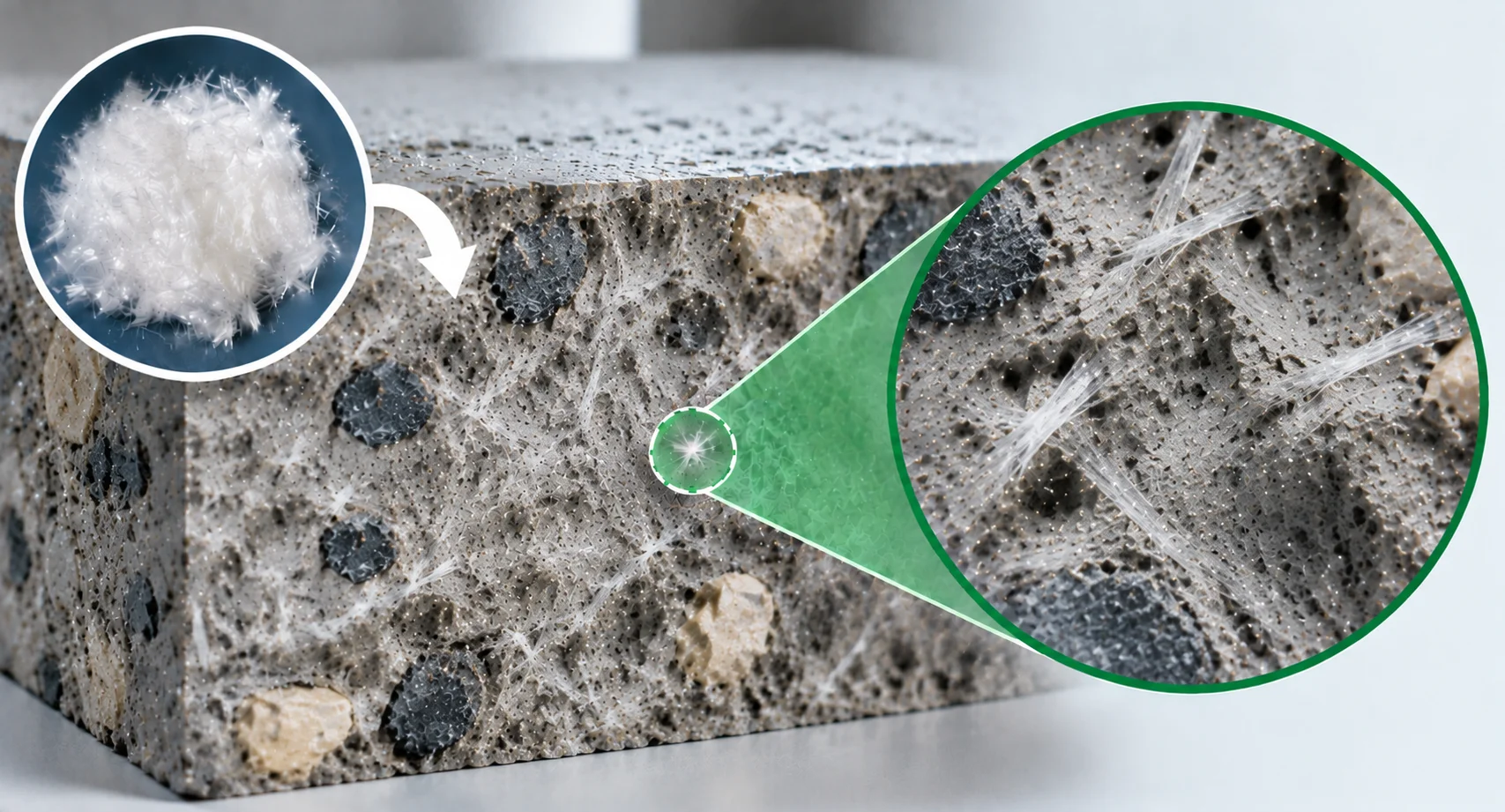
Fibers cross developing micro-cracks and help limit crack width and propagation caused by plastic shrinkage and early-age volume changes.
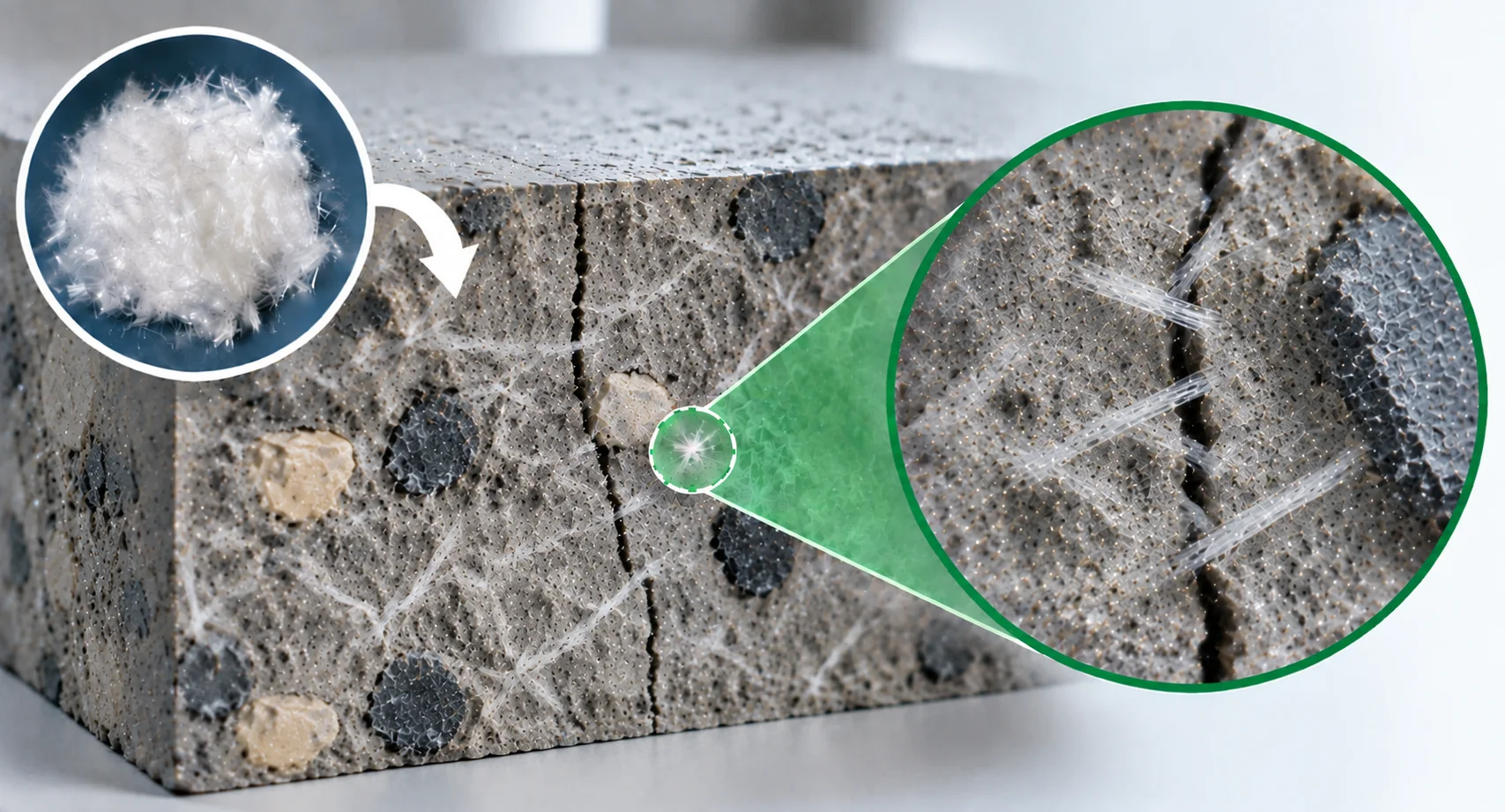
The distributed fiber network helps reduce plastic shrinkage cracking, improve toughness and support more durable concrete and mortar performance.
| Property | Value |
|---|---|
| Material | 100% Virgin Polypropylene |
| Shape | Net-like structure or monofilaments |
| Density, g/cm3 | 0.91±0.01 |
| Length, mm | 3-36 (Customized) |
| Diameter, um | 20-35 |
| Elastic Modulus, MPa | > 3500 |
| Elongation at Break, % | > 10 |
| Tensile Strength, Mpa | ≥ 450 |
| Melting Point, °C | 160-180 |
| Acid & alkali resistance | Strong |
POLYVIA™ PP Fiber is a micro synthetic fiber for concrete and mortar systems, designed for applications requiring crack control, improved surface quality and distributed reinforcement.
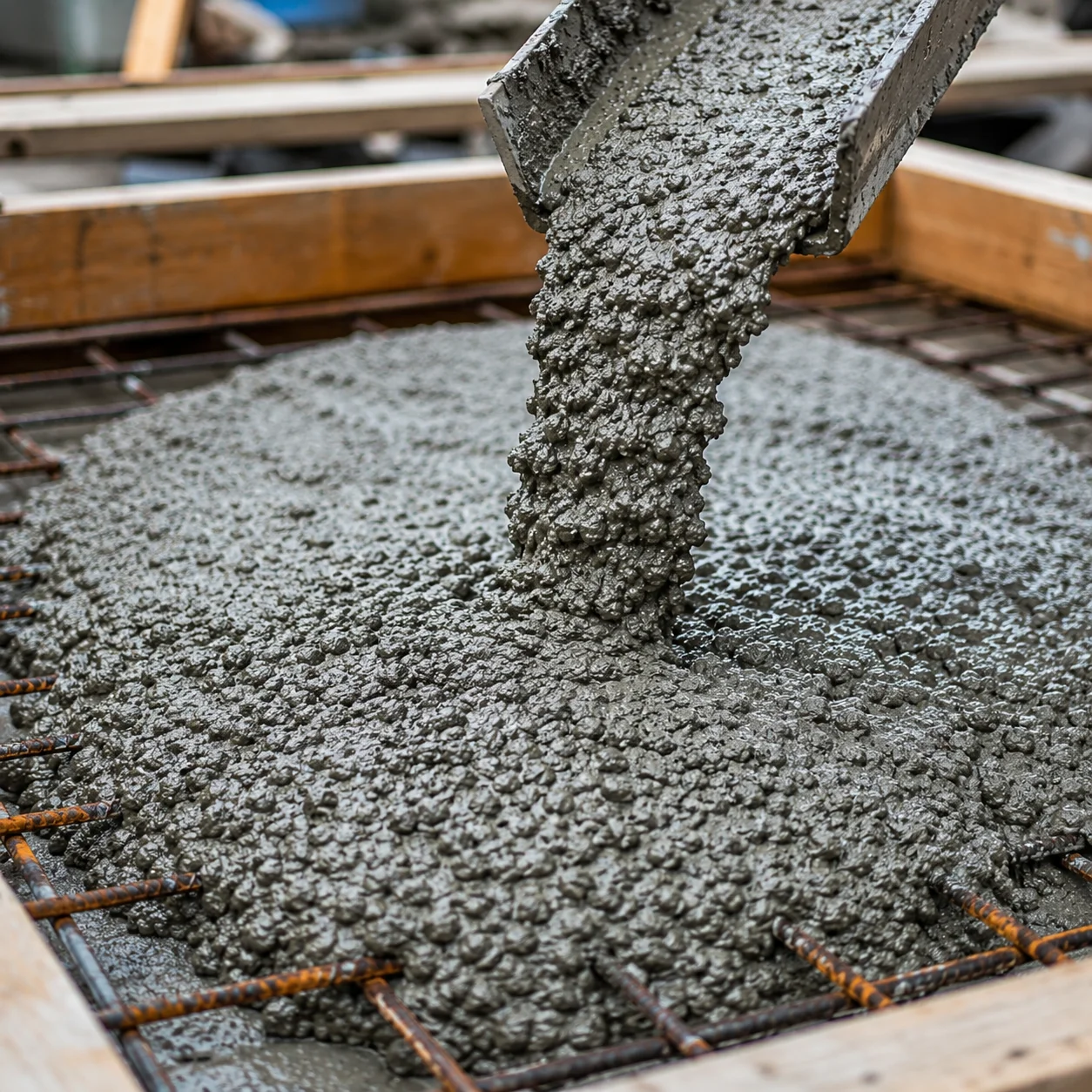
Supports early-age performance in ready-mix concrete exposed to rapid moisture loss, placement and finishing conditions that can promote plastic shrinkage cracking.

Helps manage early-age cracking in large floor slabs exposed to evaporation, surface finishing and restraint during setting and initial curing.
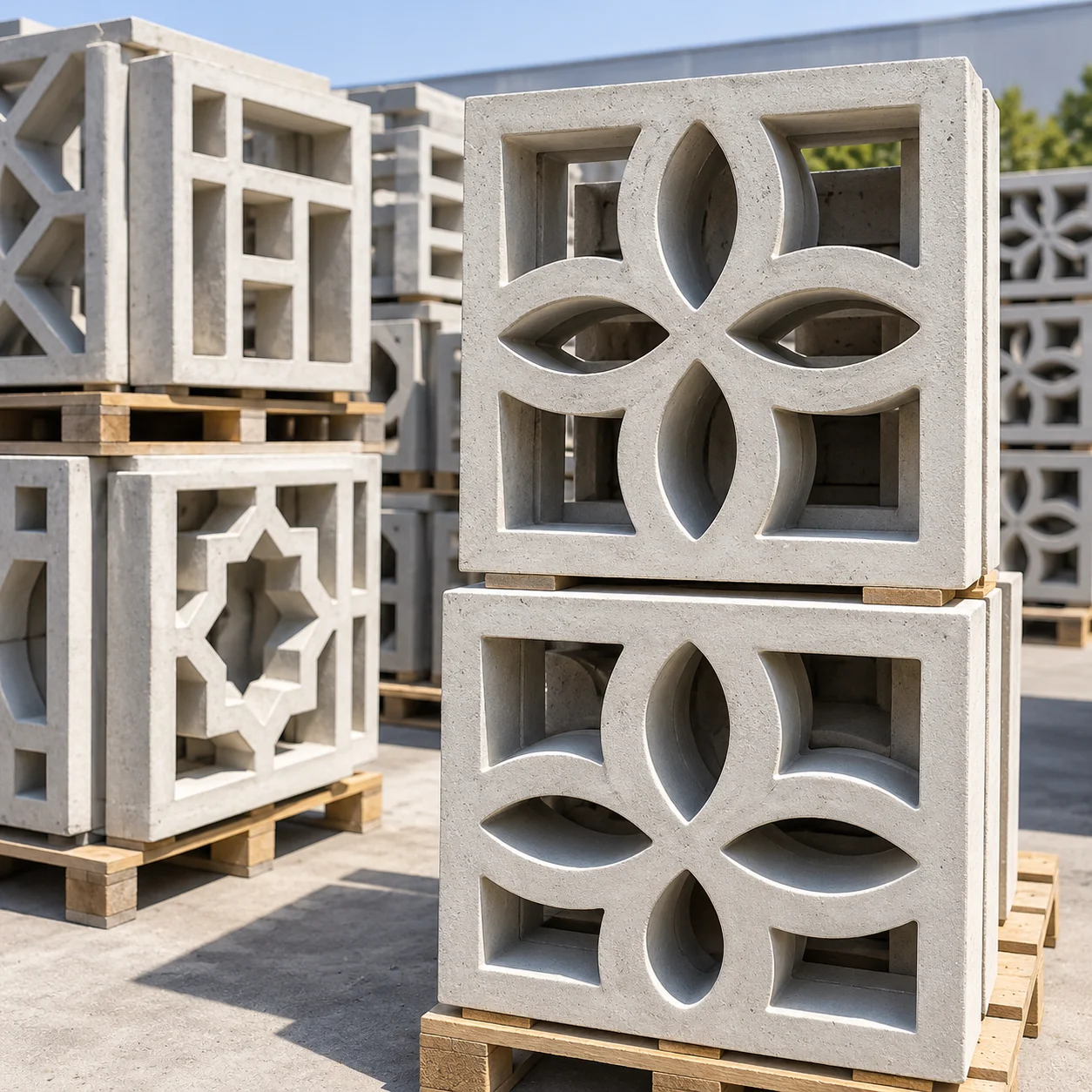
Provides distributed micro-reinforcement for precast elements where casting, early curing, demolding and handling can contribute to fine crack development.
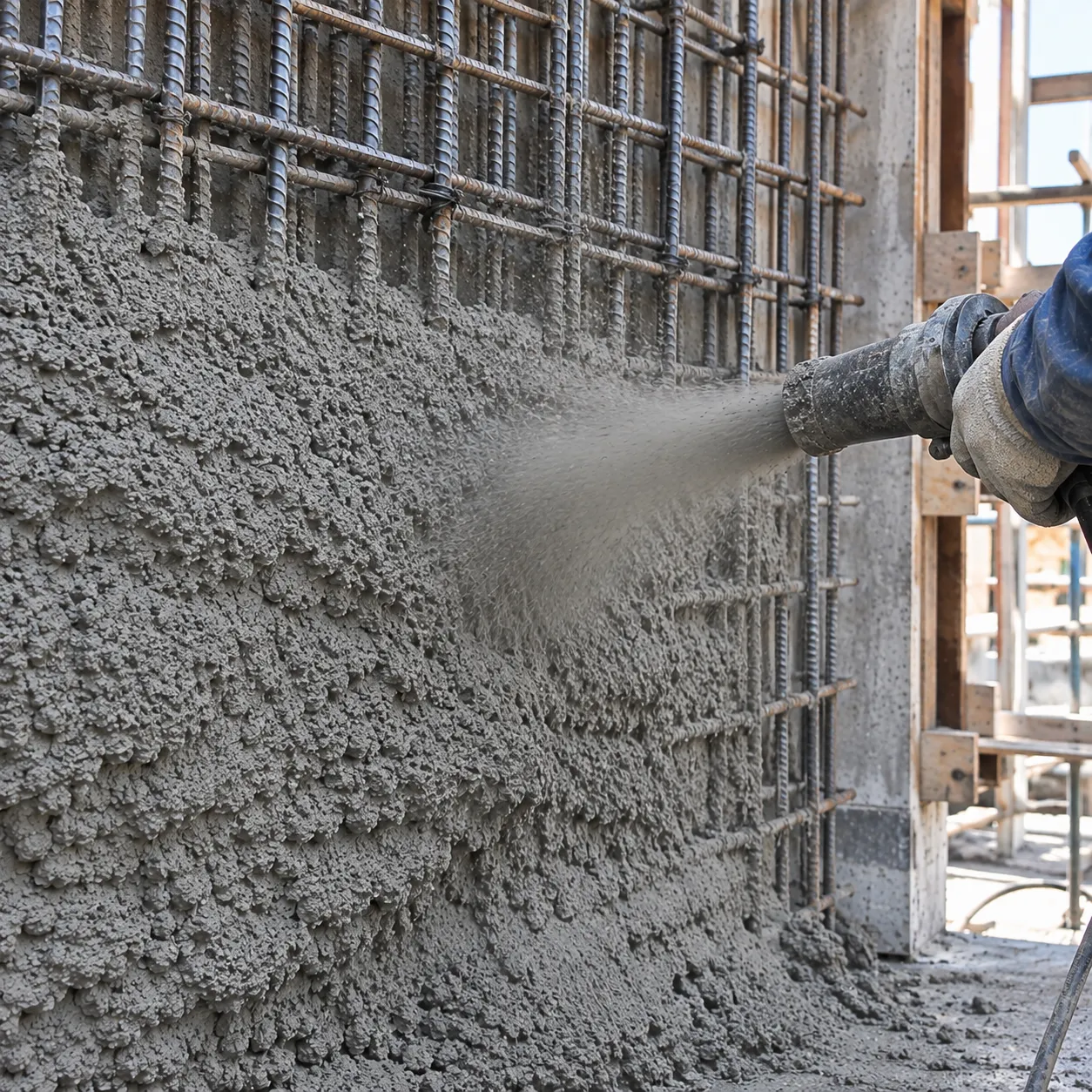
Provides distributed micro-reinforcement in sprayed concrete for tunnels, slopes and underground works where early-age cracking and localized movement require additional control.
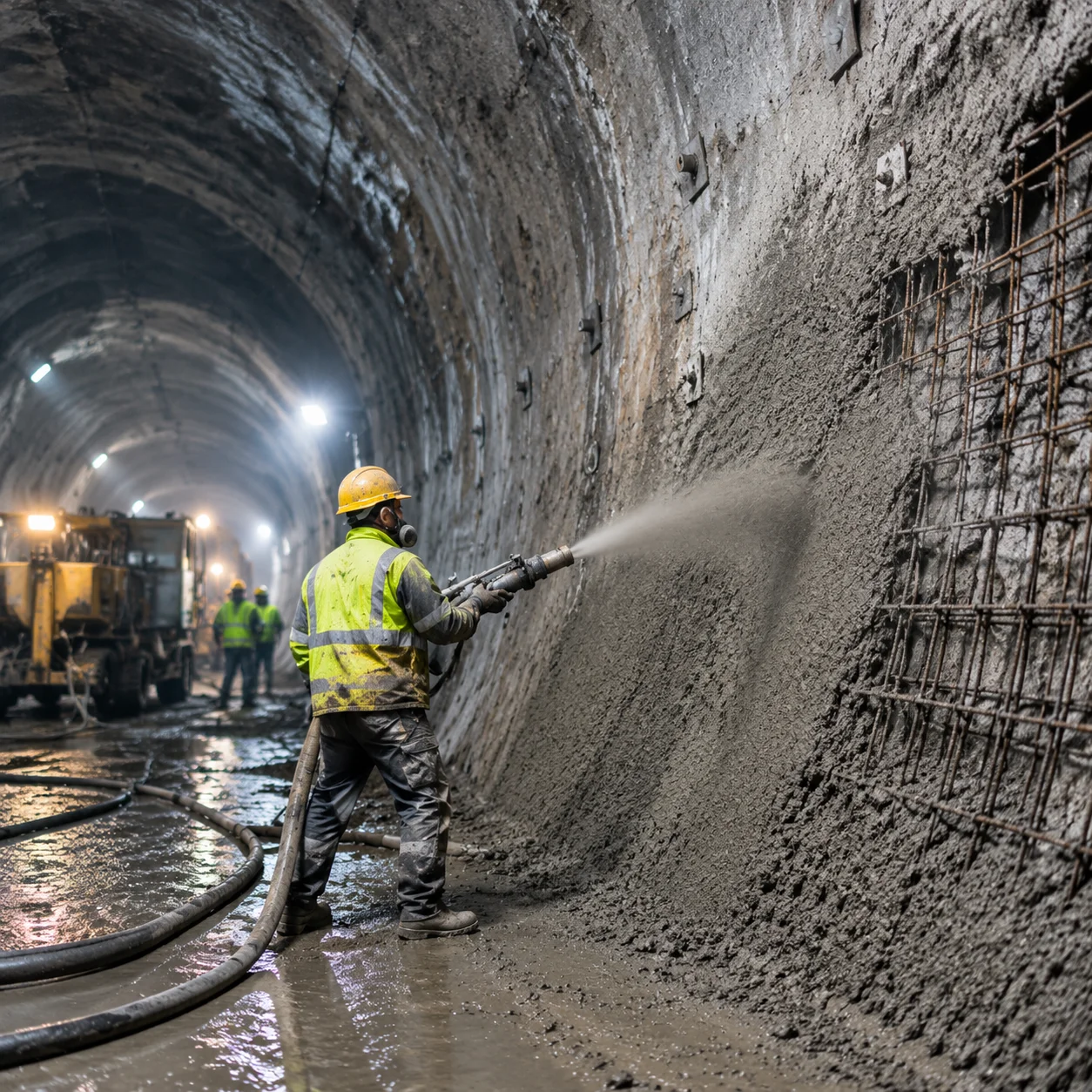
Suitable for tunnel linings and underground concrete where restrained movement, temperature variation and demanding exposure conditions can affect concrete integrity.
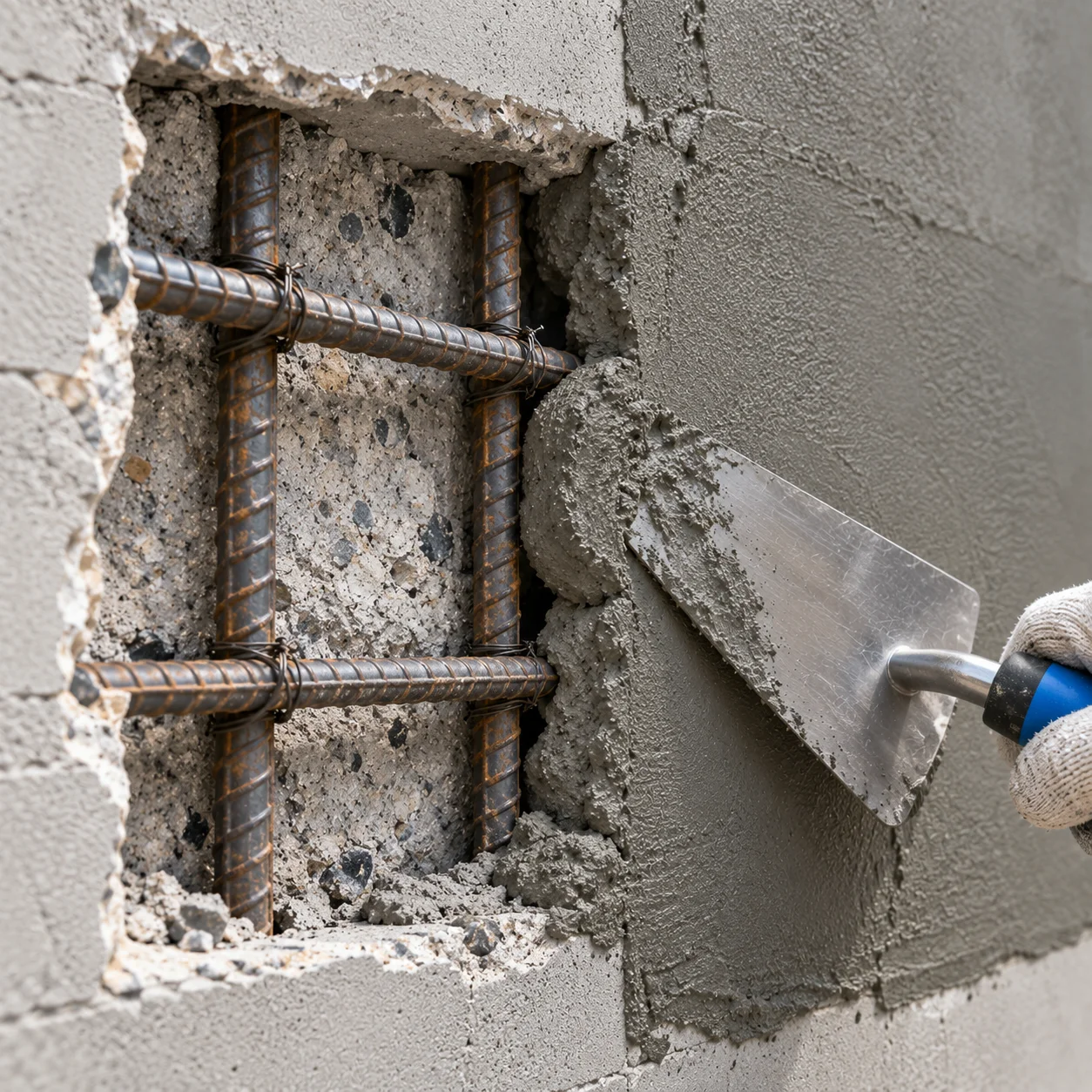
Supports thin-section repair and patching mortars where rapid moisture loss, substrate restraint and dimensional movement can promote localized cracking.
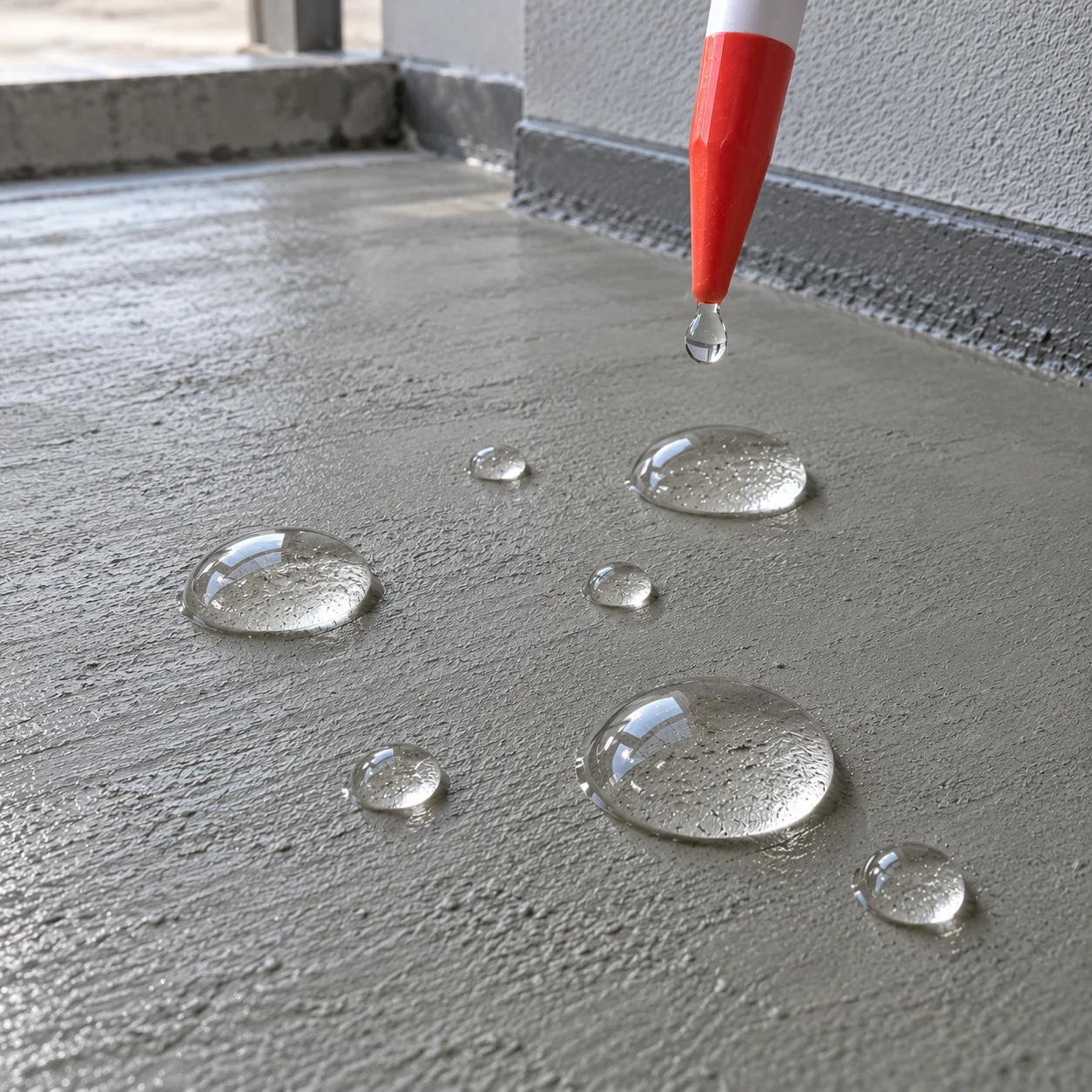
Helps limit early-age cracks that may create preferential paths for water ingress, supporting the integrity of properly designed watertight concrete systems.
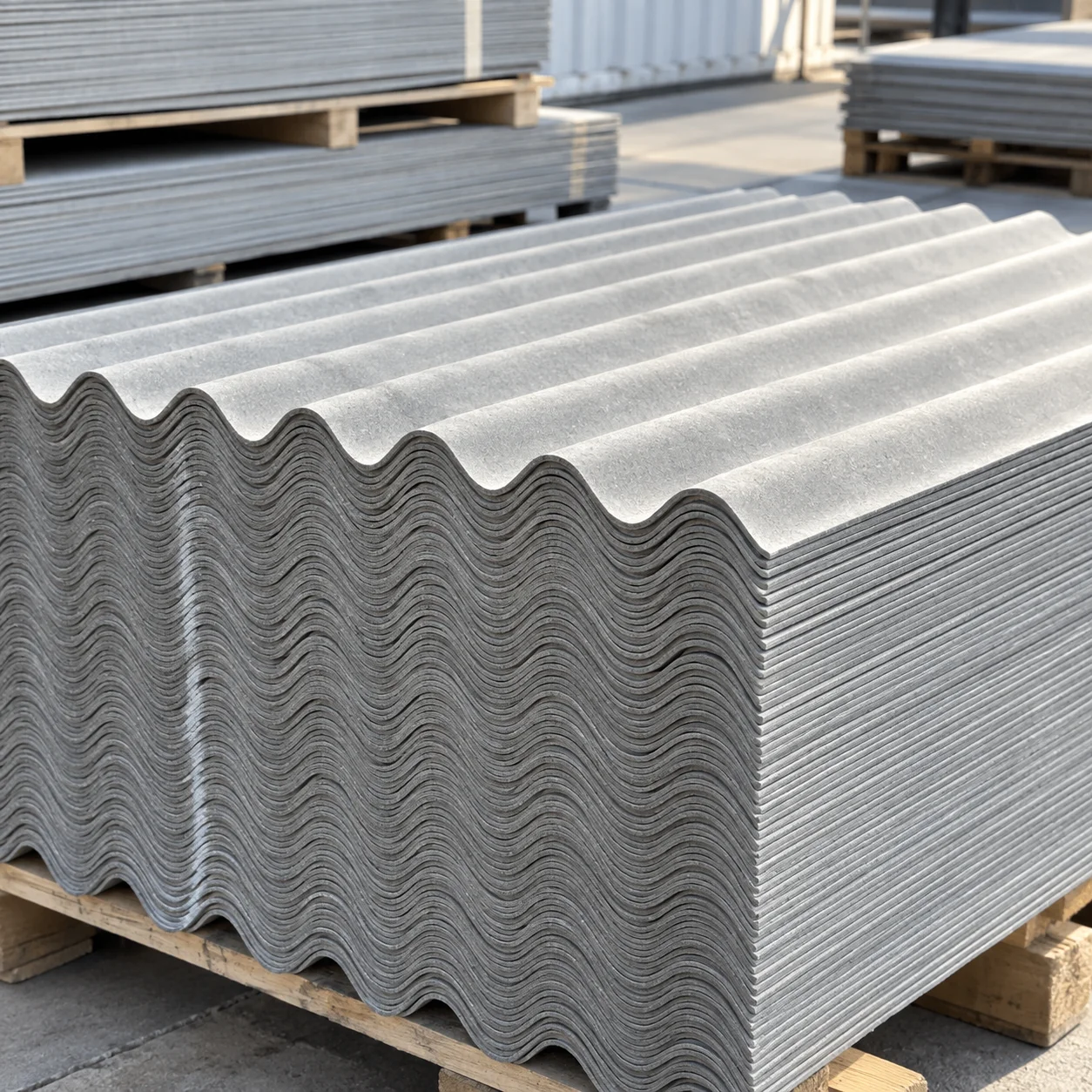
Suitable for screeds, renders, plasters and specialty mortars requiring uniform micro-reinforcement, dimensional stability and reliable fiber distribution.
Fiber performance depends on material, geometry, dosage and the surrounding cementitious system. Select the fiber technology according to the required crack-control and reinforcement performance.
| Fiber Type | Fiber Geometry | Primary Role | Typical Applications |
|---|---|---|---|
| PP Micro Fiber | Fine Monofilament | Plastic shrinkage & early-age microcrack control | Concrete, mortar, screed, precast |
| PP Twisted Bundle Fiber | Twisted / Bundled | Distributed crack control & toughness support | Concrete, flooring, precast, infrastructure |
| PP Macro Fiber | Macro Synthetic | Post-crack toughness & residual performance | Industrial floors, precast, shotcrete |
| PVA Fiber | Fine Monofilament | High-ductility cementitious reinforcement | ECC, specialty mortar |
| Micro Steel Fiber | Short High-Tensile Steel | High-performance reinforcement | UHPC, RPC |
Crack Type → Performance Requirement → Application → Fiber Solution
POLYVIA™ helps customers select suitable fiber technologies based on concrete system requirements, application conditions and targeted performance objectives.
Fibers create reinforcement throughout the concrete matrix rather than acting only at isolated locations.
Fiber bridging helps restrict crack development and crack opening under appropriate loading and restraint conditions.
Controlled crack development helps maintain continuity within the surrounding cementitious matrix
Micro, twisted-bundle and macro PP fibers address different stages and levels of crack-control and reinforcement performance.
NON-CORROSIVE REINFORCEMENT
Polypropylene fibers do not corrode, providing distributed reinforcement without introducing the corrosion risk associated with metallic fibers.
PERFORMANCE BY FIBER TYPE
PP micro, twisted-bundle and macro fibers are designed for different crack-control and reinforcement requirements. Final performance depends on fiber geometry, dosage and concrete mix design.
PP Fiber dosage and mixing conditions should be selected according to fiber type, geometry, concrete mix design and required performance. Uniform dispersion is essential for consistent fiber performance.
Typical Starting Dosage
For PP Micro Fiber used for plastic shrinkage crack control in conventional concrete, 0.6–0.9 kg/m³ is a practical starting range. PP Twisted Bundle Fiber and PP Macro Fiber require grade-specific dosage selection.
Addition
Introduce PP Fiber during batching according to the plant mixing sequence. Avoid adding the full fiber quantity as a concentrated mass where this may cause localized accumulation.
Mixing
Continue mixing until the fibers are uniformly dispersed throughout the concrete with no visible clumping. Required mixing time depends on mixer type, batch size, fiber geometry and dosage.
Workability
Fiber addition can influence fresh-concrete rheology as fiber length or dosage increases. Where adjustment is required, optimize the mix or admixture system rather than adding uncontrolled extra water.
Technical Note: Final dosage should be verified through trial batching according to the concrete mix, application conditions and required performance.
PP Fiber and steel fiber are designed for different reinforcement purposes. The optimal choice depends on application requirements, crack control objectives, structural performance targets and project conditions.
| Performance Factor | PP Fiber | Steel Fiber |
|---|---|---|
| Material | Polypropylene Synthetic Fiber | Steel Fiber |
| Density | Low Density | Higher Density |
| Corrosion Resistance | Non-Corrosive and Stable in Alkaline Concrete Environments | Corrosion Protection May Be Required Depending on Exposure Conditions |
| Fiber Distribution | Three-Dimensional Micro-Reinforcement Distribution | Fiber Distribution Depends on Geometry, Orientation and Mixing Conditions |
| Primary Function | Early-Age Crack Control and Plastic Shrinkage Crack Reduction | Structural Reinforcement and Post-Crack Toughness |
| Reinforcement Mechanism | Micro-Crack Control Through Distributed Fiber Network | Load Transfer and Residual Strength After Cracking |
| Typical Applications | Concrete Crack Control, Mortar, Shotcrete and Cement-Based Systems | Structural Fiber Reinforced Concrete, Industrial Floors and Heavy-Duty Applications |
| Handling & Mixing | Lightweight, Easy Handling and Efficient Dispersion | Higher Weight and Different Mixing Considerations |
Technical Note: PP Fiber and steel fiber are complementary reinforcement solutions rather than direct substitutes. PP Fiber is commonly selected for early-age crack control, plastic shrinkage reduction and distributed micro-reinforcement, while steel fiber is typically selected for structural toughness and post-crack load-bearing performance. Fiber selection should be based on concrete design requirements, application conditions and target performance.
POLYVIA™ provides technical support beyond fiber supply, helping customers select suitable fiber types, optimize dosage, evaluate compatibility with concrete mix designs and admixtures, and validate performance through laboratory testing and application trials.

Typical properties, fiber specifications and recommended application information.
Download ↓
Handling, storage and safety information.
Download ↓
Fiber selection, dosage, mixing sequence and application recommendations.
Download ↓
Batch-specific quality documentation for supplied products.
Download ↓POLYVIA™ Polypropylene Fiber is a synthetic micro-reinforcement fiber designed for concrete and mortar systems. After mixing, PP fibers distribute throughout the cementitious matrix and create a three-dimensional reinforcement effect that helps control plastic shrinkage cracking, reduce micro-crack development and improve concrete durability.
PP Fiber is widely used in concrete and mortar applications requiring crack control and improved durability. Typical applications include ready-mix concrete, industrial flooring, precast concrete, shotcrete, repair mortar and cement-based dry-mix systems where early-age crack reduction and surface quality improvement are required.
PP Micro Fiber is generally used for plastic shrinkage and early-age crack control and should not be treated as a direct replacement for structural steel reinforcement unless the structural design and tested fiber system specifically permit it.
Polypropylene Fiber provides multiple performance benefits in concrete and mortar systems, including plastic shrinkage crack control, improved crack resistance, enhanced toughness, better surface quality and corrosion-free reinforcement. The actual performance depends on fiber type, dosage, concrete mix design and application conditions.
The typical dosage of polypropylene fiber in concrete is generally 0.6–1.0 kg/m³ for plastic shrinkage crack control applications. The required dosage may vary depending on fiber type, fiber length, concrete mix design, aggregate characteristics and targeted crack control performance. For specific applications such as shotcrete, precast concrete or specialty mortar systems, the optimum PP fiber dosage should be determined through formulation evaluation and performance testing.
PP Fiber and steel fiber provide different reinforcement mechanisms for concrete. PP Fiber is mainly used for early-age crack control, plastic shrinkage reduction and distributed micro-reinforcement, while steel fiber is typically selected for structural reinforcement, toughness and post-crack performance. The suitable fiber solution depends on project requirements and performance objectives.
The appropriate PP Fiber grade depends on application requirements, concrete mix design, crack control objectives and construction conditions. POLYVIA™ provides different polypropylene fiber solutions for concrete, mortar and shotcrete applications, helping customers select suitable fiber types based on performance targets.
PP Fiber improves concrete and mortar performance by creating a distributed micro-reinforcement structure within the cementitious matrix. It helps control shrinkage-related cracking, improve cohesion and support more stable performance in ready-mix concrete, repair mortar, shotcrete and other cement-based systems.
Fiber performance is not determined by length alone. Share your application, mix design, aggregate size, mixing process and crack-control requirement with POLYVIA. Our technical team can help you determine the appropriate: Fiber Length → Starting Dosage → Addition Method → Mixing Time → Trial Direction