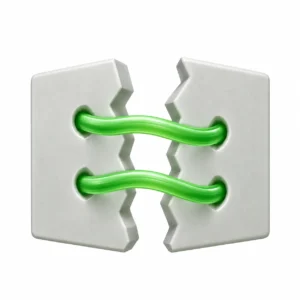
Crack Development
Shrinkage, restraint and applied stresses can initiate cracking within the concrete matrix.
Recommended:
Distributed Reinforcement

POLYVIA™ PP Macro Fiber is an engineered polypropylene macro synthetic fiber designed for crack bridging, flexural toughness and post-crack performance in concrete.
Suitable for industrial floors, pavements, precast concrete, shotcrete, tunneling and infrastructure applications.


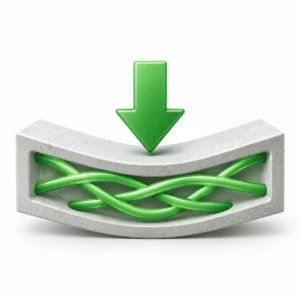
PP Macro Fiber is an engineered polypropylene macro synthetic fiber used as distributed reinforcement in concrete. Unlike conventional microfibers primarily used for early-age crack control, macro synthetic fibers are designed to contribute to post-crack load transfer, crack bridging and flexural toughness.
Its engineered geometry helps fibers distribute throughout the concrete matrix and bridge developing cracks, making PP macro fiber suitable for industrial floors, pavements, precast concrete, shotcrete, tunneling and other infrastructure applications.
Start with the concrete performance challenge—then understand how macro synthetic fiber reinforcement contributes before and after cracking.
Shrinkage, restraint and applied stresses can initiate cracking within the concrete matrix.
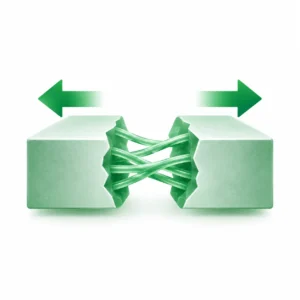
Once cracks form, continued loading can cause them to widen and propagate through the concrete.
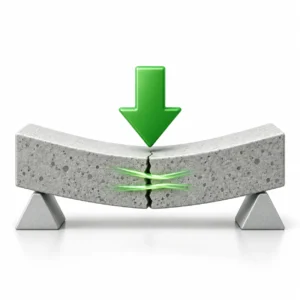
After matrix cracking, conventional concrete can experience a rapid loss of load-carrying capacity.

Structural and infrastructure applications may require continued load transfer after cracking occurs.
Macro fiber performance depends on fiber geometry, dosage, concrete properties and fiber–matrix interaction. Selection should be based on the required crack control, toughness and post-crack performance.
Selecting PP macro fiber involves more than choosing fiber length. Reinforcement performance depends on the interaction between fiber geometry, dosage, concrete matrix, aggregate system, workability, placement method and the required post-crack response.
The appropriate fiber system should therefore be selected according to the complete concrete and application requirements rather than a single physical parameter.
| Selection Factor | What to Evaluate | Performance Relevance |
|---|---|---|
| Fiber Length | 30 / 40 / 50 / 60 mm (Customized) | Influences fiber distribution, crack interception, anchorage and interaction with aggregate size and placement conditions. |
| Fiber Geometry | Shape, surface characteristics and equivalent diameter | Affects fiber–matrix interaction, mechanical anchorage and pull-out behavior as cracks develop and open. |
| Fiber Dosage | Reinforcement target and project-specific dosage | Influences fiber population across potential crack planes and the resulting toughness, residual performance and energy-absorption response. |
| Concrete Matrix | Strength class, W/B ratio, binder composition and SCMs | Determines matrix characteristics that influence fiber anchorage, bond behavior and the post-crack response of the fiber–concrete system. |
| Aggregate System | Maximum aggregate size, grading and aggregate volume | Affects fiber distribution, mixing behavior and the ability to achieve a homogeneous fiber-reinforced concrete matrix. |
| Workability & Placement | Slump, flow, pumping, spraying and finishing requirements | Determines how effectively the selected fiber can be mixed, dispersed, transported and placed under actual construction conditions. |
| Application Conditions | Floors, pavements, precast, shotcrete, tunneling or infrastructure | Defines the loading environment, placement method, service conditions and reinforcement demands the fiber system must address. |
| Performance Target | Crack control, flexural toughness, residual strength or energy absorption | Establishes the engineering objective used to guide fiber geometry, grade and dosage selection and subsequent performance verification. |
Need help selecting PP macro fiber for your concrete system?
Share your application, concrete mix, placement method and performance target with POLYVIA™ for a technical recommendation.
During mixing, fibers separate and distribute across multiple directions, establishing a three-dimensional reinforcement network within the concrete.
Effective fiber–matrix interaction helps resist pull-out and provides the bond needed for stress transfer as cracking begins.
As cracks open, engaged fibers connect opposing faces, helping control crack width and slow further crack propagation.
Fiber bridging supports residual load transfer, improved toughness and a more controlled concrete response after cracking.
| Property | Specification |
|---|---|
| Shape | Cylindrical |
| Color | White or Grey |
| Length, mm | 30 / 40 / 50 / 60 |
| Equivalent Diameter, mm | 0.2–1.5 |
| Density, g/cm³ | 0.91 |
| Tensile Strength, MPa | ≥450 |
| Elastic Modulus, MPa | ≥5,500 |
| Elongation at Break | 15 ± 5% |
| Melting Point, °C | 160–170 |
| Acid & Alkali Resistance, % | ≥95 |
| Water Absorption | Non-absorbent |
POLYVIA™ PP Macro Fiber is engineered for concrete applications where distributed reinforcement, crack bridging, toughness and post-crack performance are important design considerations. Fiber grade and dosage should be selected according to the concrete mix, placement method, service conditions and required reinforcement performance.

PP macro fiber creates three-dimensional reinforcement throughout industrial concrete floors, warehouse slabs and slab-on-ground systems exposed to shrinkage, repeated loading and localized stress. Fibers crossing developing cracks help control crack opening while contributing to flexural toughness and more controlled post-crack behavior across the concrete section.

PP macro fiber for concrete pavements distributes reinforcement across pavement sections subjected to shrinkage, thermal movement, traffic loads and repeated mechanical stress. Crack-bridging fibers help limit crack development while contributing to toughness and residual performance in industrial yards, hardstands, access roads and other concrete pavement systems.
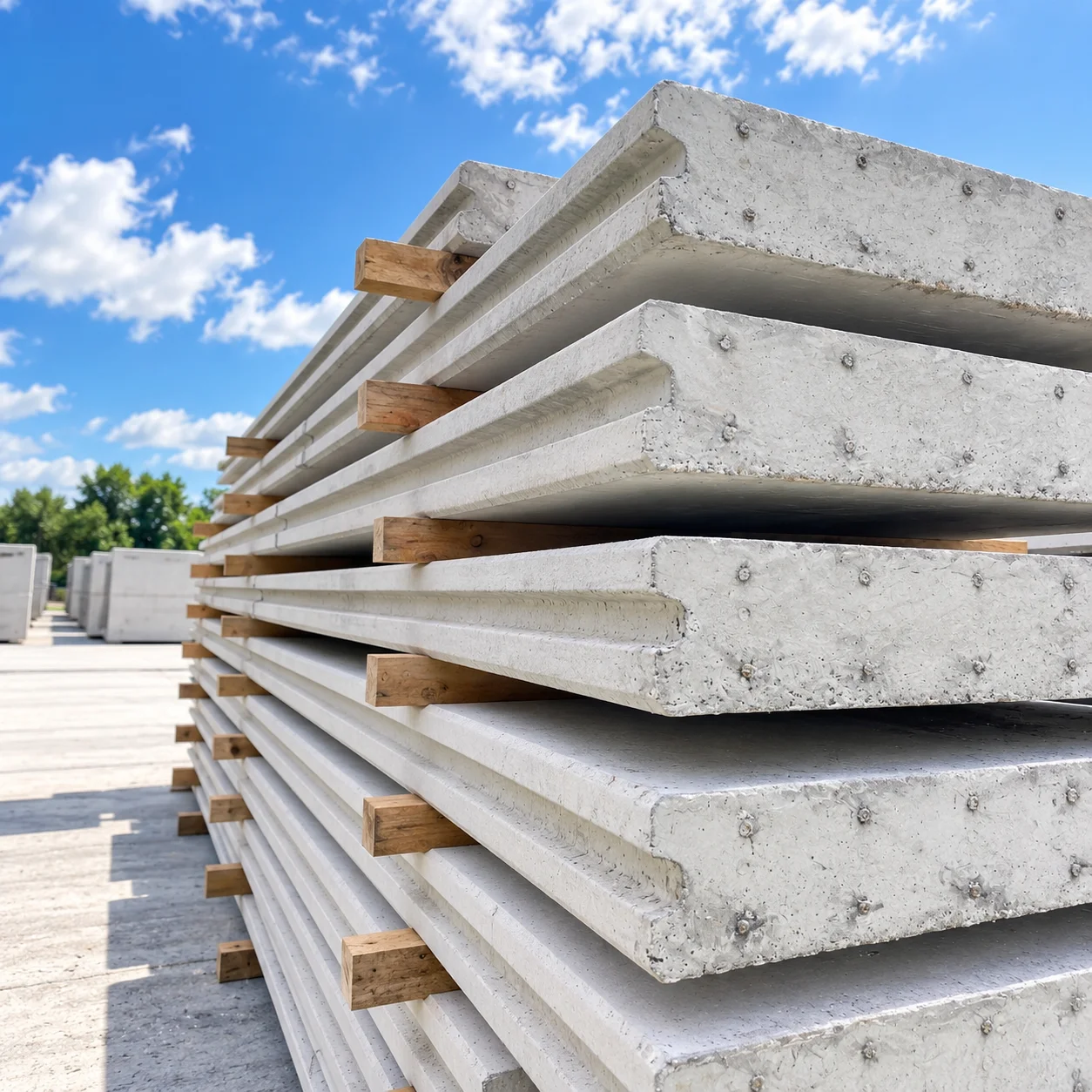
Macro synthetic fiber for precast concrete introduces distributed reinforcement throughout manufactured elements where crack control, toughness and handling performance are important. Properly selected fiber geometry and dosage help manage cracking within the concrete matrix and maintain more controlled behavior during production, demolding, handling, transportation and subsequent service.

Macro synthetic fibers reinforce infrastructure concrete exposed to restrained movement, repeated loading and demanding service conditions. Three-dimensional fiber distribution bridges potential crack planes and contributes to crack-width control, flexural toughness and post-crack load transfer in transportation, civil engineering and other performance-driven concrete structures.
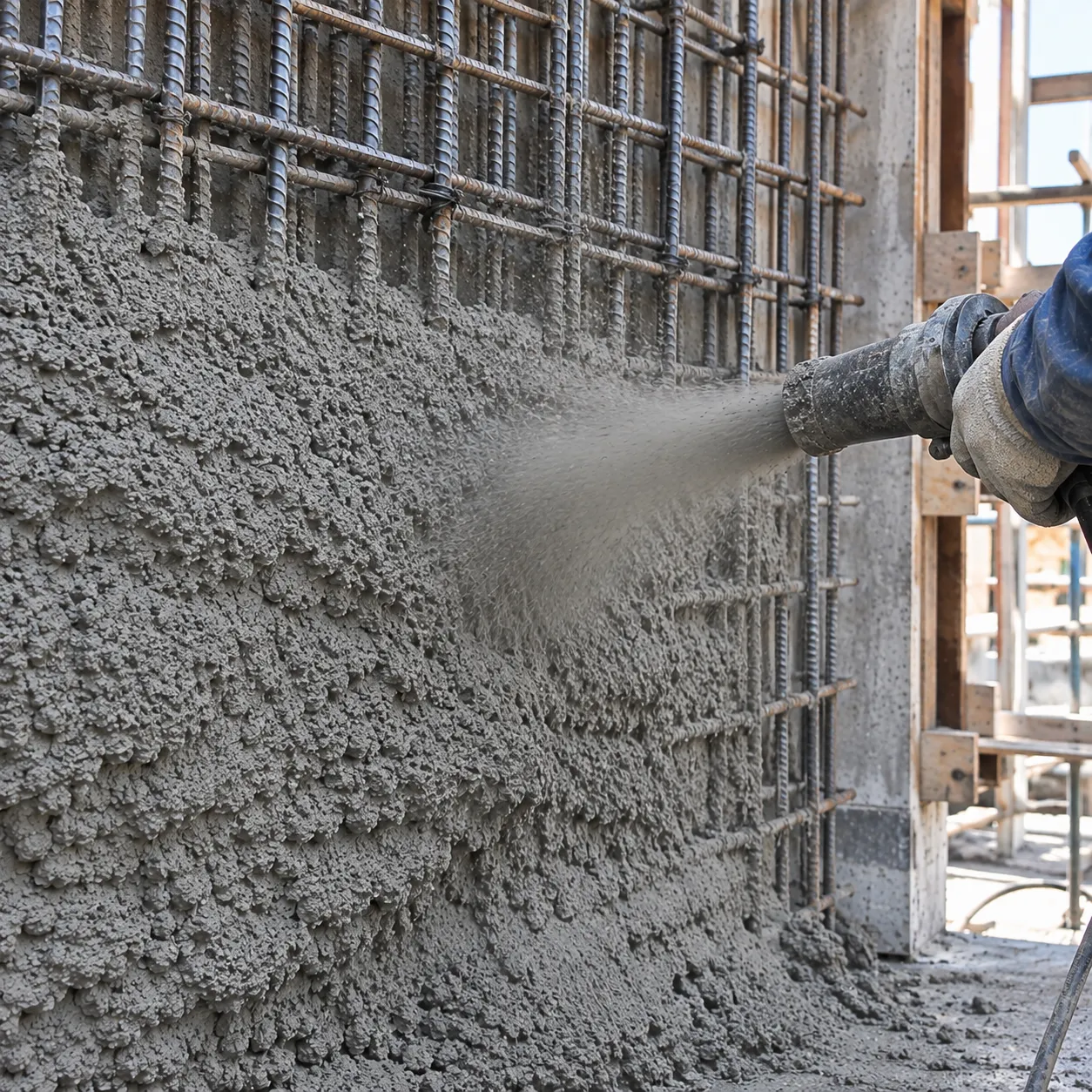
Macro synthetic fiber for shotcrete forms distributed reinforcement within sprayed concrete where crack bridging, toughness, residual performance and energy absorption may be important engineering requirements. Fiber grade and dosage can be matched to the shotcrete mix, placement conditions and specified residual-strength or energy-absorption performance.

PP macro fiber for tunnel concrete reinforces tunnel linings, ground-support systems and underground structures subjected to cracking, deformation and localized stress. Fibers intersecting crack planes maintain stress transfer after matrix cracking, contributing to toughness, residual performance and energy absorption where controlled post-crack behavior is required.

PP macro fibers introduce non-corrosive distributed reinforcement into water-retaining and marine concrete structures exposed to moisture and demanding service environments. Their crack-bridging action contributes to controlled crack development and post-crack performance without introducing the corrosion concerns associated with conventional steel fiber reinforcement.
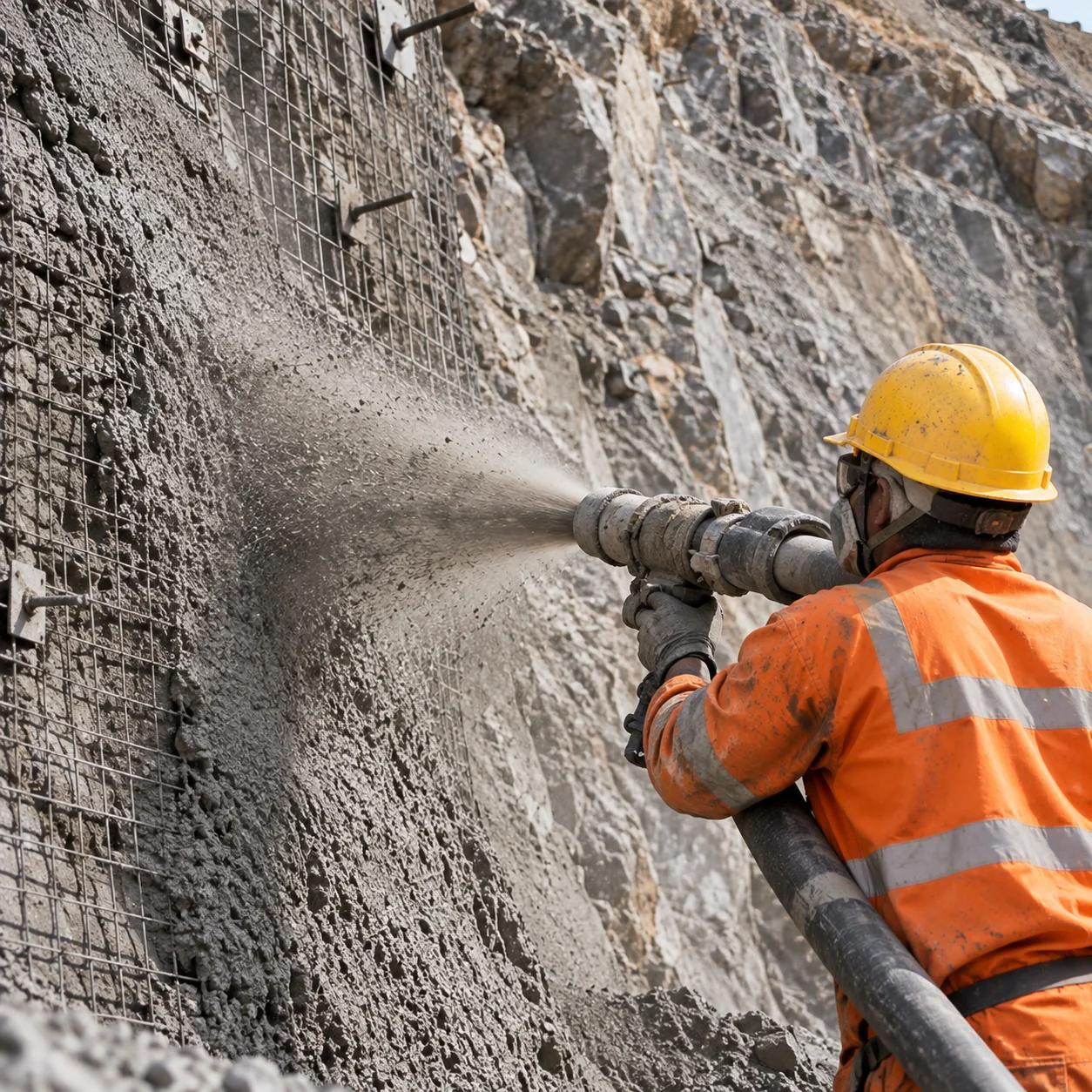
Macro synthetic fiber for mining concrete strengthens sprayed concrete, underground support and other concrete systems subjected to cracking, deformation and demanding operational conditions. Distributed fibers bridge developing cracks and maintain post-crack stress transfer, contributing to toughness, residual performance and energy absorption in underground mining applications.
Engineered for More Controlled Concrete Behavior
Distributed macro fibers bridge developing cracks and help control crack opening and propagation within the concrete matrix.
Fiber reinforcement supports a tougher, less brittle response as concrete undergoes cracking and deformation under load.
Engaged fibers continue transferring stress across cracks, helping maintain load-carrying capacity after matrix cracking.

Distributed macro fibers help concrete absorb impact energy and improve resistance to dynamic loading.
Fiber reinforcement can support improved resistance to repeated loading in appropriately designed concrete systems.
Polypropylene fibers do not rust or corrode, providing durable synthetic reinforcement in moisture-exposed environments.
PP Macro Fiber performance depends on more than the fiber itself. Effective reinforcement requires the right balance between fiber characteristics, concrete matrix, aggregate grading, rheology, admixtures, mixing and placement conditions.
FIBER + MATRIX + AGGREGATES + ADMIXTURES + PROCESS
→ CONCRETE PERFORMANCE
Fiber length, shape and surface characteristics influence dispersion, anchorage and crack-bridging behavior.
Fiber dosage influences reinforcement density across potential crack planes, as well as workability, distribution, toughness and residual performance.
Matrix strength and fracture characteristics influence crack development, fiber anchorage and the post-crack response of fiber-reinforced concrete.
Cement type, SCMs and binder composition influence hydration, matrix development, rheology and compatibility within the fiber-reinforced concrete system.
Maximum aggregate size, grading and aggregate volume influence fiber distribution, mixing behavior, workability and matrix uniformity.
W/B ratio influences matrix density, workability and strength development, affecting both fiber dispersion and fiber–matrix interaction.
PCE and other concrete admixtures influence rheology, workability retention, fiber dispersion, pumping and placement behavior within the complete mix.
Batching sequence, mixing time, pumping, spraying and placement methods influence fiber dispersion and the consistency of field performance.
Different Fiber Technologies for Different Concrete Reinforcement Requirements
| Property | PP Macro Fiber | PP Micro Fiber | Steel Fiber |
|---|---|---|---|
| Primary Role | Distributed Post-Crack Reinforcement | Early-Age Crack Control | Structural / Post-Crack Reinforcement |
| Reinforcement Mechanism | Crack Bridging & Post-Crack Stress Transfer | Fine Fiber Distribution & Microcrack Control | Microcrack Control Crack Bridging & Post-Crack Load Transfer |
| Performance Focus | Toughness & Residual Performance | Plastic Shrinkage Crack Reduction | Stiffness & Residual Performance |
| Crack-Control Function | Macro Crack Bridging & Crack-Width Control | Early-Age Microcrack Control | Macro Crack Bridging & Load Transfer |
| Primary Performance Stage | Hardened / Post-Crack | Fresh / Early Age | Hardened / Post-Crack |
| Residual Performance | Key Performance Function | Not Primary Function | Key Performance Function |
| Corrosion Risk | None | None | Exposure Dependent |
| Typical Applications | Floors / Pavements / Shotcrete / Precast / Tunnels | Slabs / Screeds / Mortars / General Concrete | Industrial Floors / Precast / Tunnels / Heavy-Duty Concrete |
Selection Note: No single fiber technology is optimal for every concrete system. Fiber selection should be based on crack-control requirements, required post-crack performance, loading conditions, exposure environment, placement method and project-specific design criteria.
POLYVIA™ provides technical support from fiber selection and dosage optimization to mix compatibility and performance verification, helping customers match fiber solutions to their concrete systems, applications and performance targets.

Grade-specific physical and mechanical properties.
Download ↓
Handling, storage and safety information.
Download ↓
Typical batch quality-control parameters.
Download ↓
Practical guidance for dosage, batching, dispersion and concrete evaluation.
Download ↓PP Macro Fiber is an engineered polypropylene macro synthetic fiber used to provide distributed reinforcement, crack bridging, improved toughness and post-crack performance in concrete.
PP Micro Fiber is primarily used for plastic shrinkage and early-age crack control, while PP Macro Fiber is designed to provide larger-scale crack bridging, toughness and post-crack reinforcement in hardened concrete.
In certain applications, macro synthetic fibers may be used as an alternative to specific types of secondary or temperature-and-shrinkage reinforcement. Any replacement should be determined through engineering design, required performance and applicable project standards.
When a crack forms, fibers crossing the crack plane engage with the concrete matrix and transfer stress across the crack, helping maintain residual performance as crack opening develops.
A typical starting dosage for PP macro fiber is 3–8 kg/m³ of concrete, depending on the fiber grade, concrete mix, application and required performance. Lower dosages may be considered for general crack-control applications, while higher dosages may be required where greater flexural toughness, residual strength or energy absorption is specified.
Final dosage should be confirmed through concrete trials and, for performance-based applications, appropriate residual-strength or energy-absorption testing.
Yes. PP Macro Fiber can be used in concrete containing PCE superplasticizer. PCE type and dosage should be optimized to maintain suitable workability, fiber dispersion, pumping and placement behavior.
Selected macro synthetic fiber grades can be used in shotcrete and tunneling applications where toughness, energy absorption and post-crack performance are required.
Polypropylene macro synthetic fiber is non-corrosive and does not rust like steel reinforcement.
NEED HELP SELECTING THE RIGHT PP MACRO FIBER? Fiber selection depends on more than length and tensile strength. Tell us your concrete application, mix design and performance target. POLYVIA™ can support fiber selection, dosage evaluation and mix compatibility before project trials. Technical Support Fiber Selection · Dosage Optimization · Mix Compatibility · Application Trials