
High Water Demand
Reduce mixing water while maintaining target slump, flow and concrete workability.
Recommended:
High Water Reduction Grade (PCE HWR50)

POLYVIA™ PCE Liquid is a high-performance polycarboxylate ether superplasticizer designed for modern concrete applications requiring efficient water reduction, stable workability, controlled rheology and reliable strength development.
Through application-matched PCE grades, POLYVIA supports ready-mix concrete, precast components, self-compacting concrete and high-performance concrete systems.
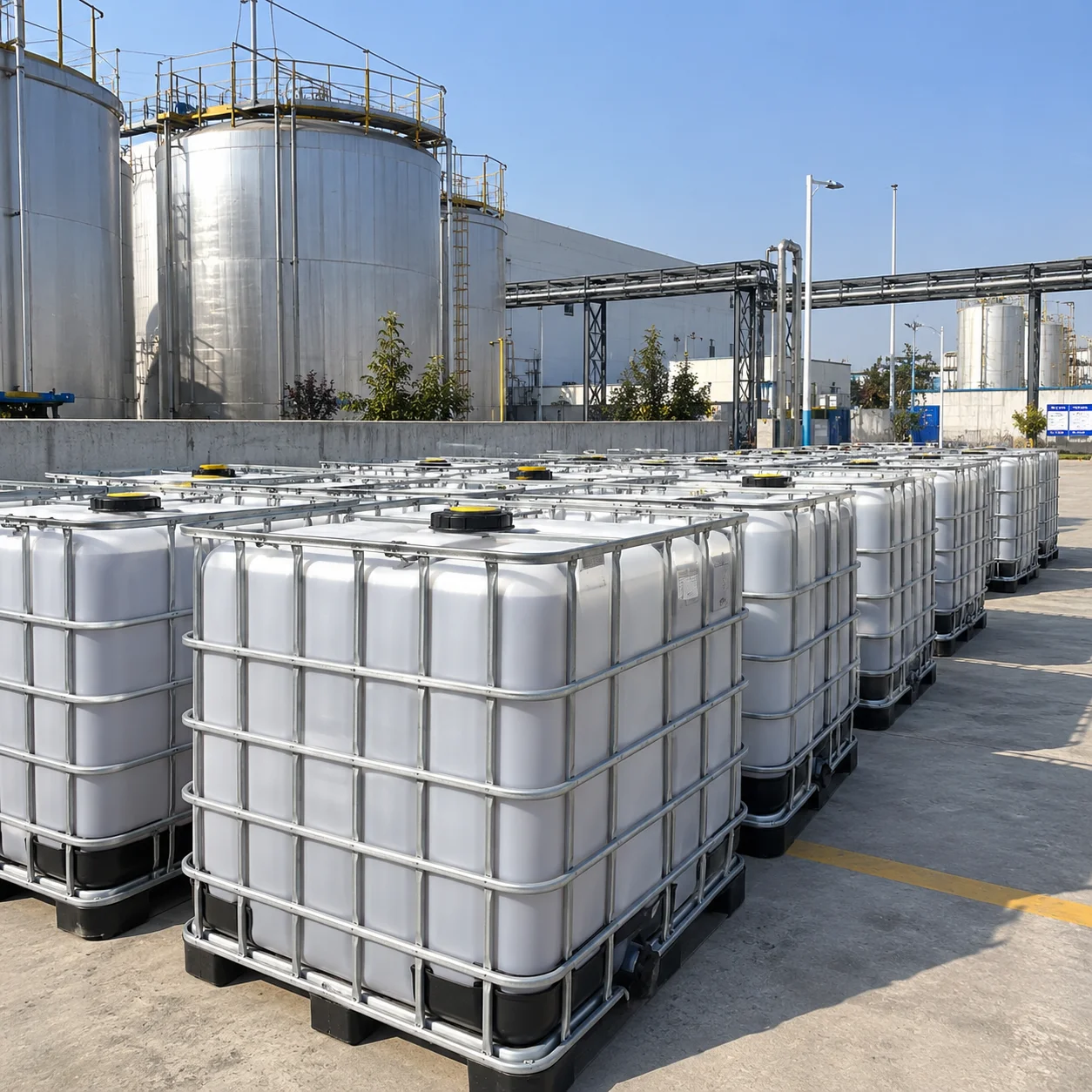


PCE Liquid (Polycarboxylate Ether Liquid) is a high-performance concrete superplasticizer designed for efficient cement dispersion and reduced water demand. Different grades support water reduction, slump retention and early-strength performance.
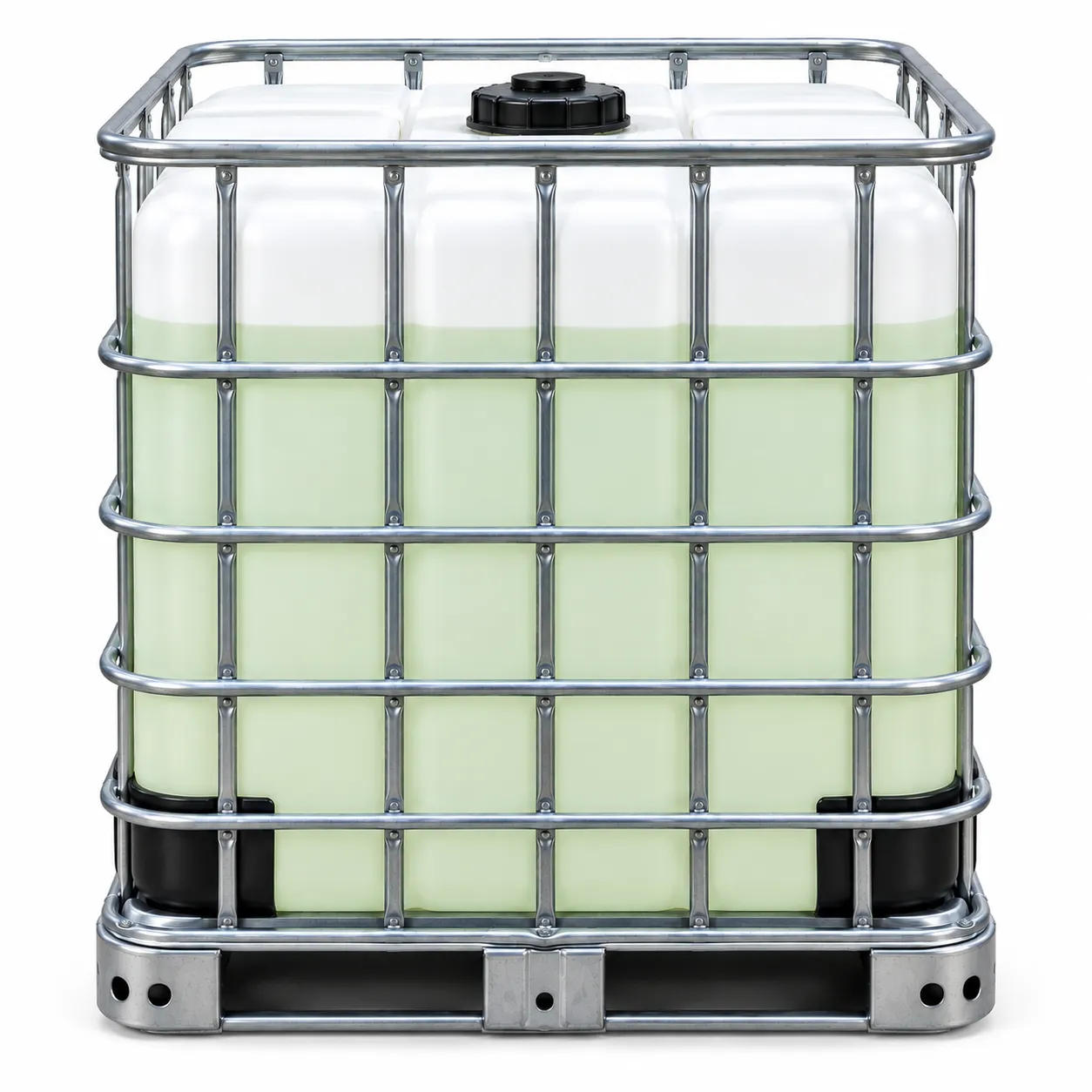
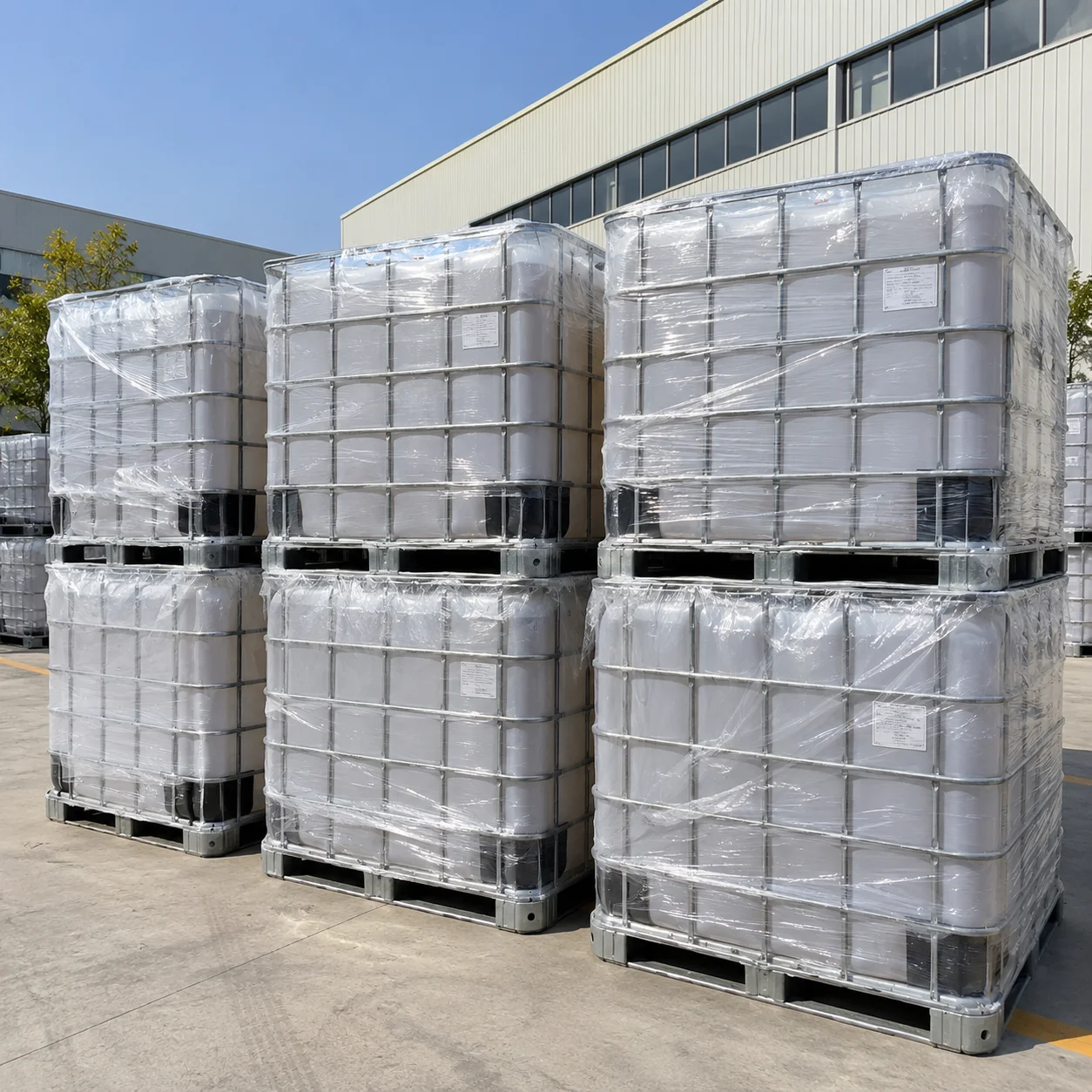
Reduce mixing water while maintaining target slump, flow and concrete workability.
Maintain workable consistency during mixing, transport, pumping and placement.

Control workability loss where elevated concrete temperature or extended delivery time accelerates slump decay.
Support lower W/B ratios, faster strength development and shorter production cycles.
| Grade | Primary Function | Water Reduction | Slump Retention | Early Strength | Typical Applications |
|---|---|---|---|---|---|
| POLYVIA™ PCE HWR50 | High Water Reduction | ●●●●● | ●●● | ●●● | HPC / Precast / Ready-Mix / Low W/B Concrete / Sprayed Concrete |
| POLYVIA™ PCE SR50 | Extended Slump Retention | ●●● | ●●●●● | ●●● | Ready-Mix / Pumped Concrete / Long Transport |
| POLYVIA™ PCE ES50 | Enhanced Early Strength | ●●●● | ●● | ●●●●● | Precast / Prestressed / Spun Pile / Rapid Demolding |
| POLYVIA™ PCE GP50 | Balanced Performance | ●●● | ●●● | ●●● | Ready-Mix / Pumped Concrete / General Concrete |
Note: Standard liquid grades are supplied at 50 ± 1% solid content, with 40 ± 1% versions available upon request. For more logistics-efficient supply, POLYVIA™ also offers PCE Powder and PCE Flake with approximately 98% solid content. After dissolution in water, 1 MT can be prepared into 2 MT of 50% PCE liquid, helping reduce water transportation and optimize freight, storage and handling costs.
Molecular Design for Controlled Concrete Performance
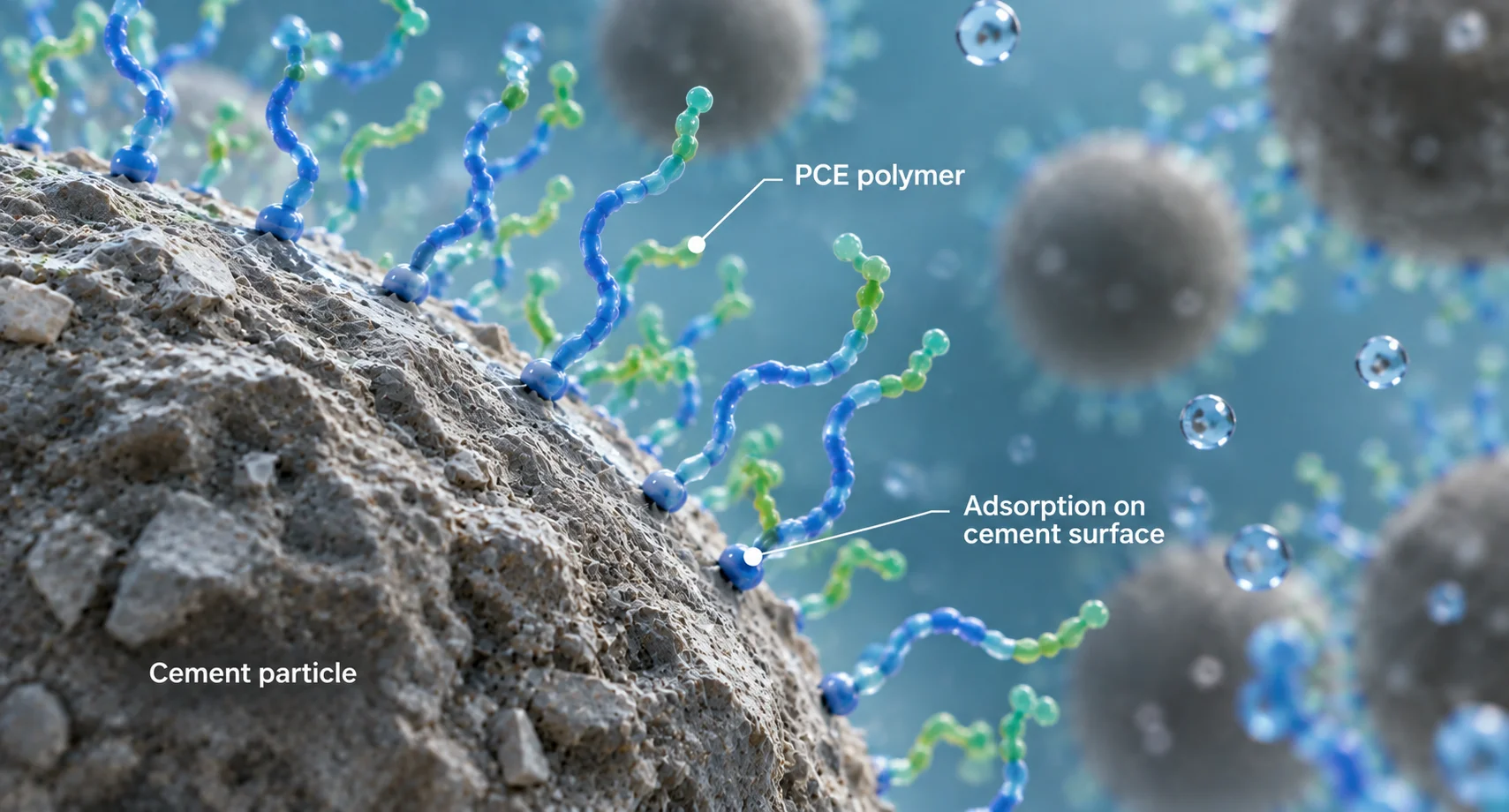
PCE polymer chains attach to cement particle surfaces, forming an adsorption layer that controls particle interaction.
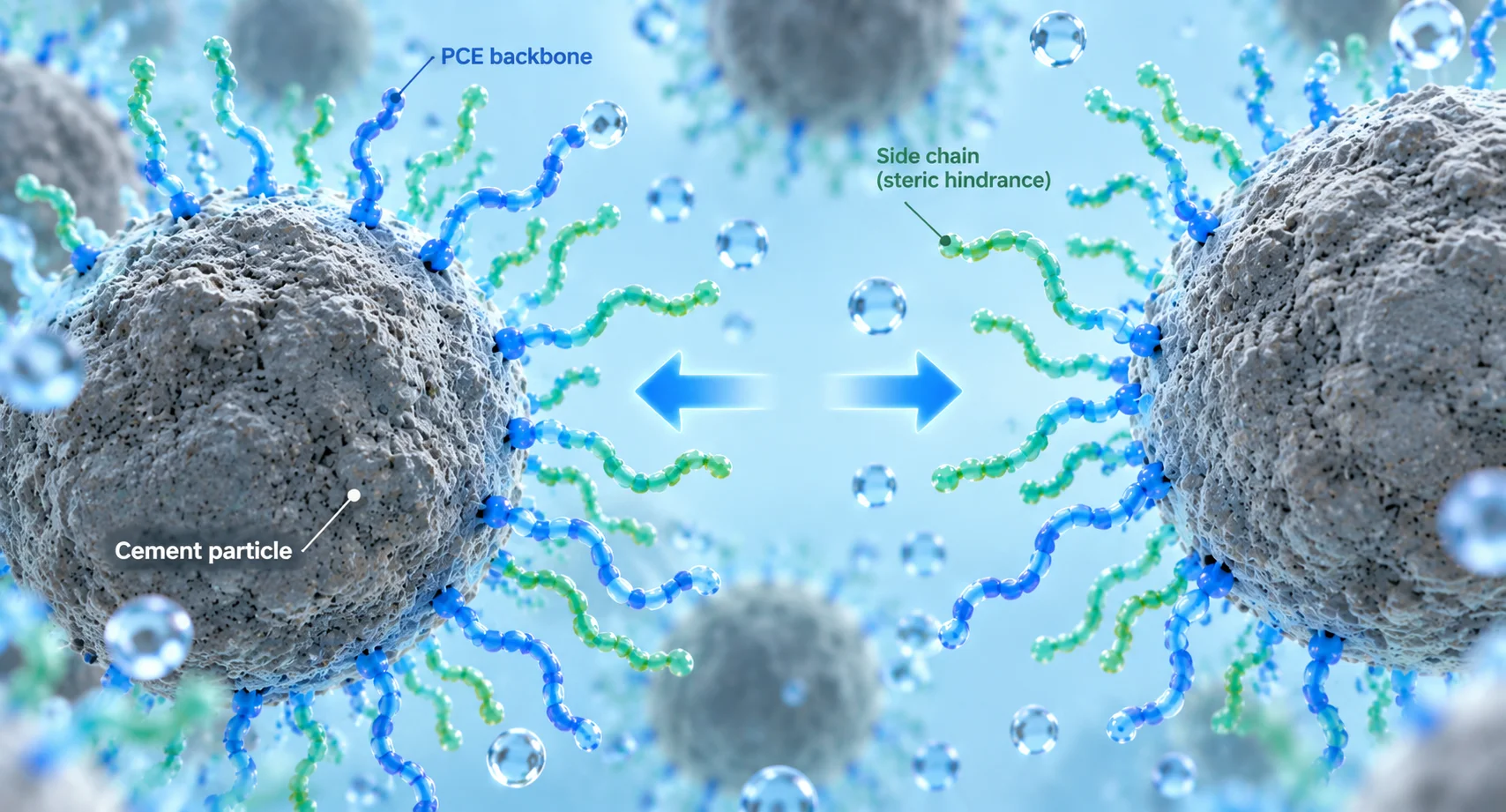
Polyether side chains create steric repulsion between cement particles, reducing flocculation and improving particle dispersion.
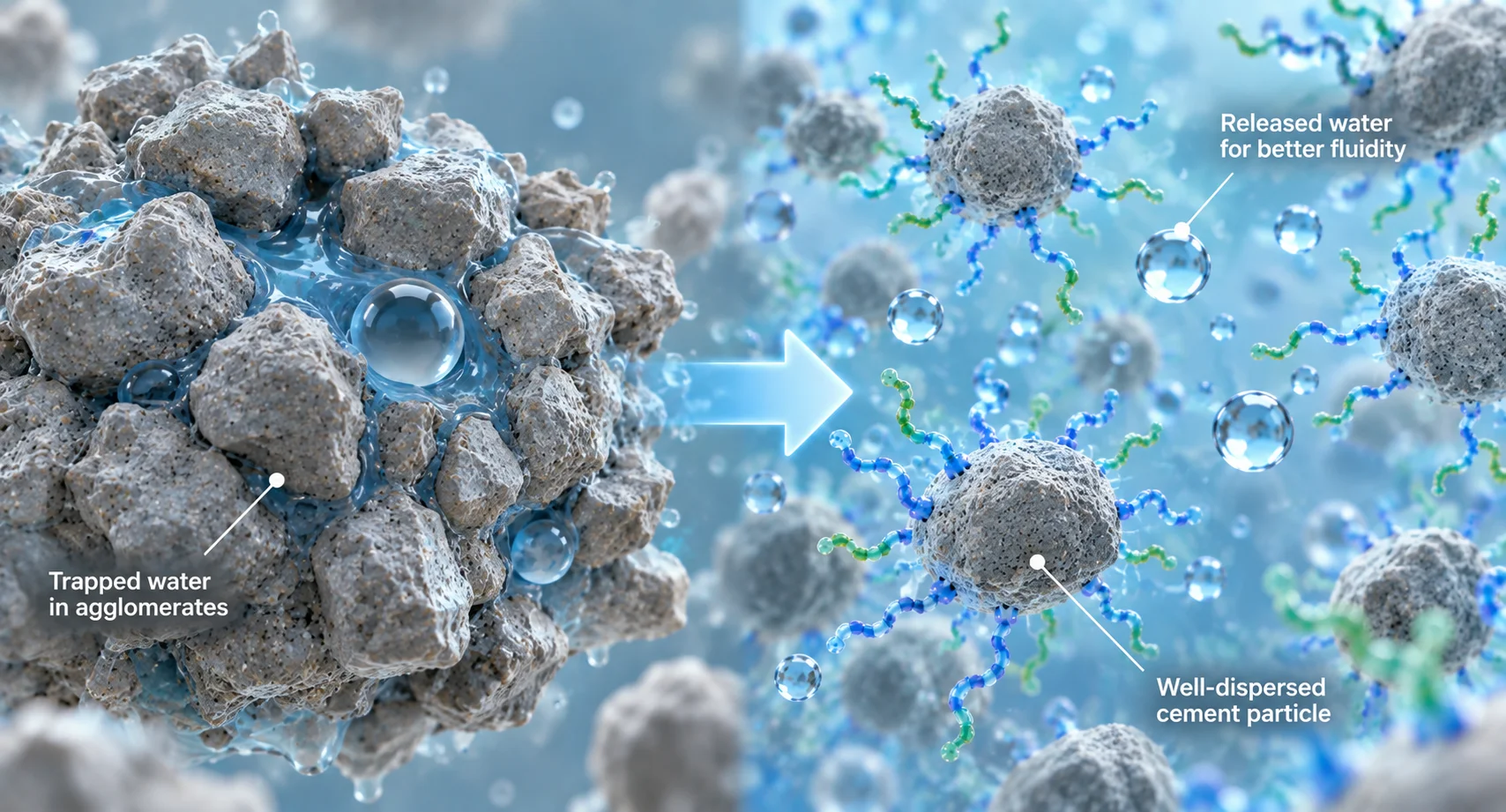
Improved particle separation releases entrapped water, reducing water demand while maintaining concrete flow.
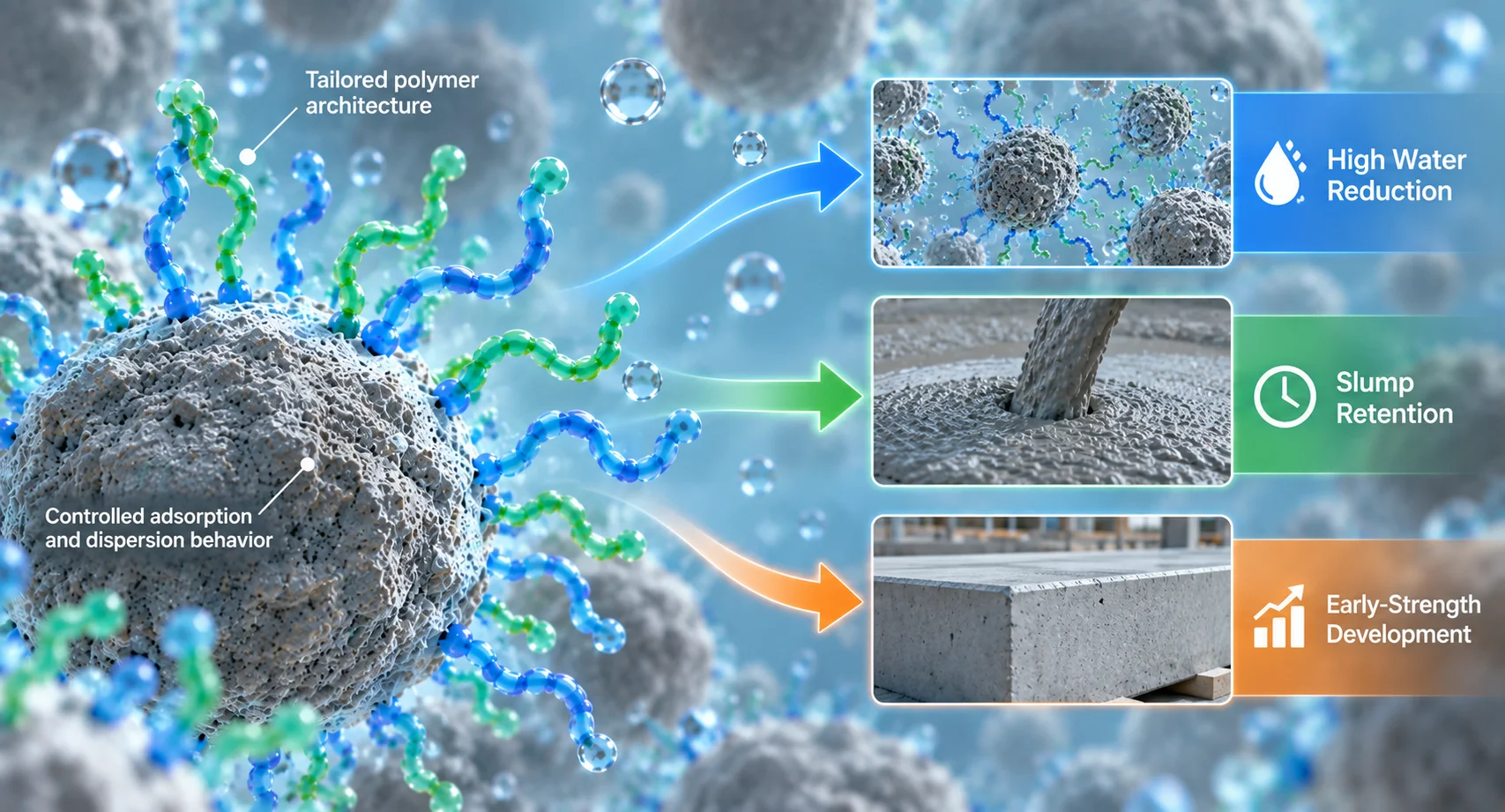
Customized PCE structures deliver application-specific performance, including water reduction, slump retention and early strength development.
| Items | HWR Series | SR Series | ES Series | GP Series |
|---|---|---|---|---|
| Type | High Water Reduction | High Slump Retention | Early Strength | General Purpose |
| Solid Content, % | 40±1% / 50±1% | 40±1% / 50±1% | 40±1% / 50±1% | 40±1% / 50±1% |
| Appearance | Colorless to light yellow liquid | Amber to brown liquid | Colorless to light yellow liquid | Colorless to light yellow liquid |
| pH value, 25°C | 5.0–7.0 | 5.0–7.0 | 5.0–7.0 | 5.0–7.0 |
| Density (25°C), g/cm³ | 1.08–1.12 | 1.08–1.12 | 1.08–1.12 | 1.08–1.12 |
| Chloride Content | Chloride-Free | Chloride-Free | Chloride-Free | Chloride-Free |
PCE Liquid Technology Designed for Different Concrete Performance Requirements
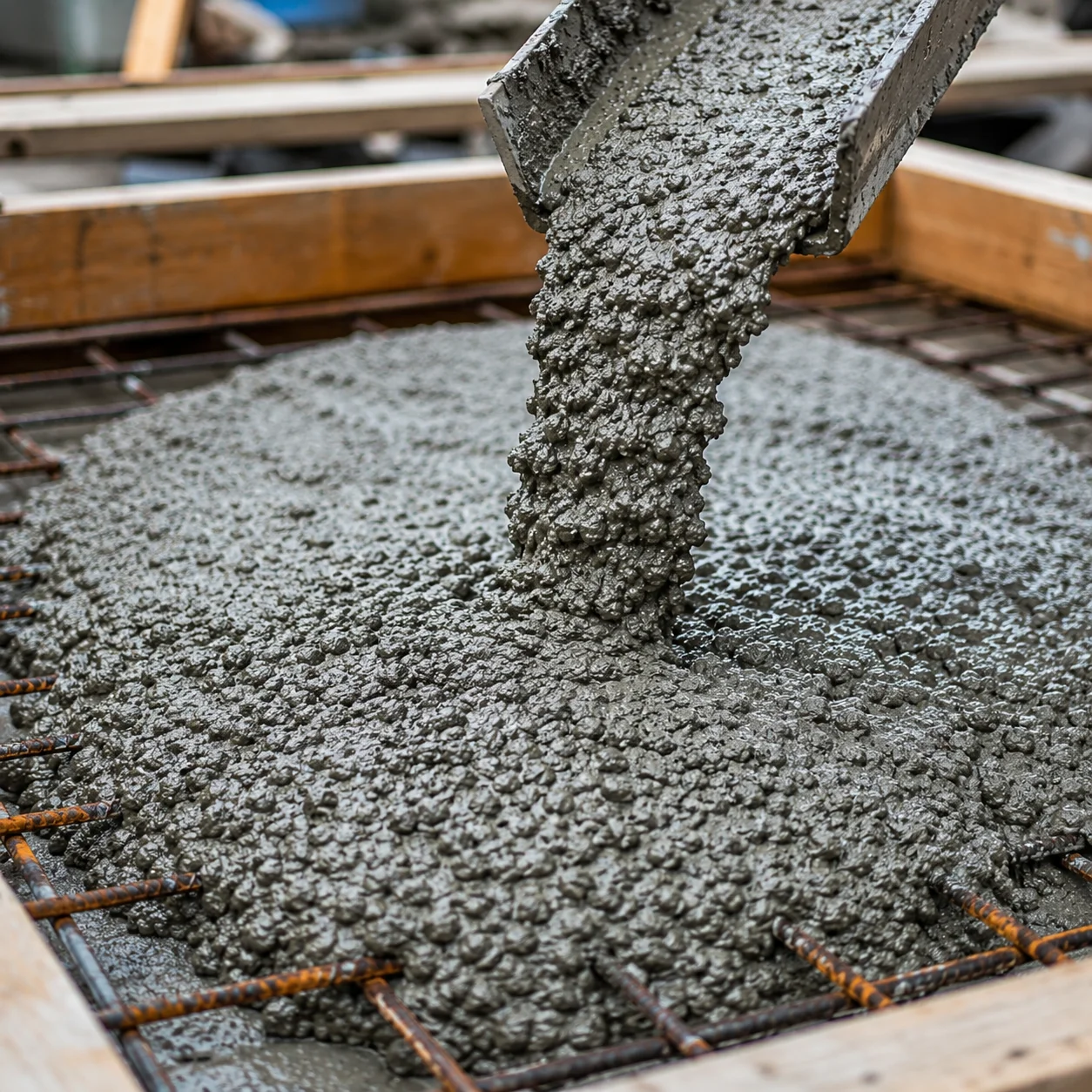
Designed for ready-mix concrete requiring stable water reduction, consistent workability and reliable slump retention during transportation and placement.
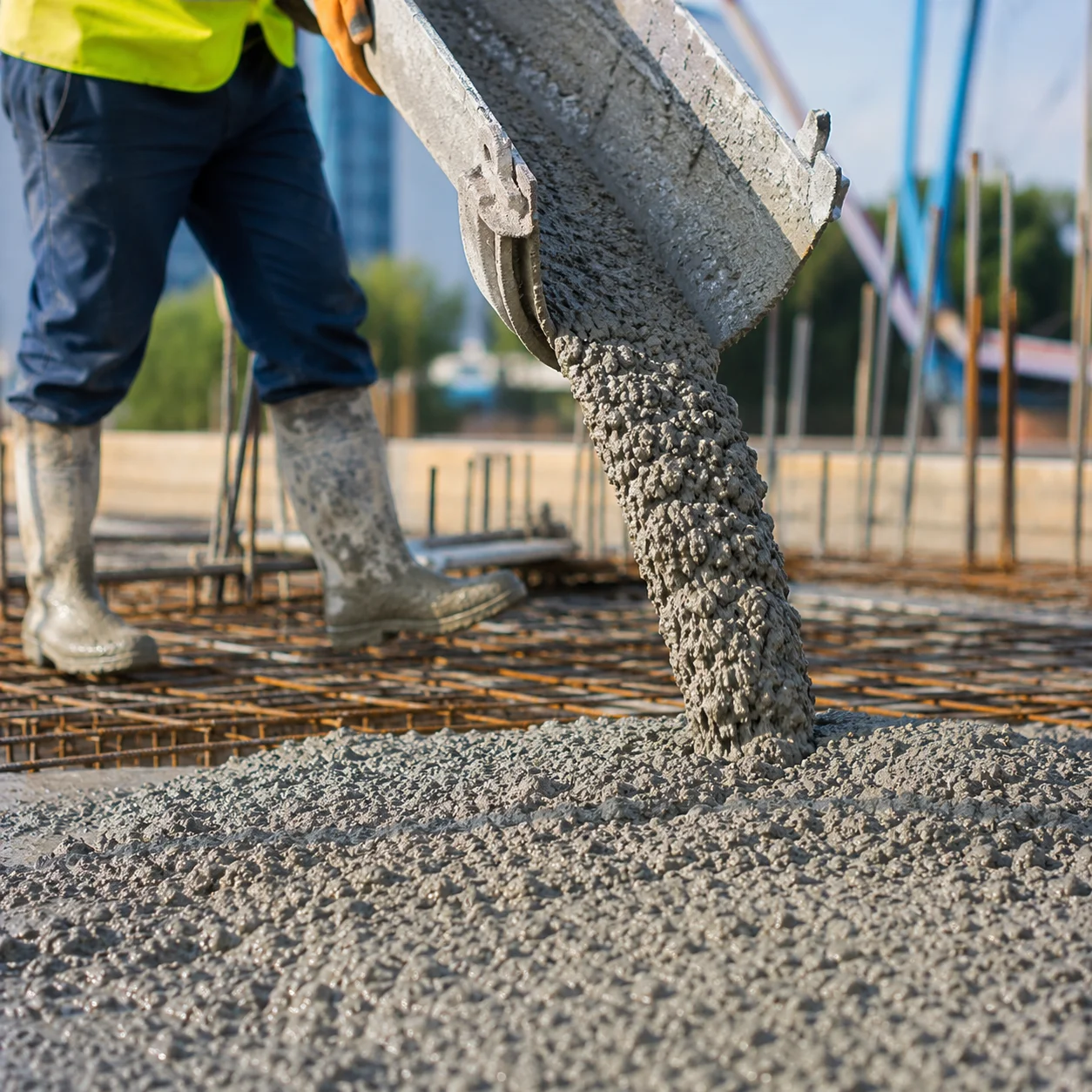
Supports long-distance pumping applications with improved flowability, reduced pumping resistance and controlled concrete consistency.
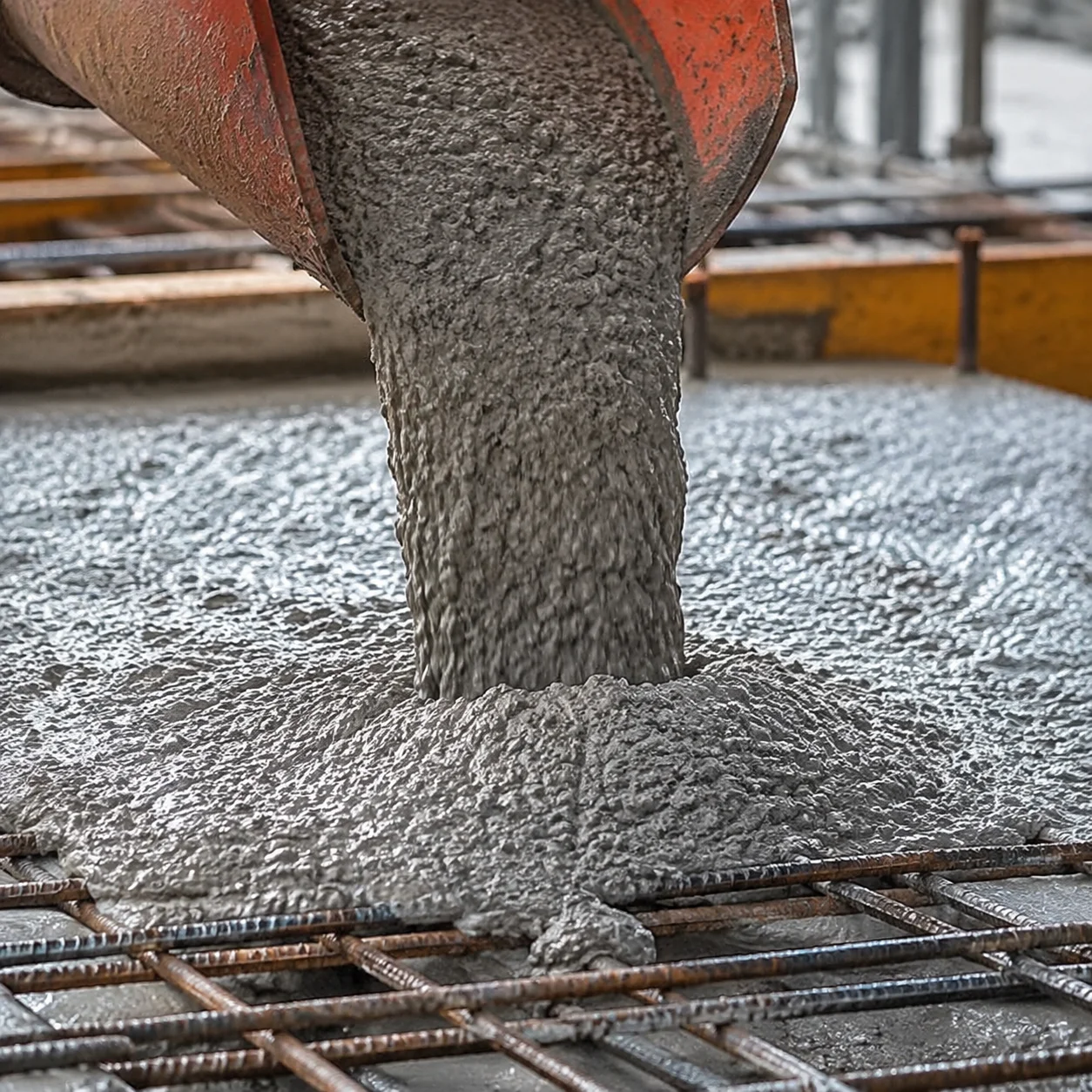
Helps maintain concrete workability under elevated temperatures through controlled slump retention and stable dispersion performance.
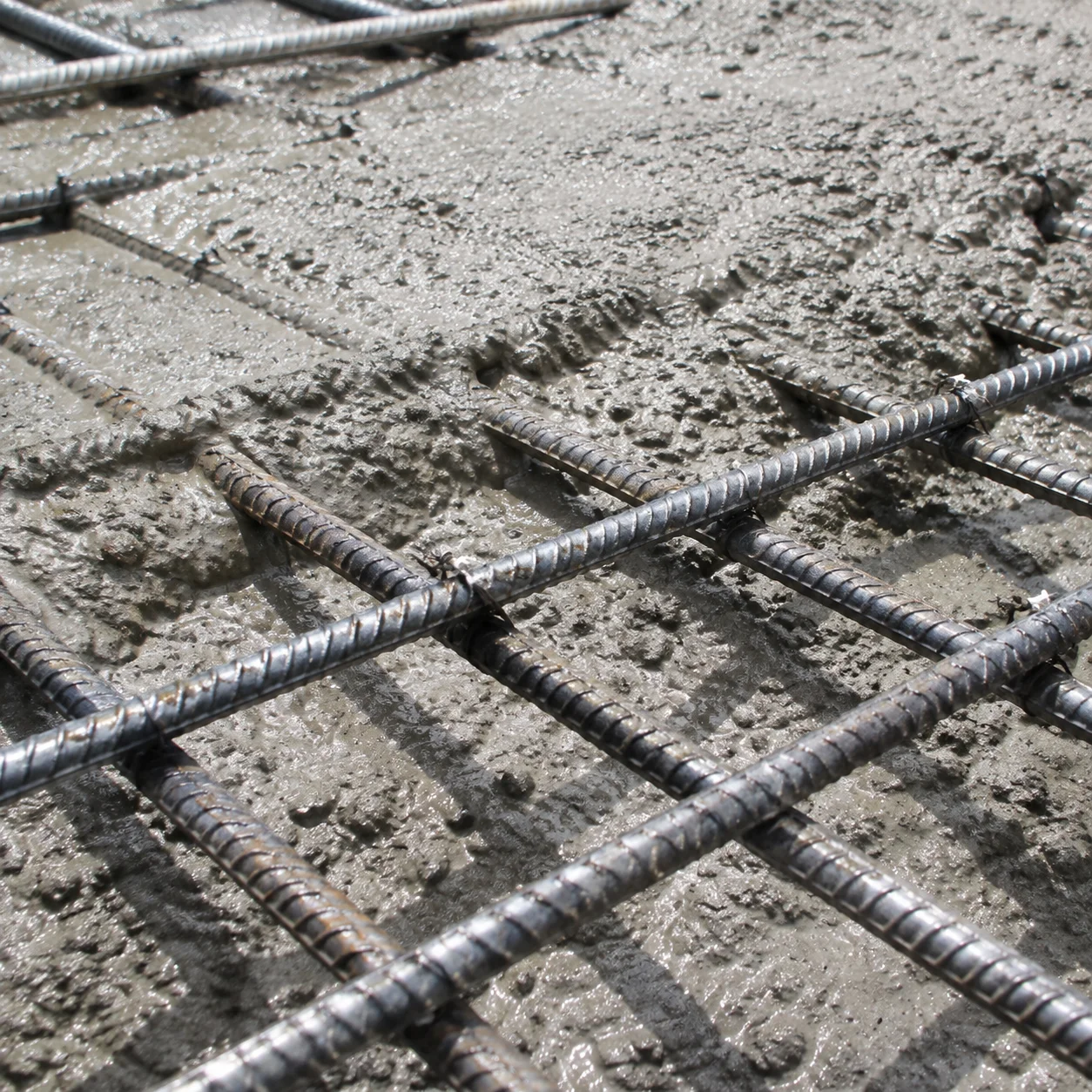
Provides efficient cement dispersion for high flowability, filling ability and stability without compromising segregation resistance.
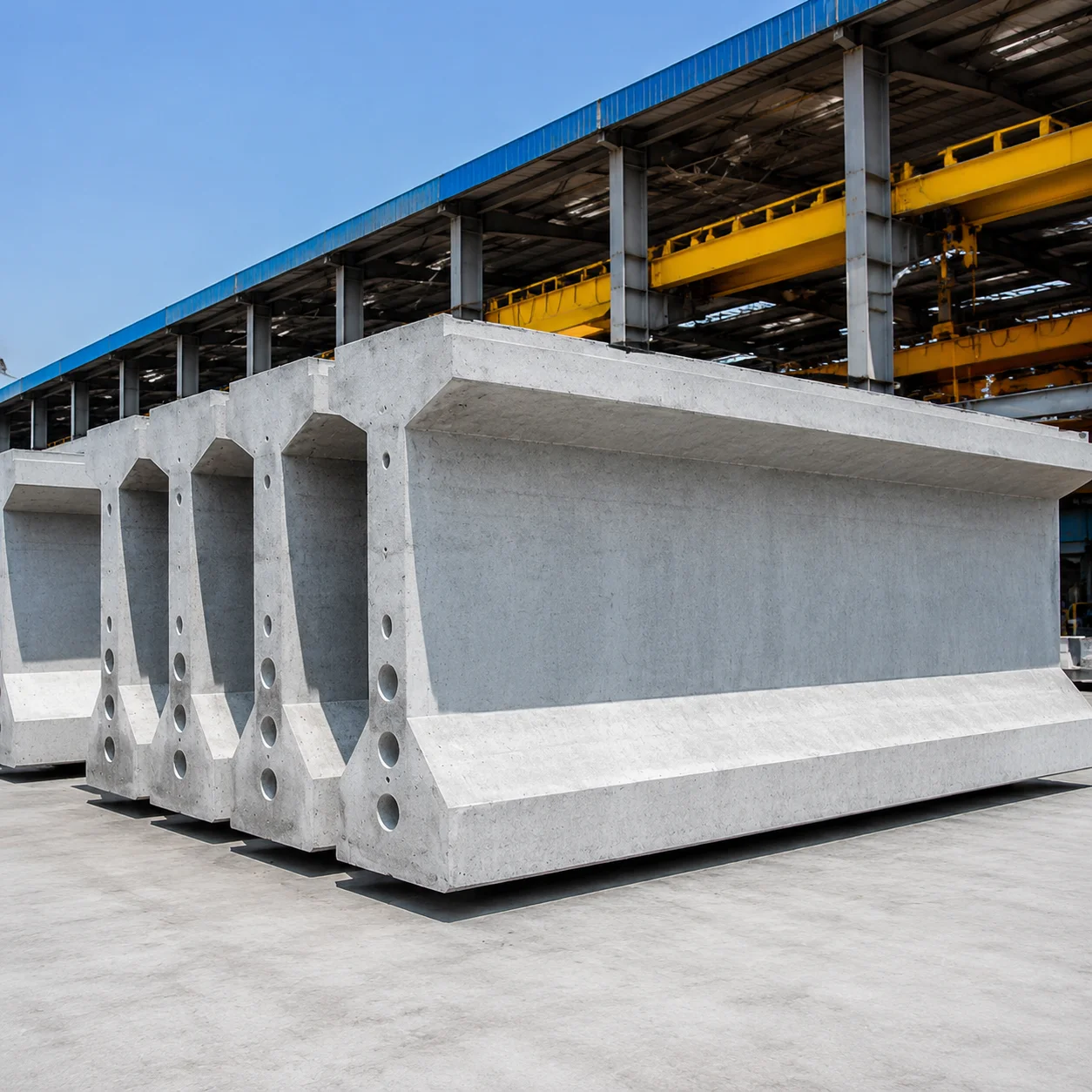
Supports precast production with low W/B ratio concrete, faster strength development and efficient demolding cycles.
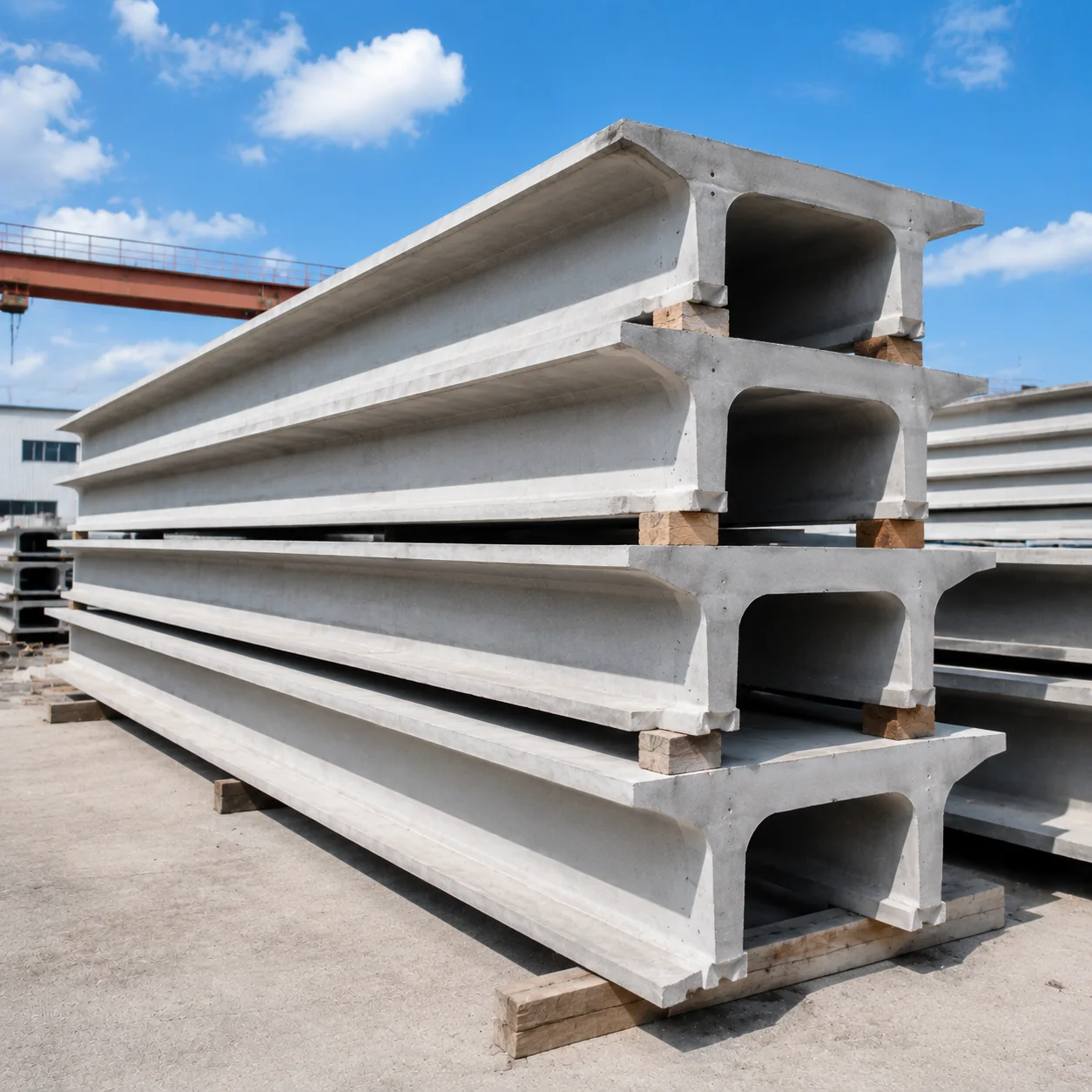
Enables high-strength concrete systems with optimized dispersion, controlled workability and reliable early-age performance.
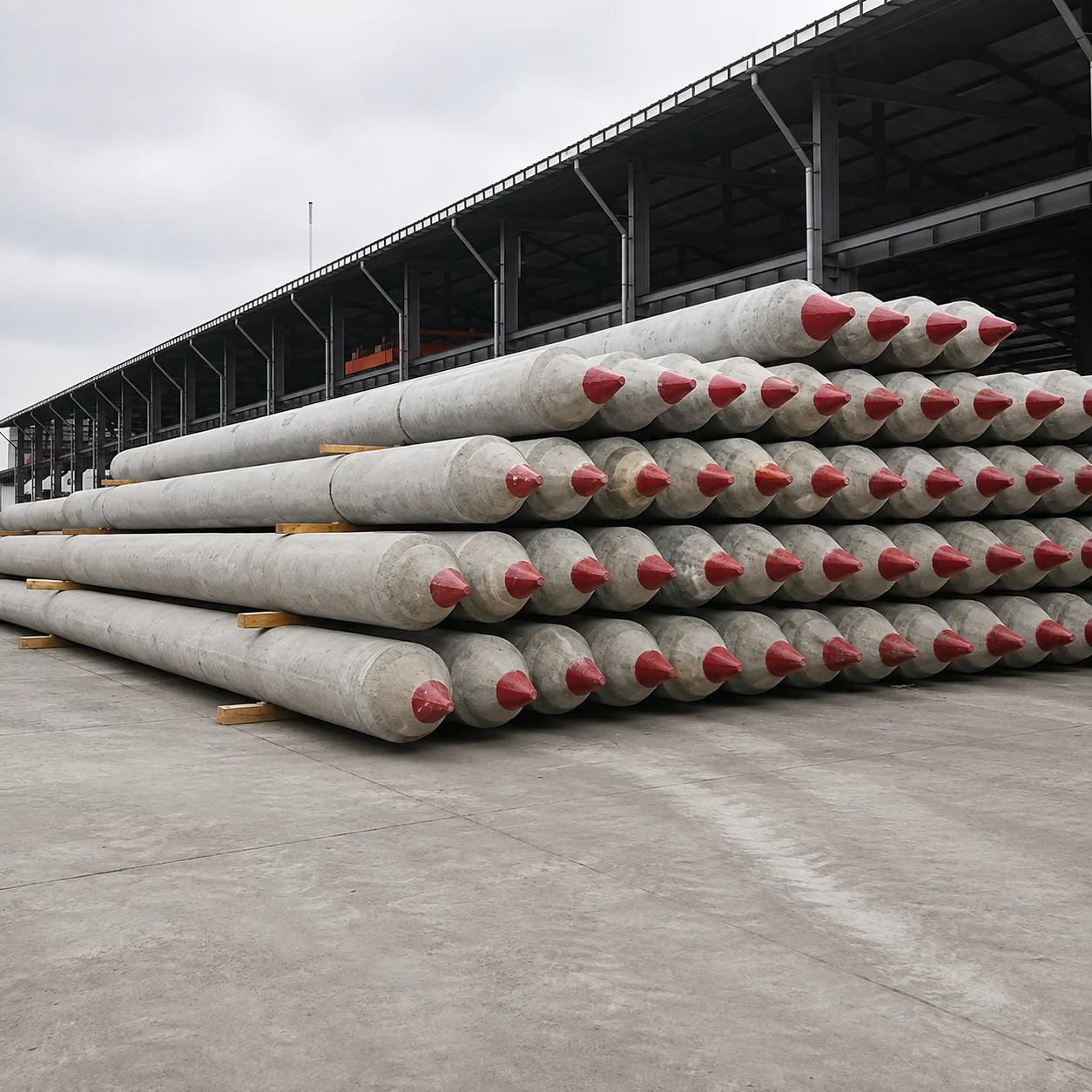
Designed for ultra-high-strength concrete applications requiring rapid strength gain, dense structure and fast mold turnover.
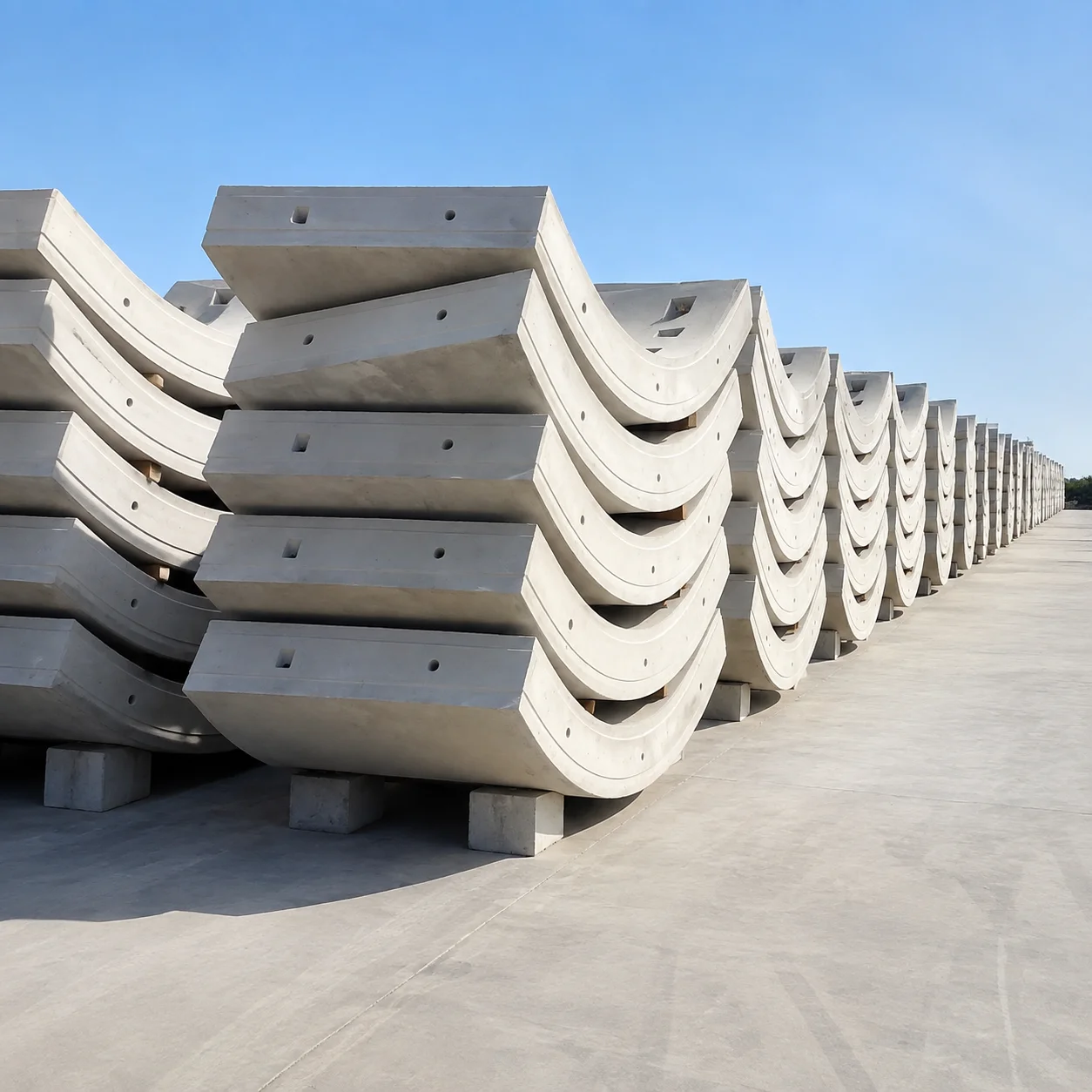
Enables advanced concrete mix designs with high dispersion efficiency, low water demand and improved durability potential.
Reduce water demand while maintaining required workability.
Maintain workable consistency according to transport and placement requirements.

Support strength-oriented and durability-oriented concrete design.
Support faster strength development in precast and prestressed systems.
Improve concrete movement through mixing, pumping and placement.

Use individual grades or blend HWR / SR / ES technologies according to performance targets.
Final performance depends on the interaction between PCE, cementitious materials, mix design and production conditions. A structured trial process helps identify the right dosage and performance balance before full-scale use.
Define → Materials→ Mix Design → Select PCE → Dosage → Workability → Strength → Production
Define target slump, retention time, water reduction, W/B ratio and strength development as the basis for PCE selection.
Evaluate cement, SCMs, aggregates and mixing water to identify factors that may influence PCE response and concrete performance.
Review binder content, SCM ratio, W/B ratio and aggregate grading to establish the required PCE performance profile.
Select HWR, SR, ES or a suitable combination according to water reduction, retention and strength requirements.
Determine the effective dosage range to balance dispersion, water reduction, workability, concrete stability and formulation efficiency.
Measure initial slump, retention over time, air content, cohesion, bleeding and segregation under representative test conditions.
Evaluate setting behavior and early-age strength development to confirm that the selected PCE meets production performance targets.
Verify mixing, dosing, temperature response, transport performance and consistency through trials under actual plant production conditions.
Understanding Different PCE Technologies for Concrete Performance Control
| Performance Factor | High Water Reduction PCE (HWR) | Slump Retention PCE (SR) |
|---|---|---|
| Primary Focus | Maximum water reduction with high cement dispersion efficiency | Extended workability retention during transportation, waiting and placement |
| Main Function | Reduce water demand by improving cement particle dispersion while maintaining required flowability | Control slump loss and maintain concrete consistency over extended working periods |
| Water Reduction Capability | Very High | High |
| Slump Retention Performance | Standard | Extended |
| Recommended Applications | High-Performance Concrete (HPC), Low W/B Concrete, Precast and strength-oriented concrete systems | Ready-Mix Concrete, Long-Distance Transportation, Hot-Weather Concrete and extended placement applications |
| Concrete Performance Benefit | Lower W/B ratio, denser concrete structure and higher strength potential | More stable placement, reduced slump loss and improved construction efficiency |
| Typical Selection Priority | When maximum water reduction, low W/B ratio and strength development are primary targets | When extended workability, transportation time and placement stability are critical |
From PCE Selection to Concrete Performance
POLYVIA™ supports customers from PCE selection to concrete performance optimization. By evaluating concrete requirements, cement compatibility, SCM interaction and dosage strategy, we help develop application-matched solutions for water reduction, slump retention and strength development.

Product properties, recommended use and technical parameters.
Download ↓
Handling, storage and safety information.
Download ↓
Grade selection, formulation and concrete trial guidance.
Download ↓
Batch-specific quality documentation.
Download ↓PCE Liquid is an aqueous polycarboxylate ether superplasticizer designed to improve cement dispersion, reduce water demand and control concrete workability. Different polymer structures can be optimized for high water reduction, slump retention or early strength development.
PCE HWR is primarily designed to maximize initial dispersion and water reduction.
PCE SR is designed to maintain concrete workability for a longer period.
In many ready-mix formulations, the optimum performance is achieved by adjusting the HWR/SR ratio rather than relying on a single PCE component.
The appropriate grade depends on cement chemistry, initial slump, required retention time, ambient temperature, transportation distance, pumping requirements and other admixtures used in the formulation.
For many ready-mix systems, an HWR + SR combination provides greater formulation flexibility.
Start with the main performance problem you need to solve, rather than selecting only by solid content.
PCE-HWR is designed for high initial water reduction and strong dispersion.
PCE-SR is selected when extended slump retention is the priority.
PCE-ES is intended for early-strength-oriented systems such as precast, prestressed and spun-pile concrete.
PCE50 provides balanced performance for general concrete and admixture formulation.
Final selection should be confirmed with the actual cement, SCMs and concrete mix.
Not necessarily.
Rapid slump loss may be related to cement compatibility, temperature, sulfate balance, SCMs, low W/B ratio or insufficient slump-retention capability. Simply increasing an HWR-type PCE can increase initial flow without solving the retention problem.
For ready-mix concrete, adjusting the HWR/SR balance is often a more effective approach.
There is no universal HWR/SR ratio.
The optimum balance depends on target initial slump, required retention time, cement chemistry, temperature, transportation time and pumping conditions.
A practical formulation process is to establish the required initial water reduction with PCE-HWR, then progressively introduce PCE-SR until the required workability-retention profile is achieved.
The final ratio should always be determined by laboratory and plant trials.
Performance depends on cement chemistry, SCM content and mix design. Trial evaluation is recommended.
Early Strength PCE is recommended for precast and prestressed concrete production.
Tell us about your concrete requirements, including cement type, mix design, target slump retention, transportation time and strength objectives. Our technical team will help evaluate suitable PCE grades and performance solutions.