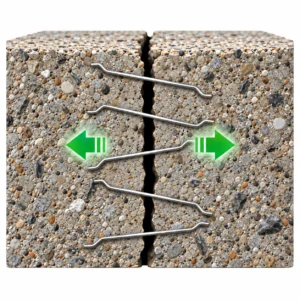
Crack Width Control
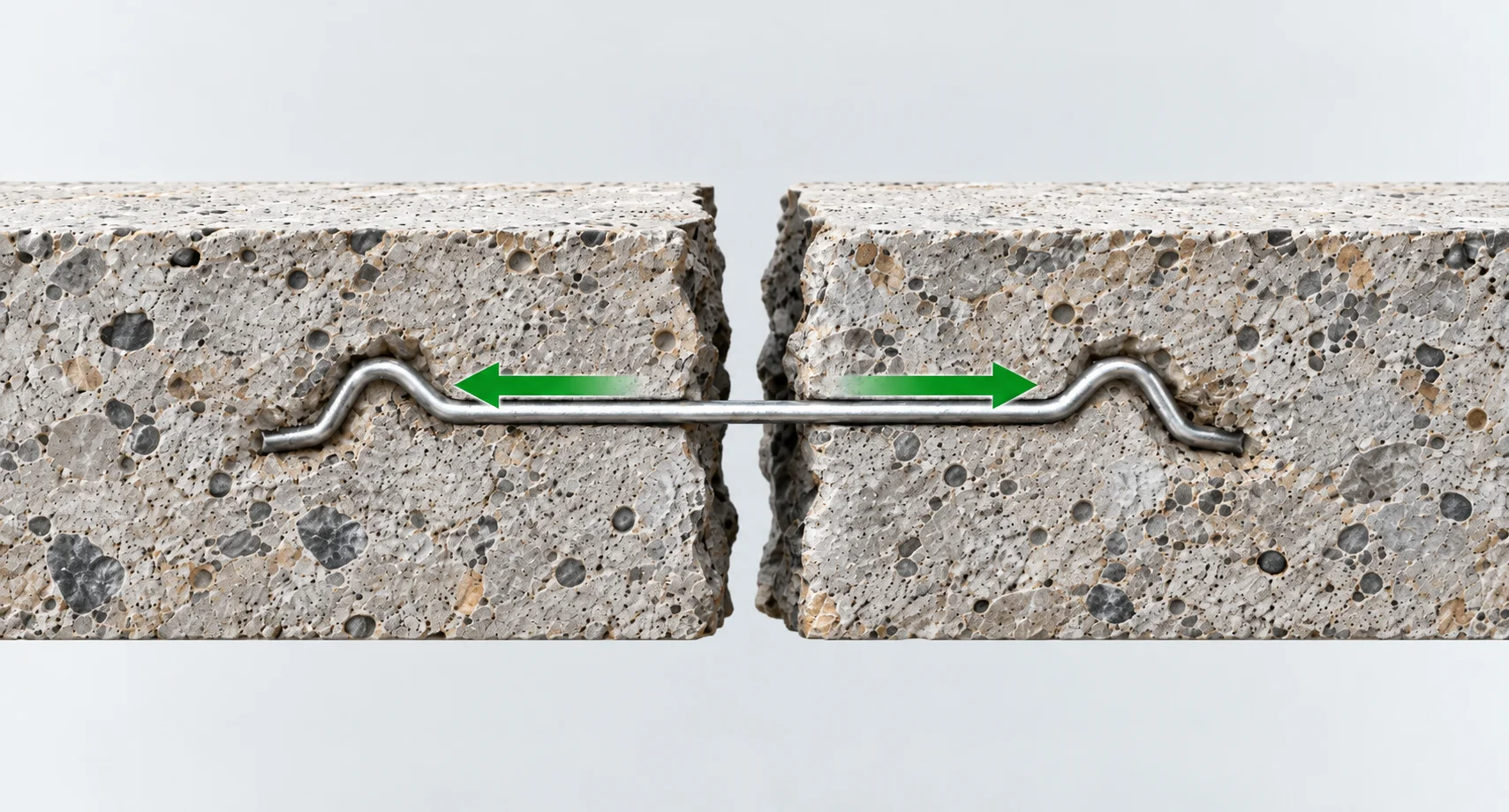
Distributed steel fibers bridge developing cracks, helping limit crack opening and maintain concrete integrity under loading.

POLYVIA Hooked End Steel Fiber features mechanically formed hooks at both ends, providing effective anchorage within the concrete matrix. Designed for steel fiber reinforced concrete (SFRC), it supports crack control, residual flexural performance and toughness in industrial floors, precast concrete, shotcrete and infrastructure applications.
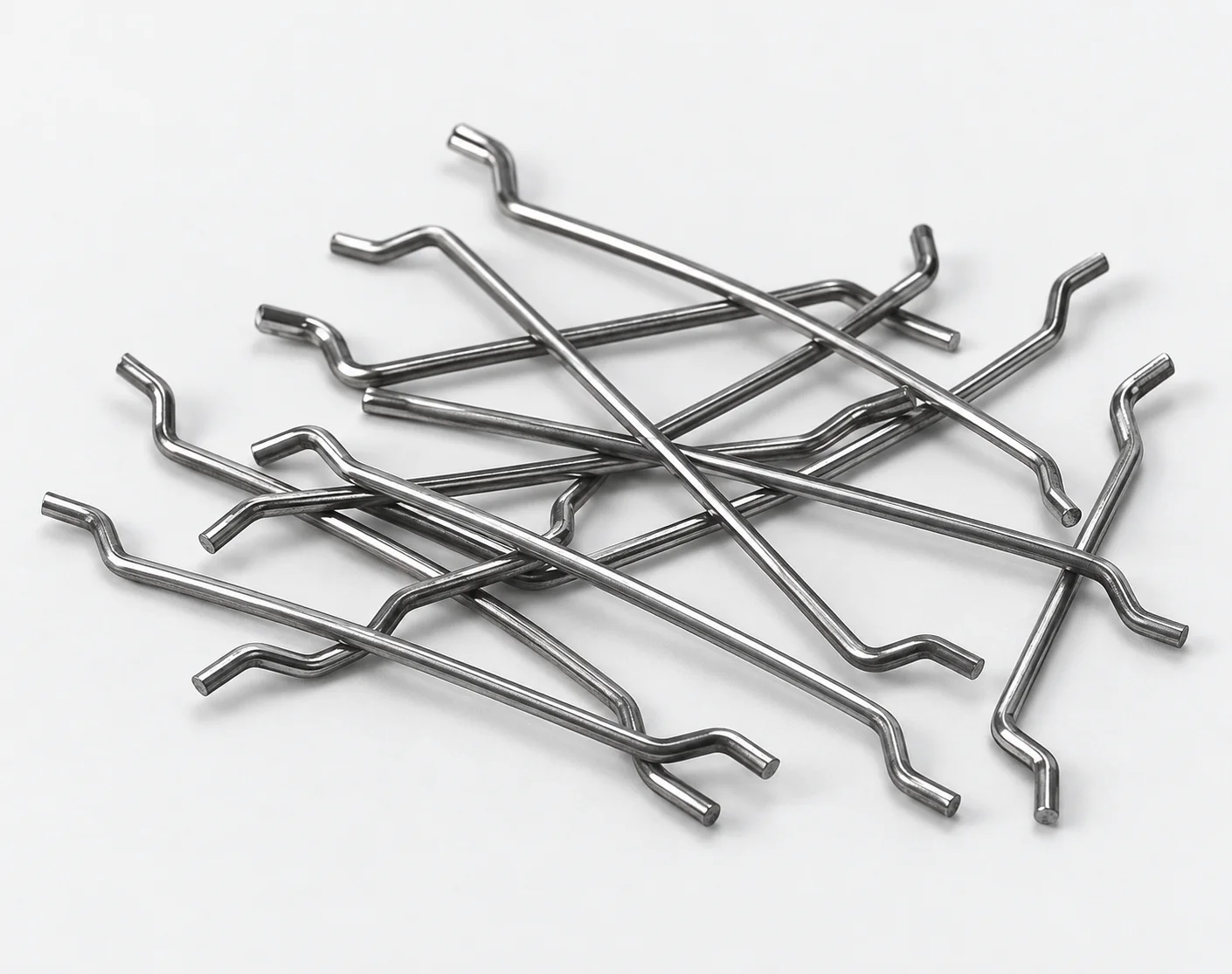
Hooked End Steel Fiber is a discrete steel reinforcement fiber manufactured with mechanically bent ends. Its hooked geometry provides additional resistance to pullout compared with straight steel fibers of otherwise similar properties.
When distributed throughout concrete, the fibers form a multidirectional reinforcement system that transfers tensile forces across cracks and helps maintain post-crack load-bearing capacity.
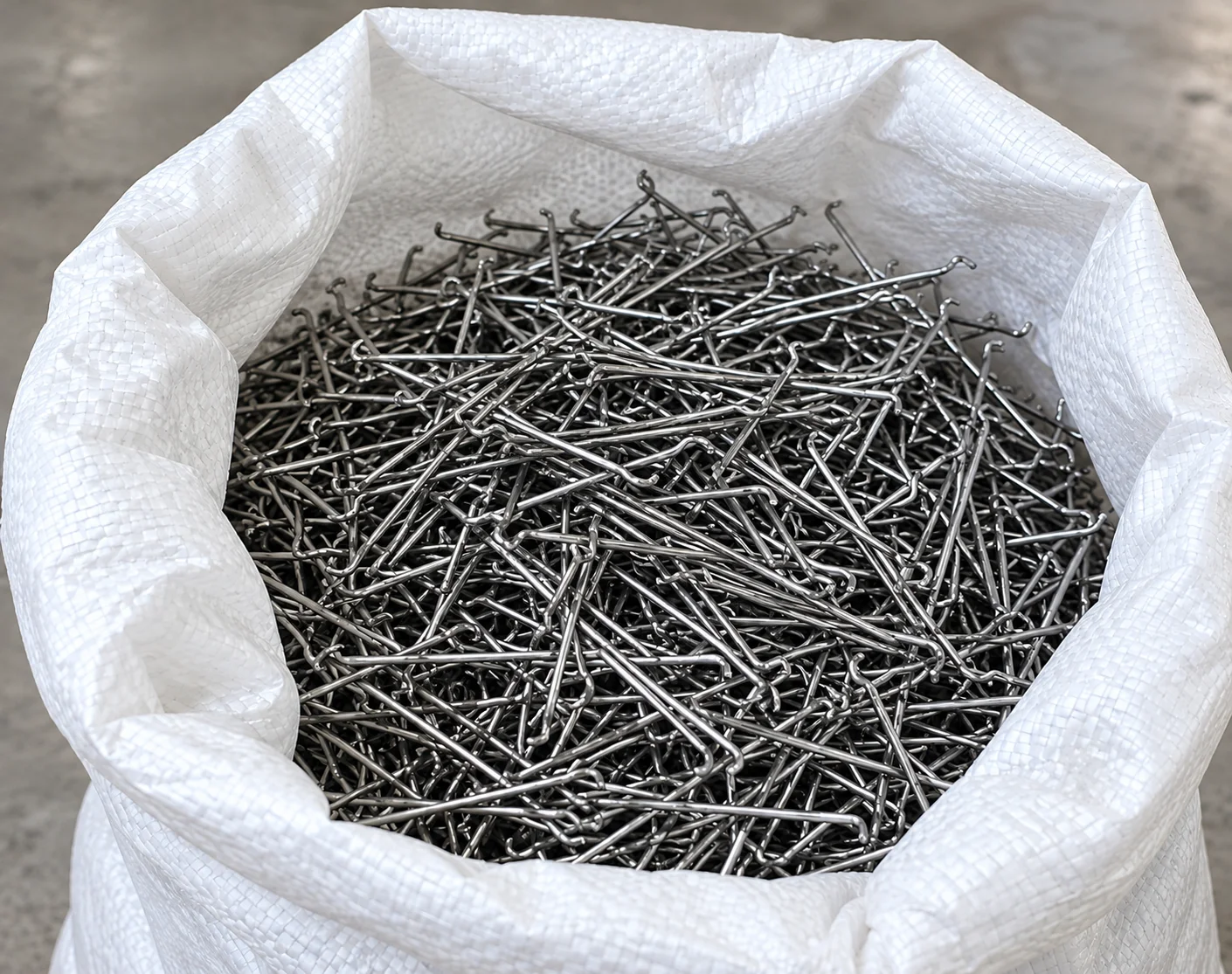
Distributed steel fibers bridge developing cracks, helping limit crack opening and maintain concrete integrity under loading.
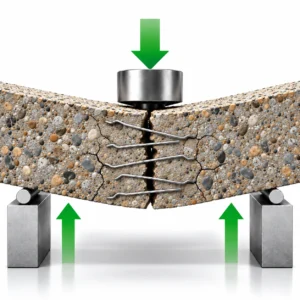
Hooked-end fibers transfer tensile forces across cracks, supporting residual load-bearing capacity after concrete matrix cracking.
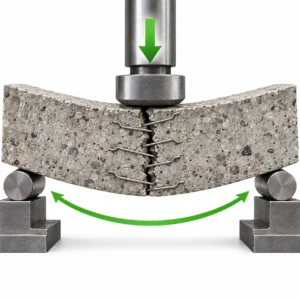
Fiber reinforcement improves post-cracking energy absorption and deformation capacity, reducing brittle failure behavior.
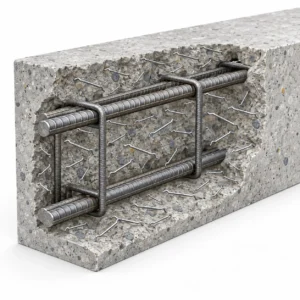
In engineered concrete applications, steel fibers can reduce conventional reinforcement requirements and simplify construction procedures.
Hooked End Steel Fiber reinforces cracked concrete through four interconnected mechanisms, combining fiber bridging, mechanical anchorage and progressive pullout resistance.
Fibers crossing developing cracks transfer tensile forces across the crack plane, helping restrain crack opening.
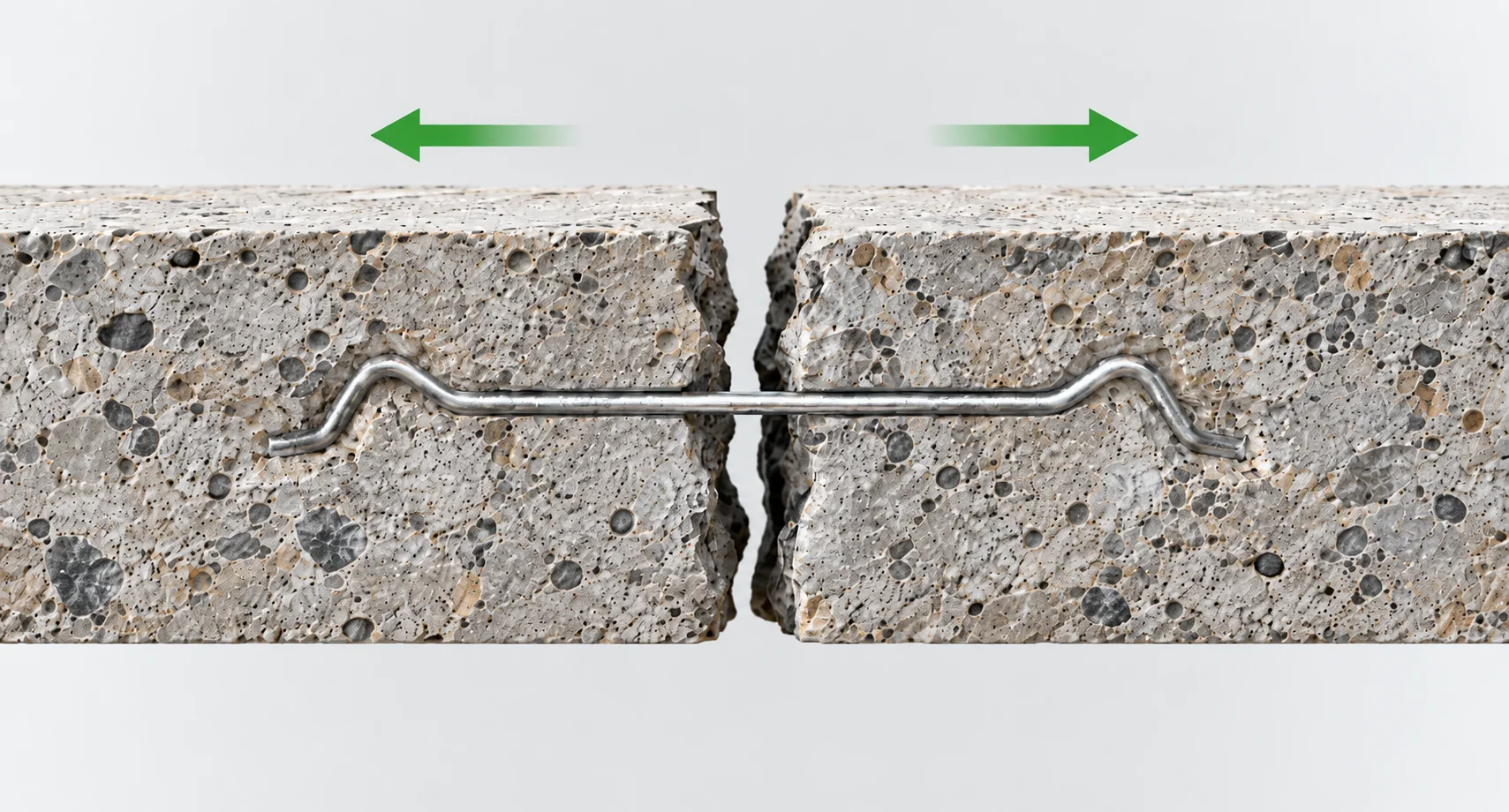
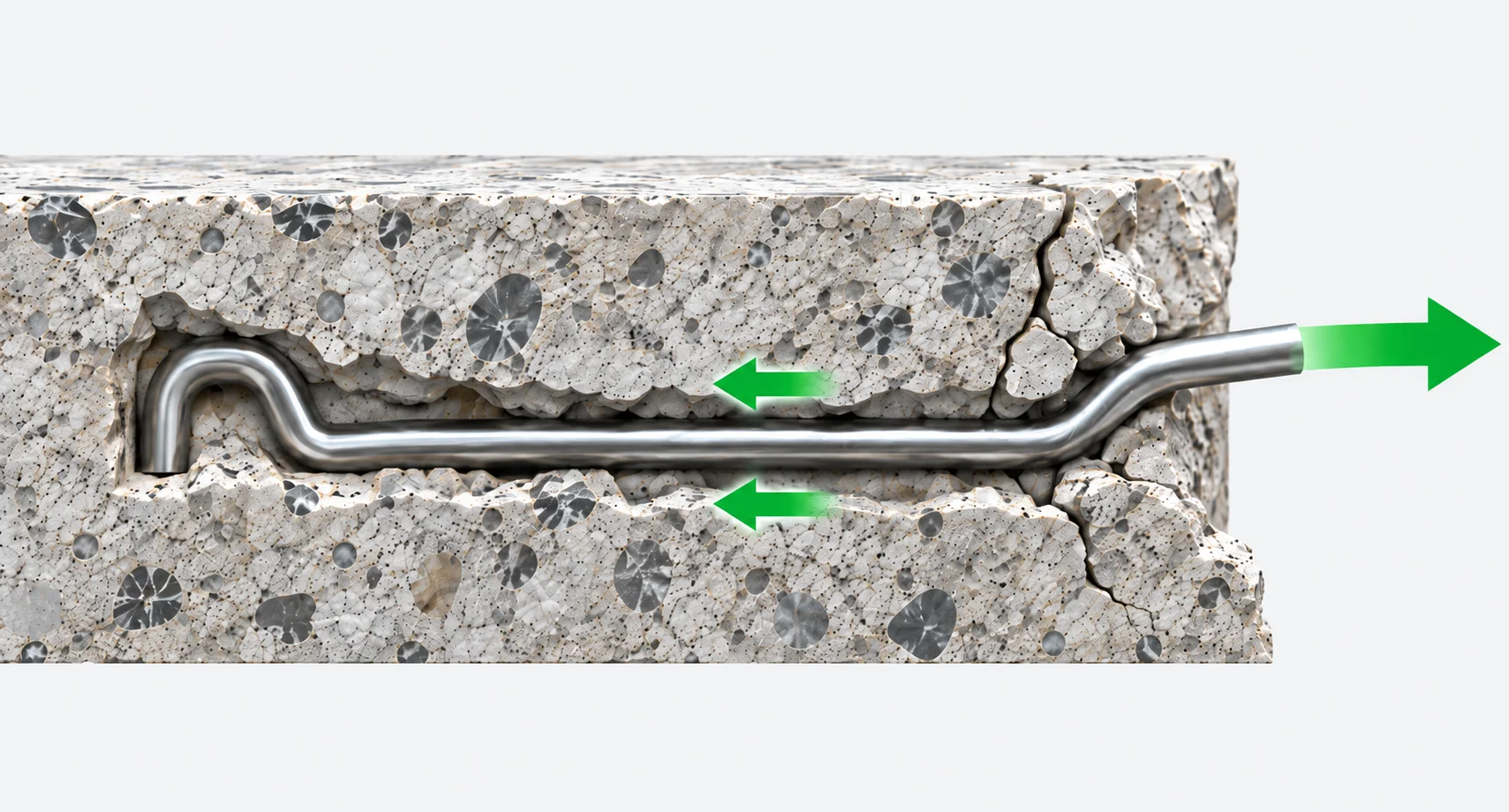
Bent fiber ends provide mechanical anchorage within the concrete matrix, increasing resistance to fiber pullout.
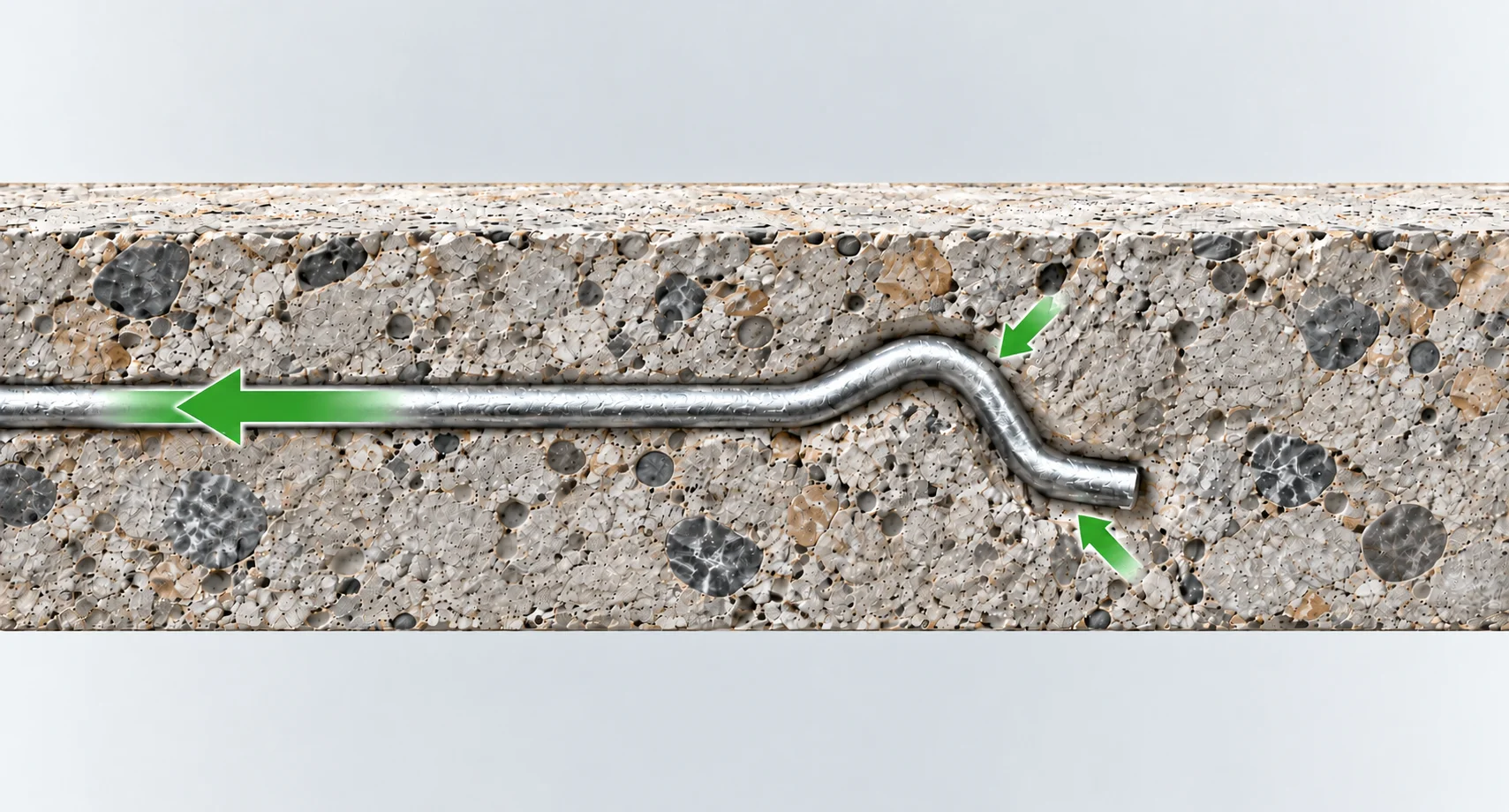
Bridging fibers continue transferring tensile forces after matrix cracking, contributing to residual flexural strength.
Progressive fiber debonding, frictional sliding and hook deformation dissipate energy during crack opening and fiber pullout.
POLYVIA offers multiple Hooked End Steel Fiber grades with different lengths, diameters and aspect ratios. These specifications support product selection for concrete reinforcement systems with varying structural and production requirements.
| Model | Diameter (mm) | Length (mm) | Aspect Ratio | Tensile Strength (MPa) |
|---|---|---|---|---|
| P-50/50 | 1.00 | 50 | 50 | ≥1000 |
| P-65/60 | 0.92 | 50 | 65 | ≥1000 |
| P-55/50 | 0.90 | 50 | 55 | ≥1000 |
| P-80/60 | 0.75 | 60 | 80 | ≥1000 |
| P-65/50 | 0.77 | 50 | 65 | ≥1000 |
| P-45/35 | 0.77 | 35 | 45 | ≥1000 |
| P-55/30 | 0.54 | 30 | 55 | ≥1000 |
| P-60/30 | 0.50 | 30 | 60 | ≥1000 |
| P-50/25 | 0.50 | 25 | 50 | ≥1000 |
| P-60/25 | 0.40 | 25 | 50 | ≥1000 |
The appropriate fiber grade depends on the required concrete performance and production conditions. Longer fibers and higher aspect ratios are not automatically better; their reinforcement benefits must be balanced against workability, dispersion and placement requirements.
| Fiber Length | Available Models | New Column |
|---|---|---|
| 25–30 mm | P-50/25, P-60/25, P-55/30, P-60/30 | Evaluate for applications with restricted section dimensions or demanding fiber distribution conditions. |
| 35–50 mm | P-45/35, P-50/50, P-55/50, P-65/50, P-65/60 | Evaluate where crack-bridging requirements must be balanced with concrete handling and placement. |
| 60 mm | P-80/60 | Consider for mixes accommodating longer fibers and requiring appropriately verified residual performance. |
For highly congested or narrow concrete sections: Assess fiber length relative to the available placement space, aggregate grading and conventional reinforcement arrangement.
For pumped or highly flowable concrete: Verify that the selected fiber geometry does not cause unacceptable workability loss, blockages or uneven distribution.
For structurally specified SFRC: Establish the fiber grade and dosage through residual flexural testing and the applicable engineering design method, rather than relying on nominal fiber dimensions alone.
Final grade selection should be confirmed through application-specific concrete trials.

Used in warehouses, logistics facilities and industrial slabs to support post-cracking performance under concentrated loads and repeated traffic.
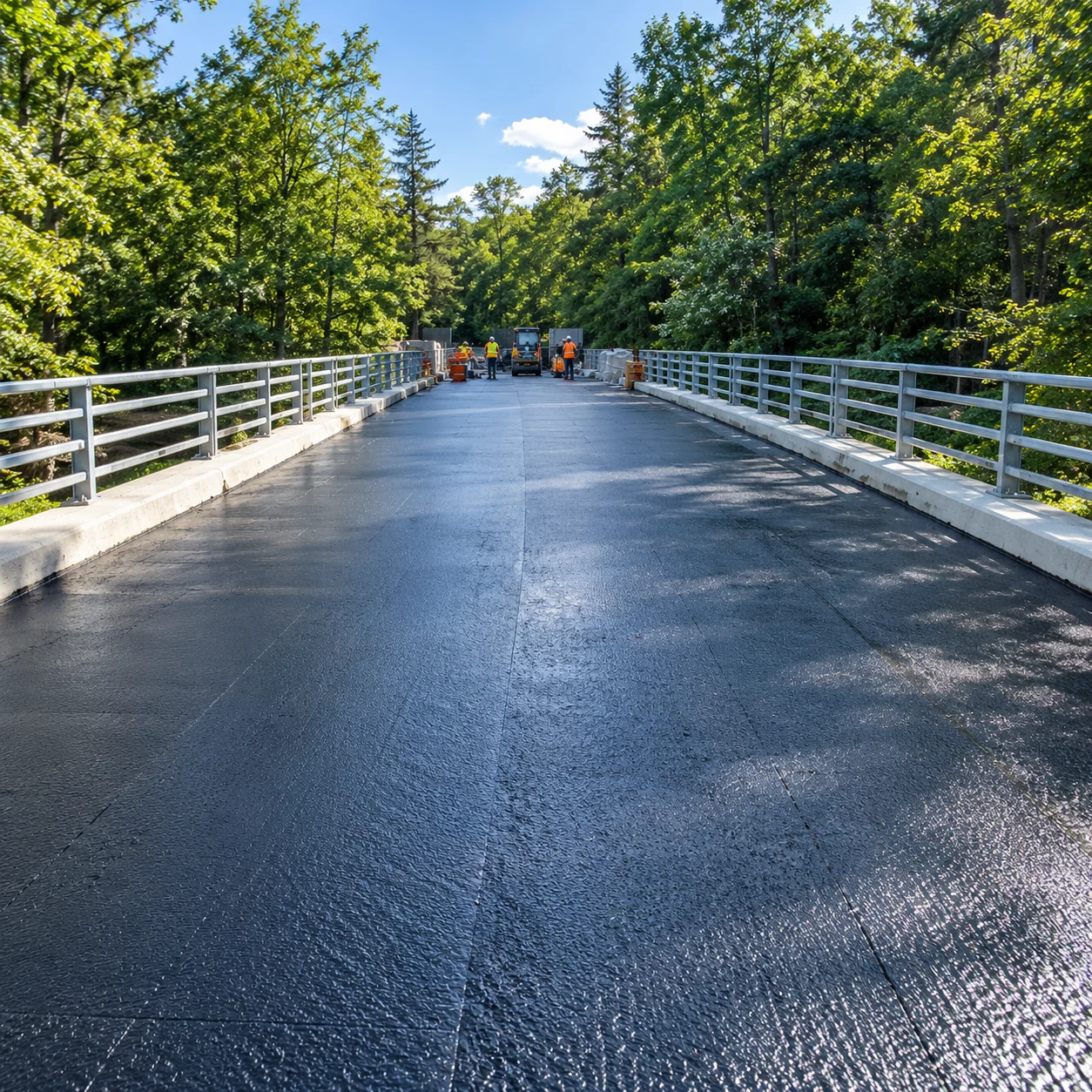
Applied in industrial yards, transport terminals and engineered pavements requiring flexural performance under repeated vehicle loading.
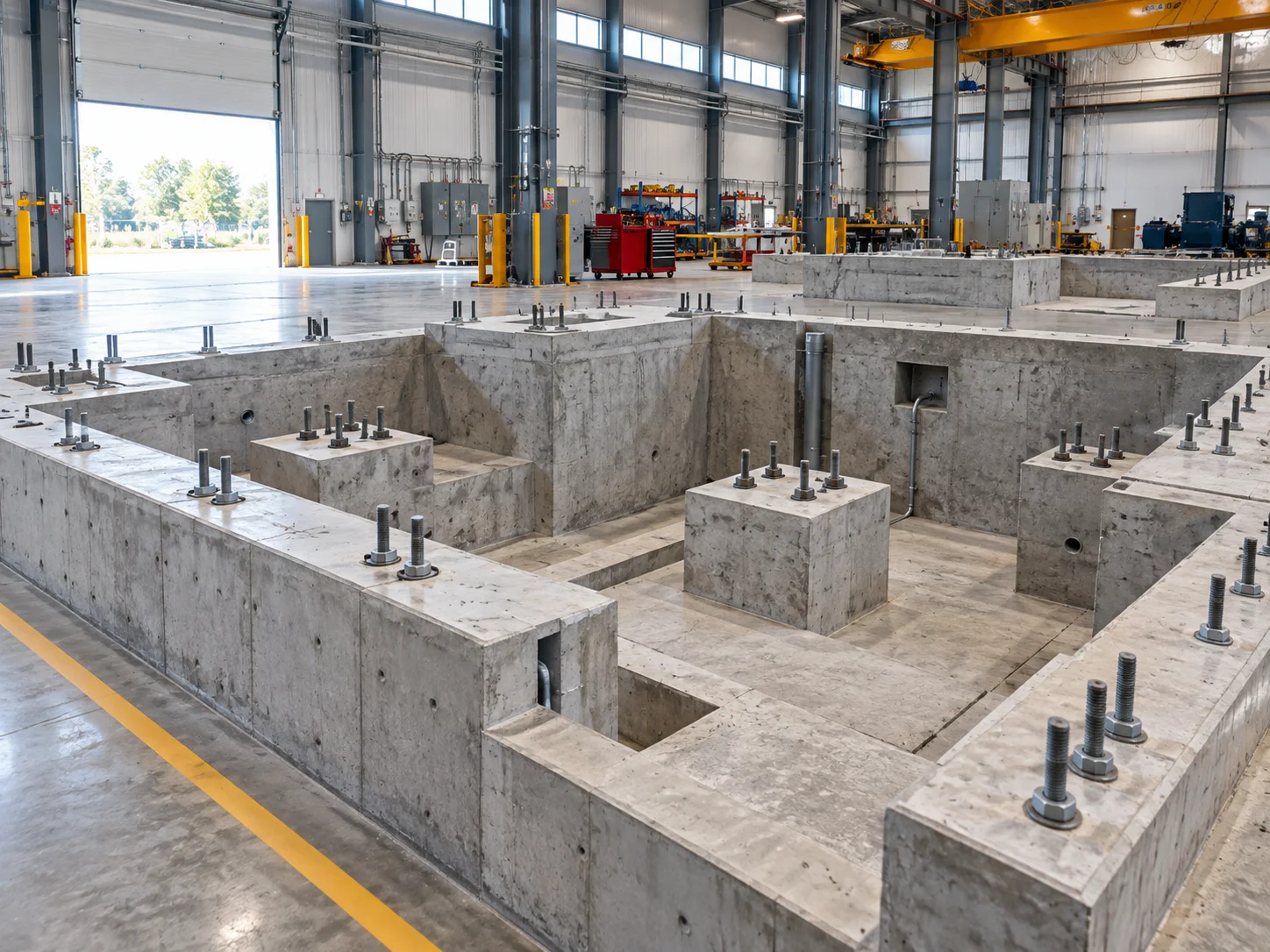
Provides supplementary crack control and post-cracking reinforcement in engineered equipment foundations subjected to localized or dynamic loading.
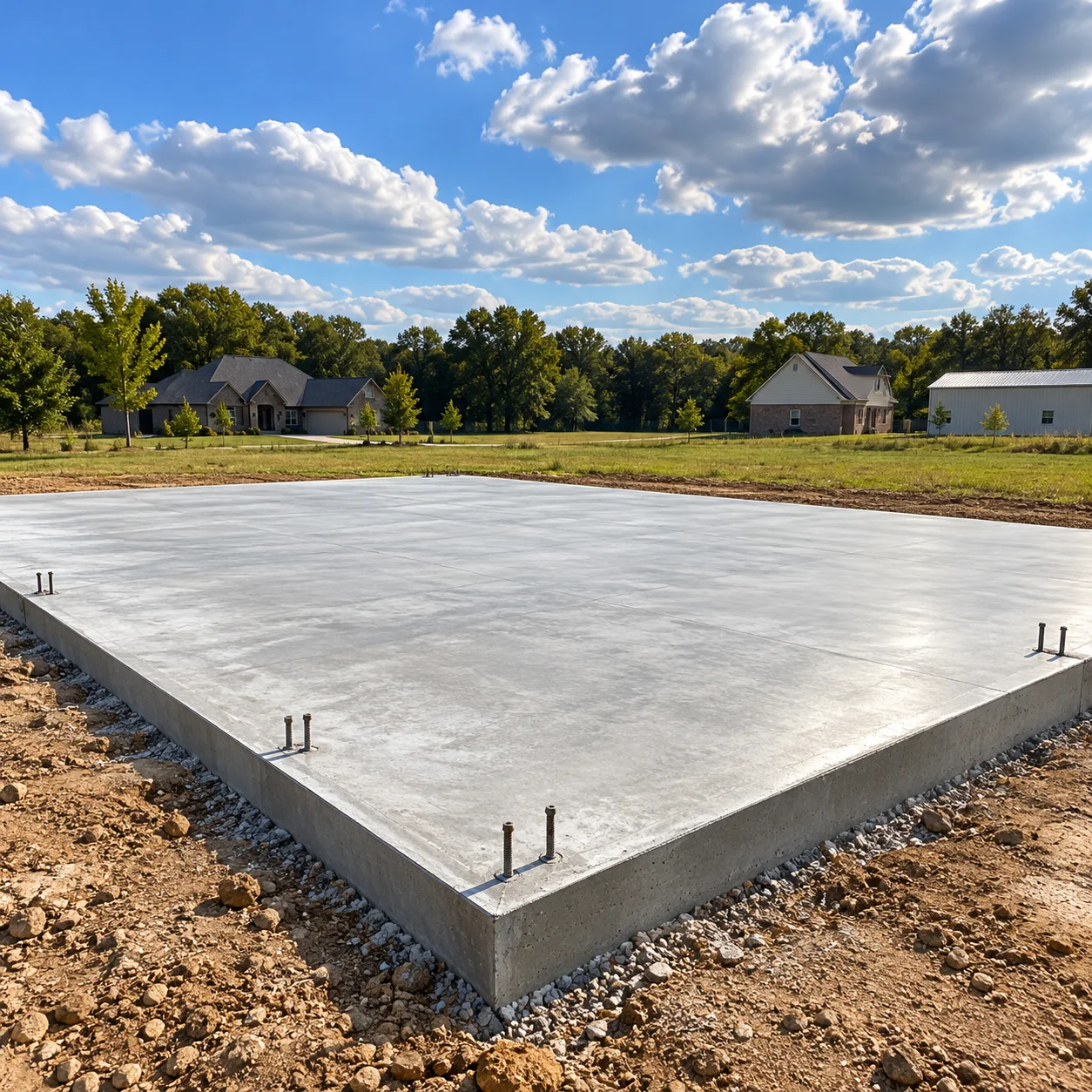
Supports crack-width control and residual load-bearing performance in suitably designed large-area slabs requiring efficient reinforcement arrangements.
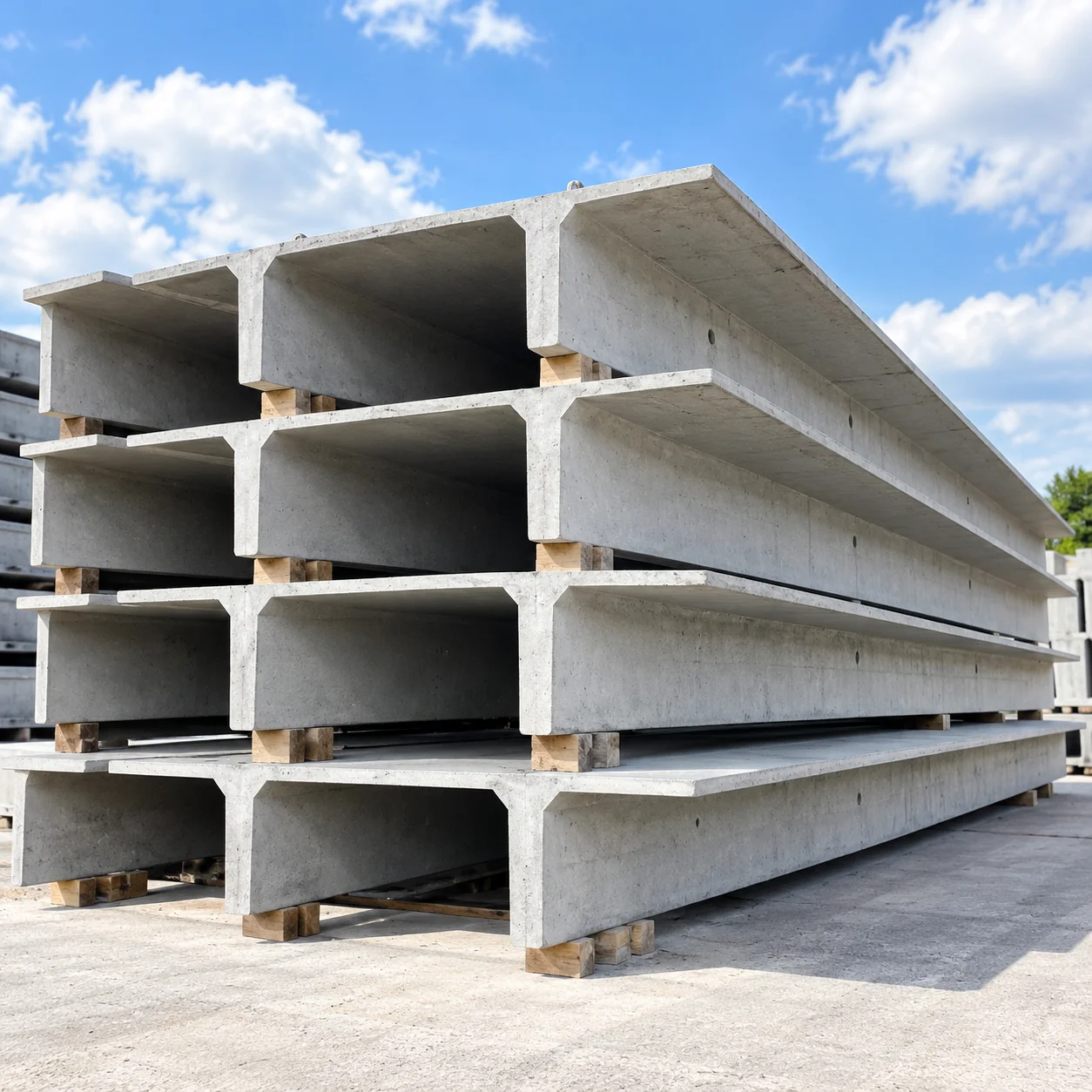
Incorporated into engineered precast panels, beams and components to support crack control and specified residual flexural performance.
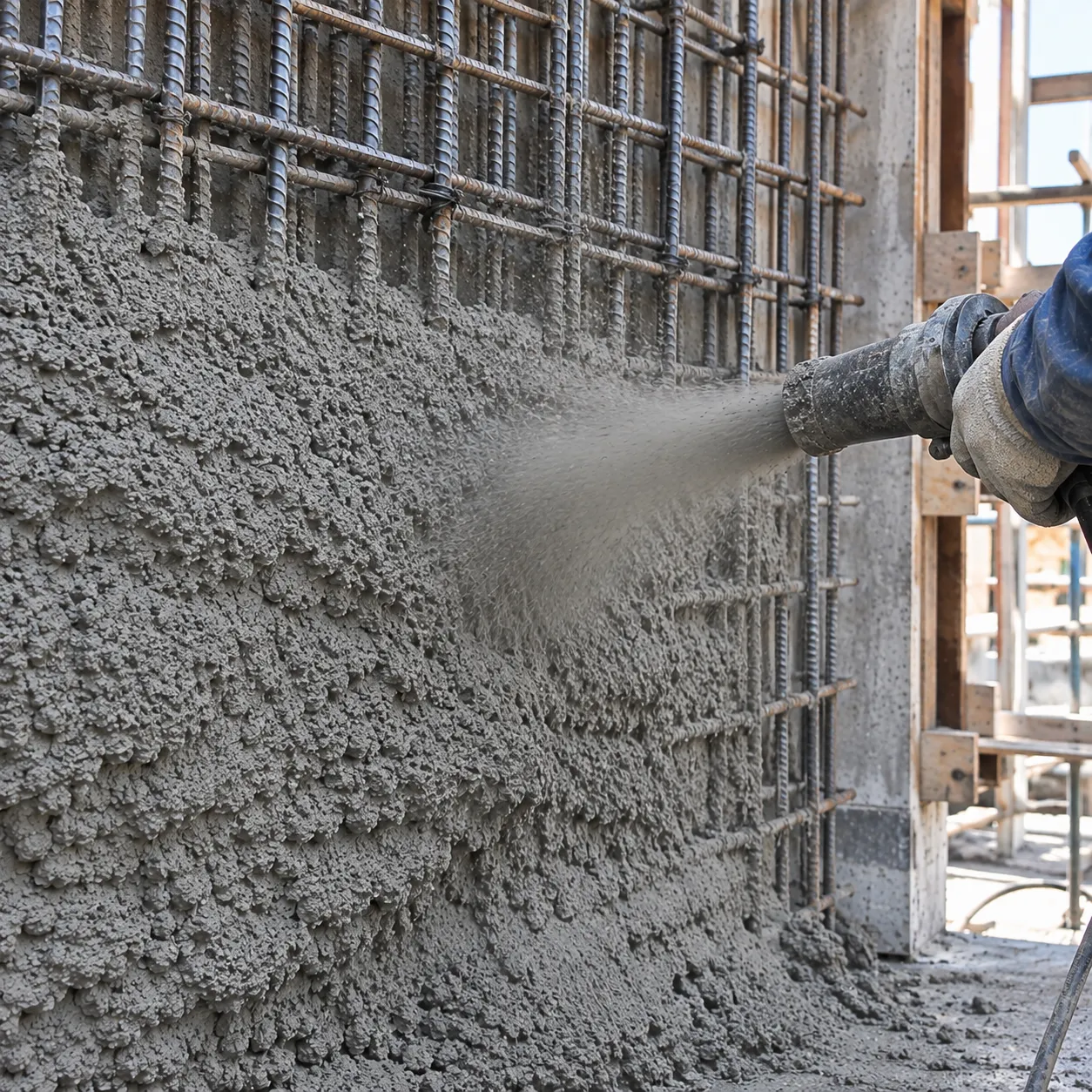
Used in sprayed concrete for tunnel linings and underground support systems requiring post-cracking resistance and deformation capacity.
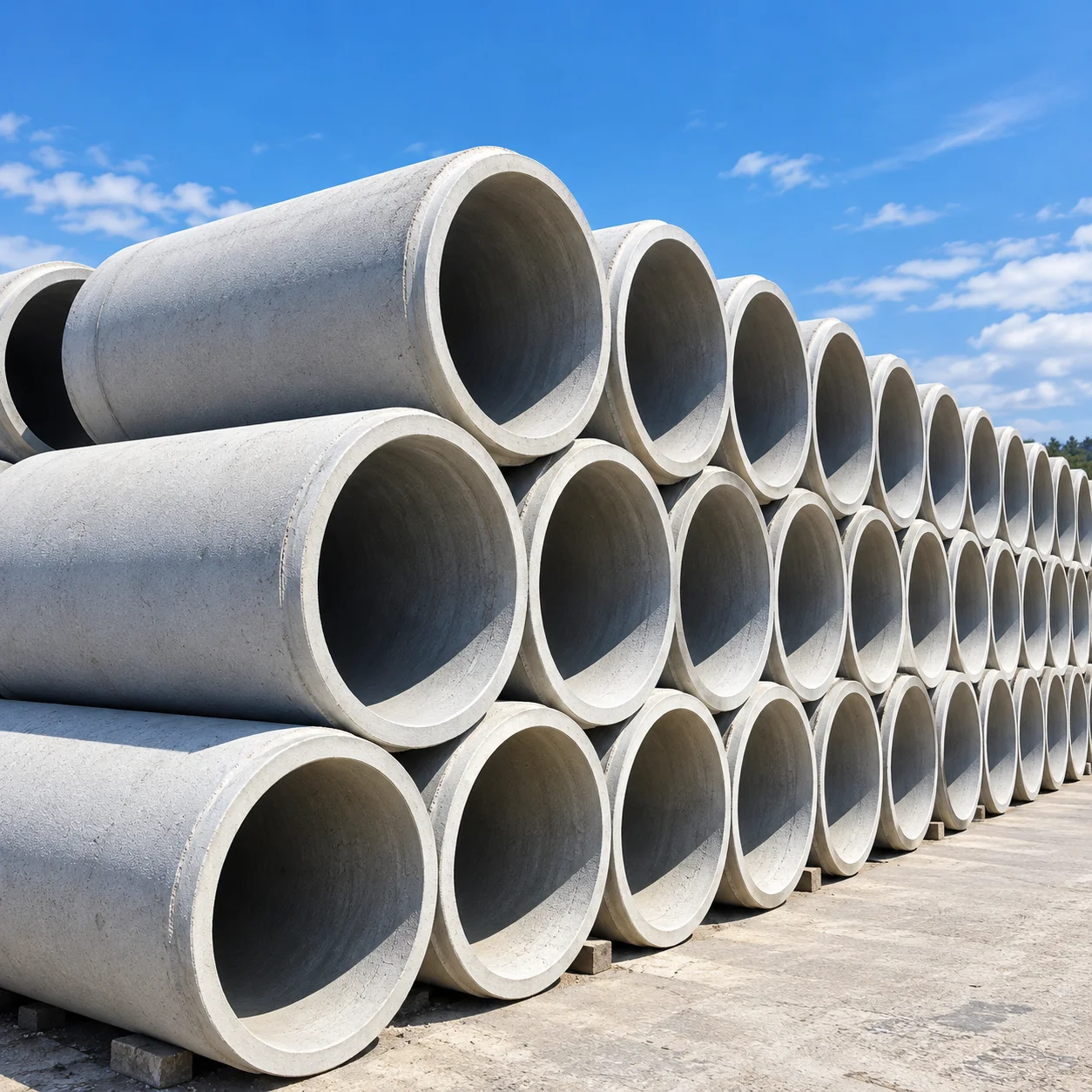
Used in qualified precast drainage pipes and culvert components where fiber reinforcement is supported by structural design and load-bearing tests.
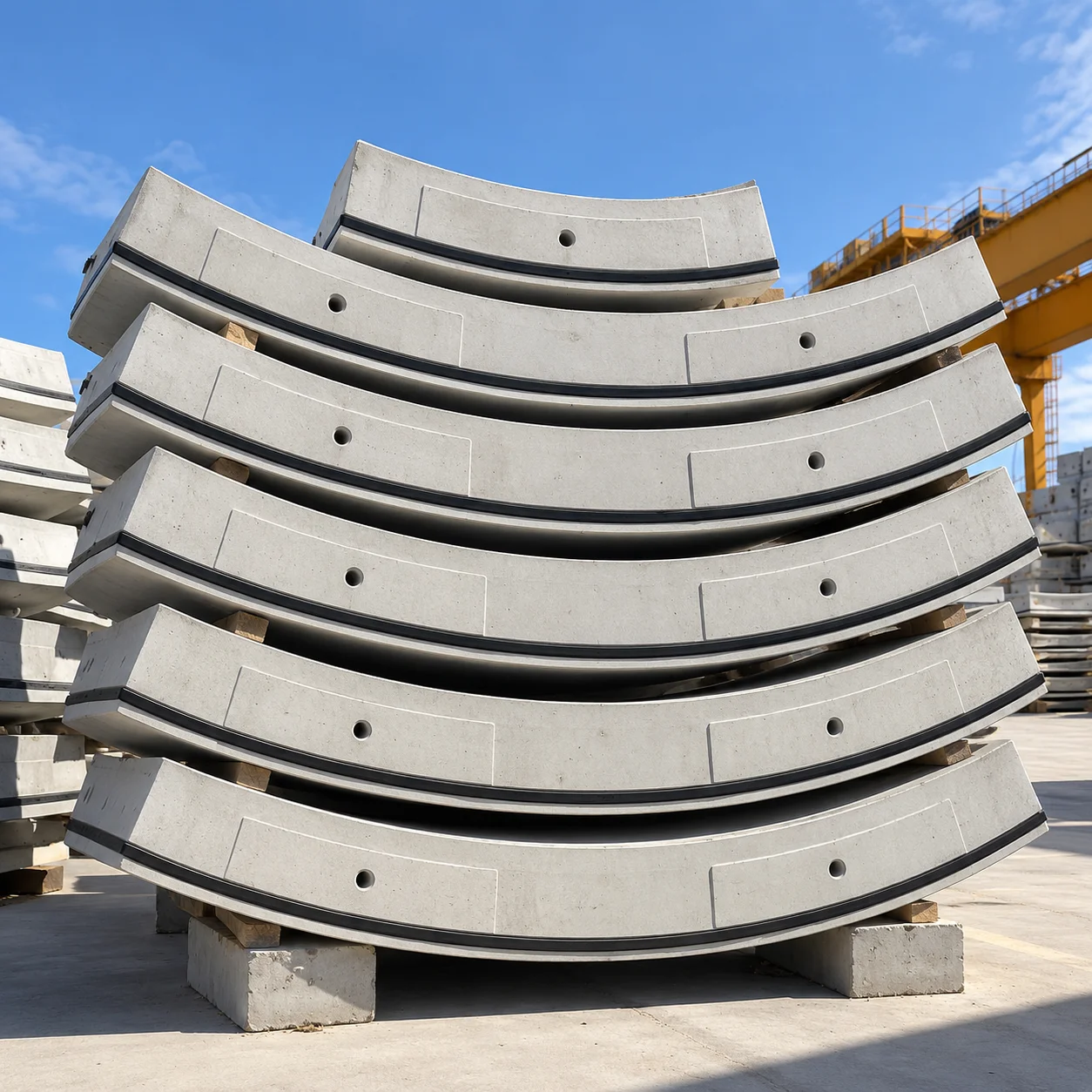
Evaluated in engineered tunnel lining segments requiring controlled crack development and verified post-cracking structural performance.
Correct fiber addition and mixing are essential for uniform reinforcement distribution. The mixing procedure should be adapted to the selected fiber grade, concrete composition and batching equipment.
RECOMMENDED REFERENCE DOSAGE
Of concrete volume. Final dosage is subject to the required concrete performance and project-specific verification.
| Step | Procedure | Key Control Point |
|---|---|---|
| 01 — Material Preparation | Prepare aggregates, cement, water, admixtures and steel fibers according to the approved mix design. | Accurate proportioning |
| 02 — Fiber Addition | Introduce Hooked End Steel Fiber gradually during mixing. | Controlled feeding |
| 03 — Uniform Mixing | Continue mixing until the fibers are evenly dispersed without visible clumping. | Fiber distribution |
| 04 — Workability Check | Evaluate concrete consistency and adjust the approved mix or admixture system if necessary. | Placement workability |
| 05 — Placement & Compaction | Place, compact and finish the concrete using appropriate construction procedures. | Proper consolidation |
01 — Prevent Fiber Balling
Add steel fibers at a controlled rate and maintain adequate mixing to prevent clumping and uneven distribution.
02 — Maintain Concrete Workability
Evaluate the effects of fiber dosage, aspect ratio and aggregate grading on concrete consistency and placement.
03 — Control Water Addition
Avoid uncontrolled water addition that could increase the water-to-binder ratio and compromise concrete performance.
04 — Evaluate PCE Compatibility
Compatible PCE superplasticizers may improve workability without additional mixing water. Verify compatibility through concrete trials.
05 — Verify Residual Performance
Where residual flexural strength is specified, validate fiber dosage and concrete performance using applicable test methods, such as ASTM C1609 or EN 14651.
Standard Packaging: 25 kg/carton or bag, Pallet Loading: 1,500–2,000 kg/pallet
Store in a dry, covered area on stable pallets. Keep packaging sealed until use and protect fibers from moisture, corrosion and contamination
POLYVIA supports customers with Hooked End Steel Fiber grade selection, dosage evaluation, mixing guidance and residual flexural performance assessment.

Fiber dimensions, mechanical properties and technical specifications.
Download ↓
Safe handling, storage and occupational safety guidance.
Download ↓
Grade selection, recommended dosage and concrete mixing guidance.
Download ↓Batch-specific quality inspection and conformity information.
Request COA ↓The recommended reference dosage is 15–25 kg/m³ of concrete. Final dosage should be established according to concrete mix design, required residual strength and project specifications.
Hooked-end fibers generally provide greater pullout resistance and post-cracking anchorage than comparable straight fibers. The better choice depends on concrete performance requirements, fiber geometry and cost considerations.
Select the appropriate P-series grade based on fiber length, diameter, aspect ratio, concrete workability and required residual strength. Trial testing is recommended.
Add fibers gradually, maintain suitable concrete workability and allow sufficient mixing time. Avoid adding large quantities into one mixing zone.
Yes. Compatible PCE superplasticizers can help maintain concrete workability without unnecessary water addition. Verify compatibility through concrete trials.
Steel fibers generally complement conventional reinforcement. Partial replacement may be permitted in specific engineered applications, subject to structural design, applicable standards and performance verification.
Standard packaging is 25 kg per carton or bag, with typical pallet loading of 1,500–2,000 kg. Confirm packaging availability and shipment arrangements before ordering.
Check fiber dimensions, tensile strength and conformity with applicable specifications. Where structural performance is required, verify concrete residual flexural strength through appropriate testing, such as ASTM C1609 or EN 14651.
Our technical team can help you select the suitable Hooked End Steel Fiber grade, evaluate dosage requirements and provide specifications based on your concrete application.