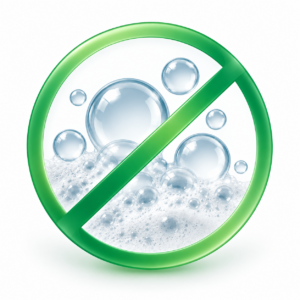
Excessive Foam
Foam generated during mixing may be stabilized by surfactants and polymers, making rapid collapse more difficult.
Recommended:
Fast Foam Control

POLYVIA™ Powder Defoamer is a free-flowing dry additive engineered to control unwanted foam and entrained air in cementitious and gypsum-based formulations.
Designed for self-leveling compounds, grouts, repair mortars, tile adhesives and other dry-mix systems, it provides a controlled balance of defoaming efficiency, air release, formulation compatibility and surface quality.
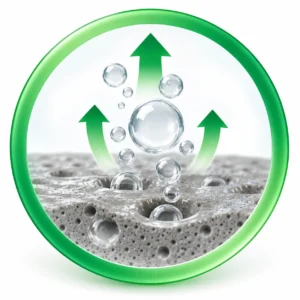
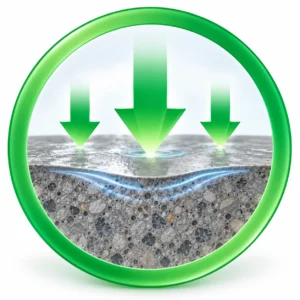
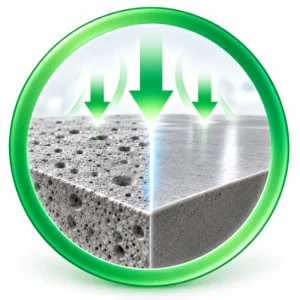
Powder defoamer is a dry-form additive used to manage unwanted air in cementitious, gypsum-based and polymer-modified formulations.
It can be added directly during dry blending and becomes active after water addition, making it well suited for dry-mix mortar and other premixed construction materials.
Powder defoamer performance is not only about removing visible foam. Effective air control also requires managing residual micro-air, wet density and surface quality within the fresh mortar system
Foam generated during mixing may be stabilized by surfactants and polymers, making rapid collapse more difficult.
Fine air bubbles may remain trapped in fresh mortar after visible foam disappears, increasing residual air content.
Excess unwanted air can reduce wet density and create internal voids, resulting in a less compact matrix.
Residual air near the surface can cause pinholes and craters, particularly in highly flowable mortar systems.
Technical Note: Visible foam and entrained micro-air are different air-control challenges. Effective defoaming should address both while maintaining formulation balance.
Different dry-mix systems require different levels of foam control. Select the grade according to formulation complexity, target air content, flow requirements and surface quality.
| Grade | Grade Positioning | Foam Control | Air Release | Surface Control | Recommended Systems |
|---|---|---|---|---|---|
| POLYVIA™ DF100 | General Purpose | ●●●● | ●●●● | ●●● | General Mortar / Putty / Skim Coat |
| POLYVIA™ DF200 | Balanced Performance | ●●●● | ●●●● | ●●●● | Grout / Repair Mortar / Tile Adhesive |
| POLYVIA™ DF300 | High-Performance Air Control | ●●●●● | ●●●●● | ●●●●● | Self-Leveling / Flooring / High-Flow Mortar |
Technical Note: Effective defoamer selection requires a controlled balance between foam suppression, residual air, flow behavior and surface quality. Grade and dosage should be optimized within the complete formulation under representative application conditions.
From Dry Dispersion to Controlled Air Release
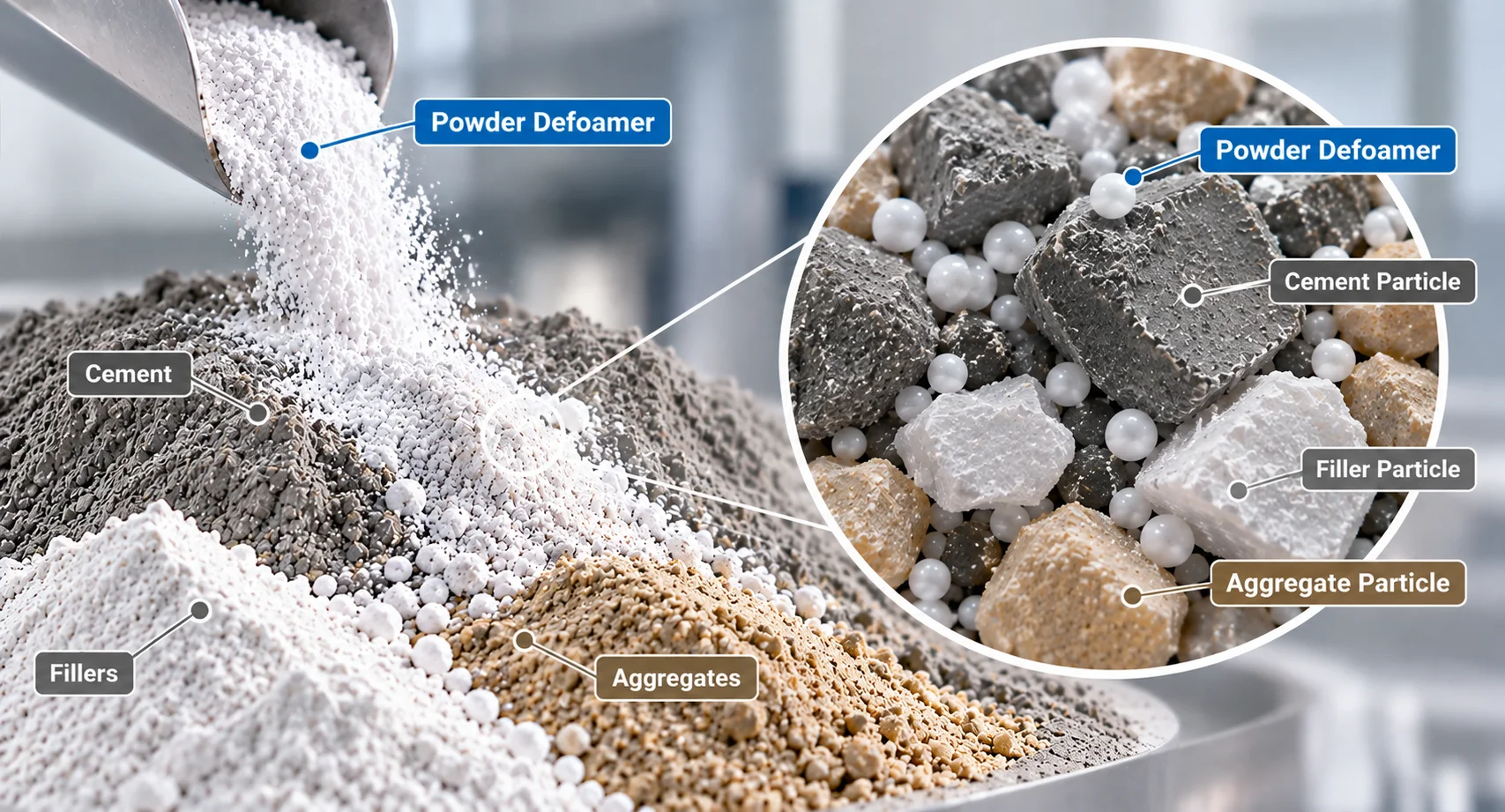
Powder defoamer disperses throughout the dry blend together with binders, fillers and other additives.
After water addition, active defoaming components interact with foam films and air–liquid interfaces during mixing.
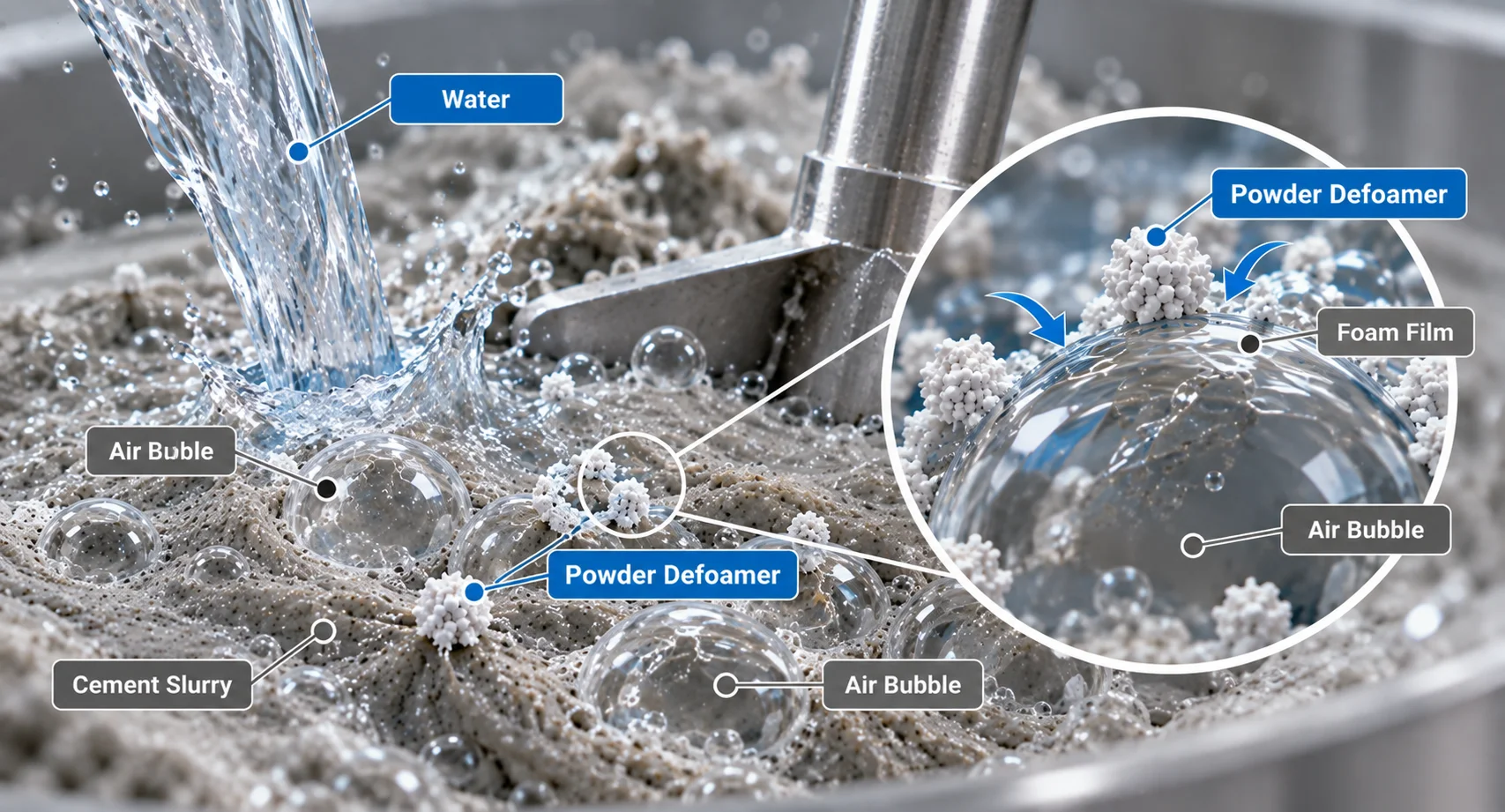
Defoaming action destabilizes persistent foam films, promoting bubble coalescence and rupture during mixing.
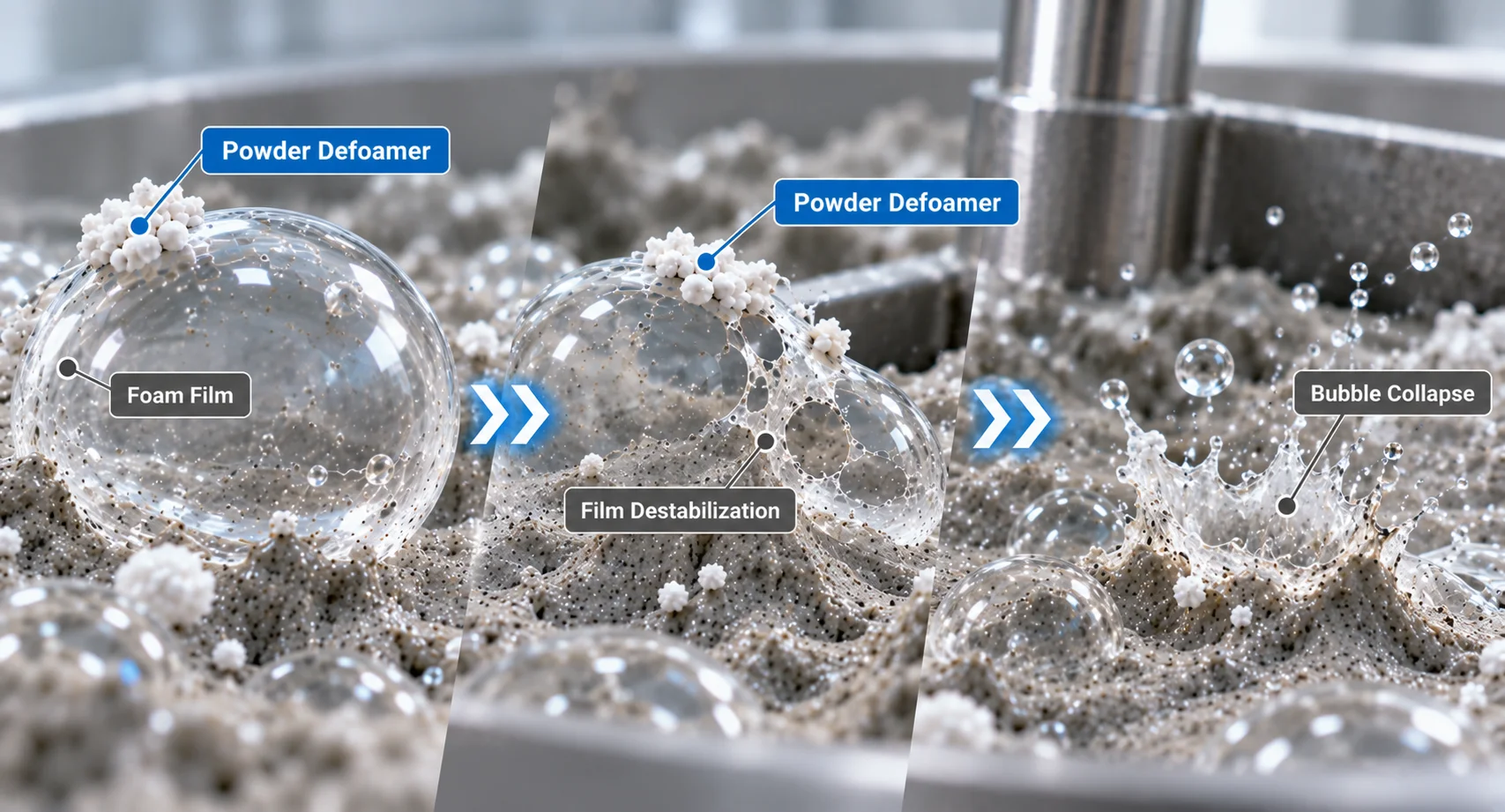
Destabilized bubbles collapse or escape from the fresh system, reducing residual air and air-related defects.
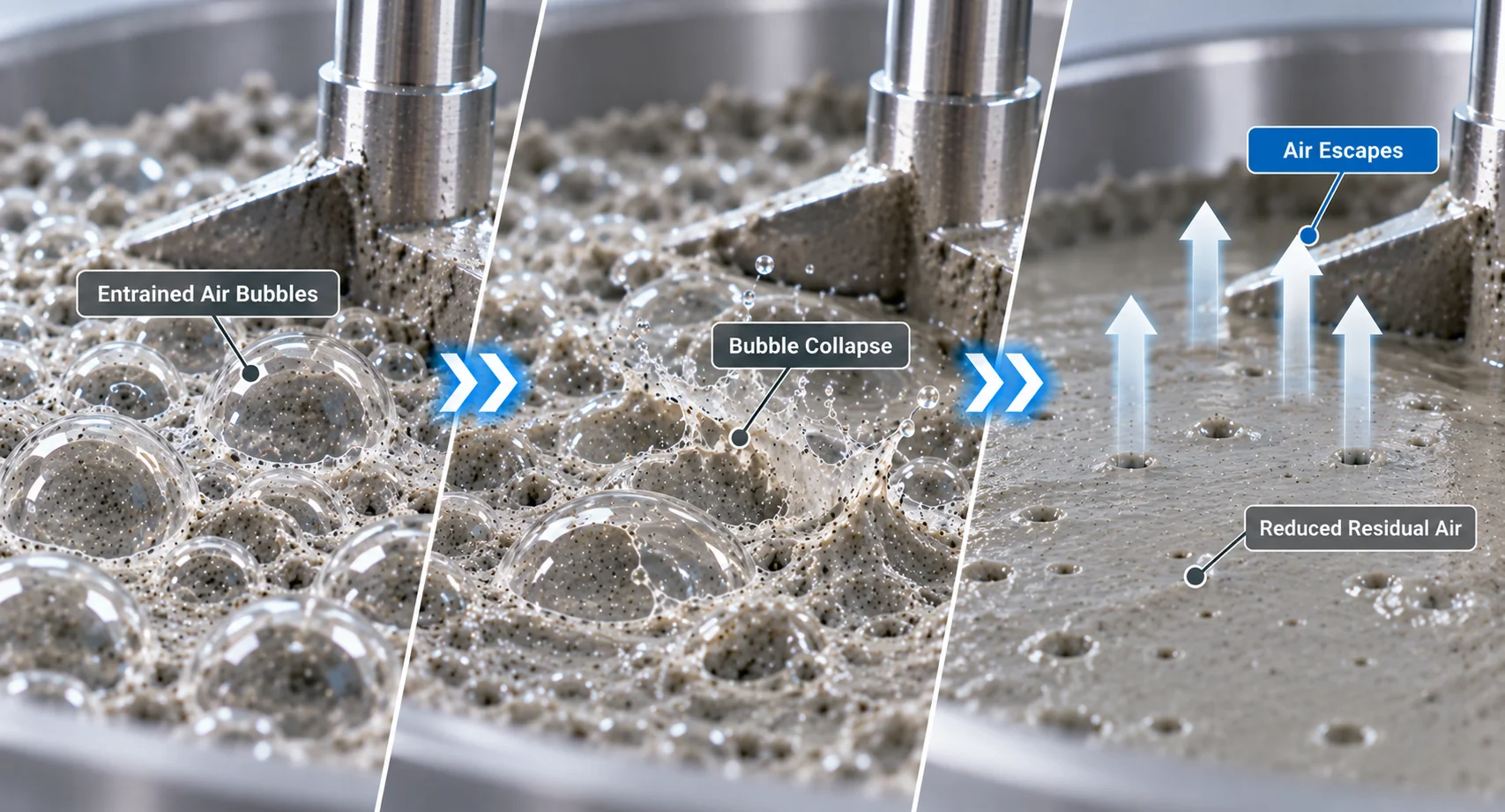
Select the appropriate grade according to required air-control efficiency, formulation characteristics and application requirements.
| Property | POLYVIA™ DF100 | POLYVIA™ DF200 | POLYVIA™ DF300 |
|---|---|---|---|
| Appearance | White Powder | White Powder | White Powder |
| Active content, % | ≥75 | ≥85 | ≥95 |
| Moisture, % | ≤5.0 | ≤5.0 | ≤5.0 |
| Recommended Dosage, % of Total Dry Mix | 0.10–0.30 | 0.10–0.30 | 0.05–0.20 |
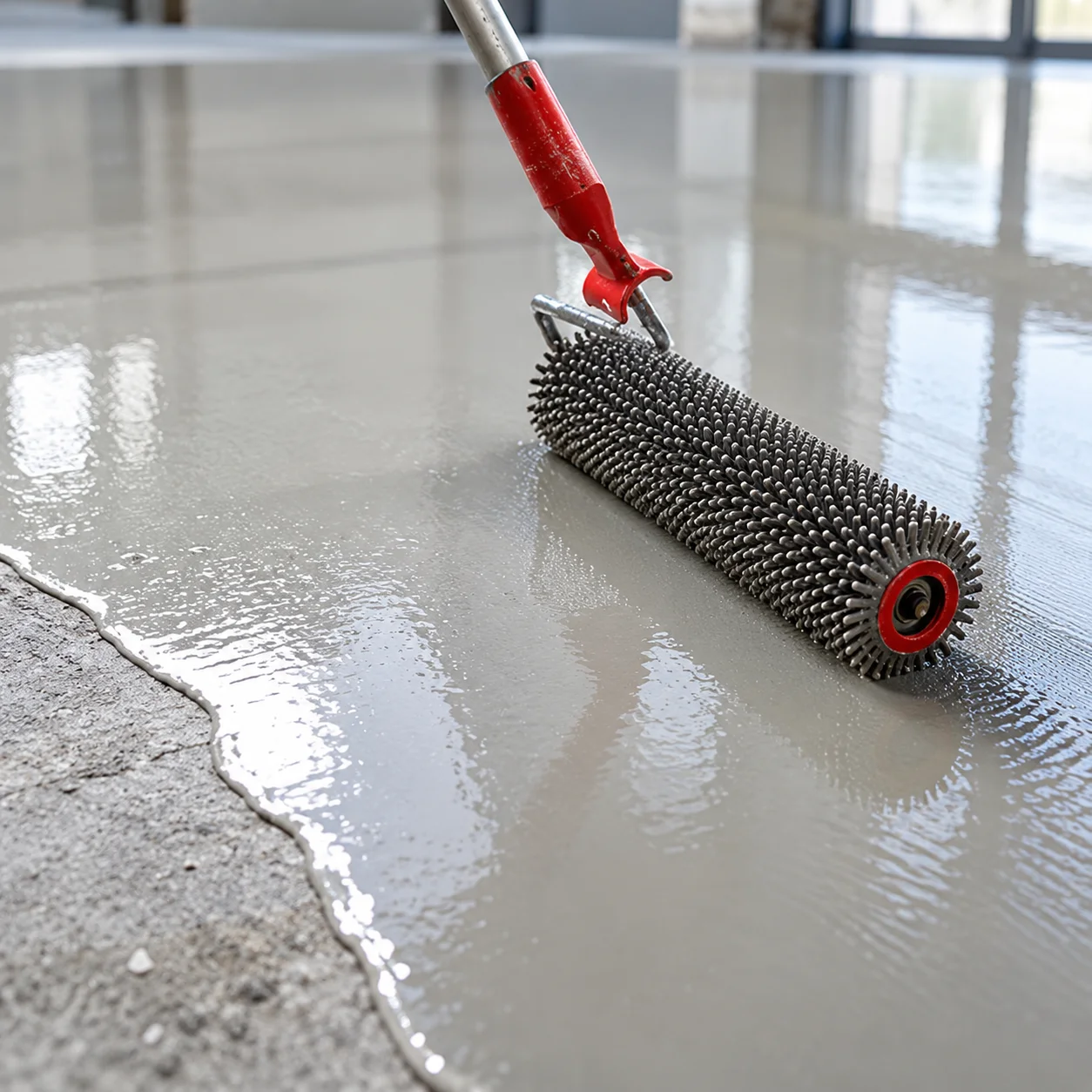
Helps control entrained air in highly flowable systems, particularly where PCE Powder is used to achieve high fluidity and low water demand.
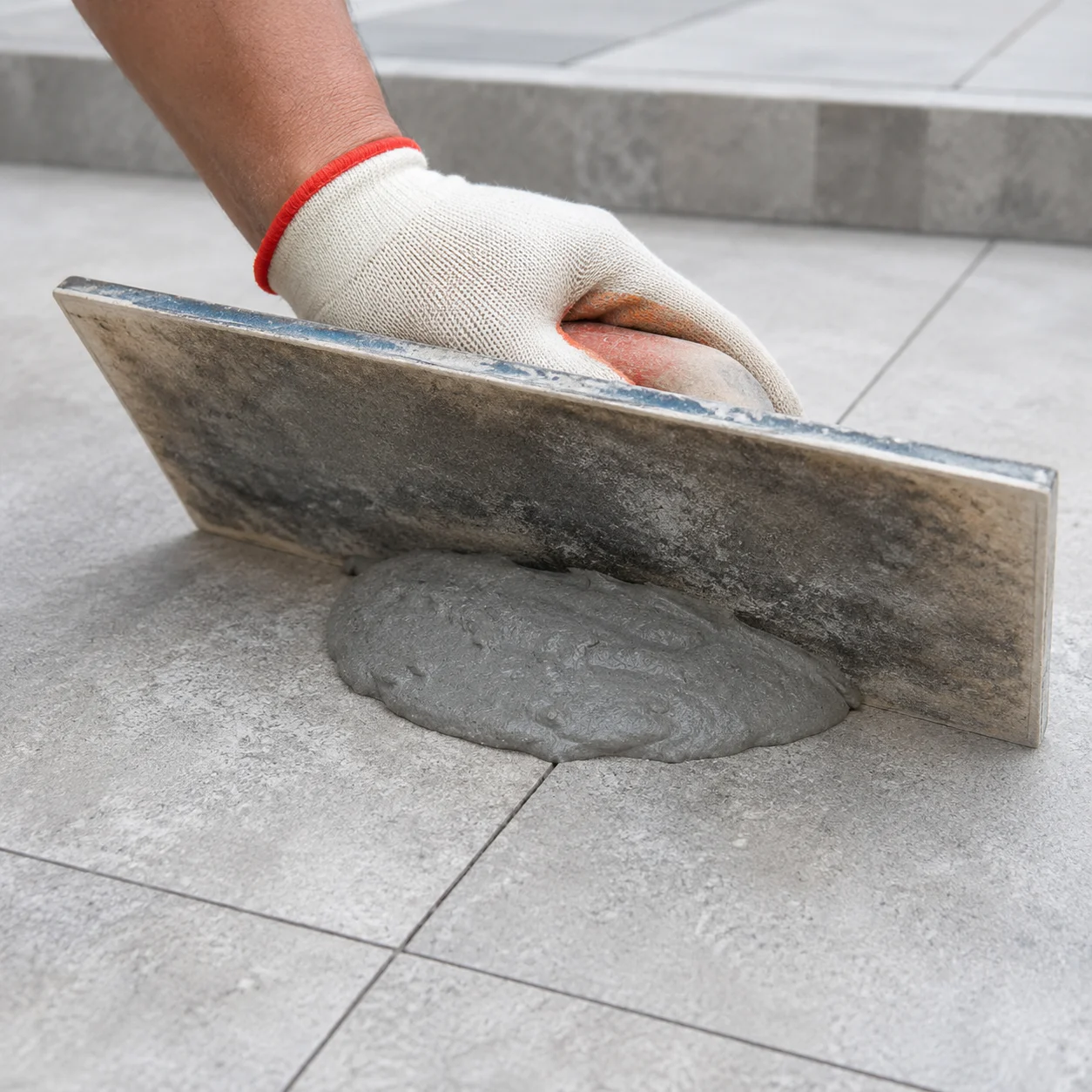
Controls unwanted air in fluid grout systems, supporting wet density and a more compact matrix.
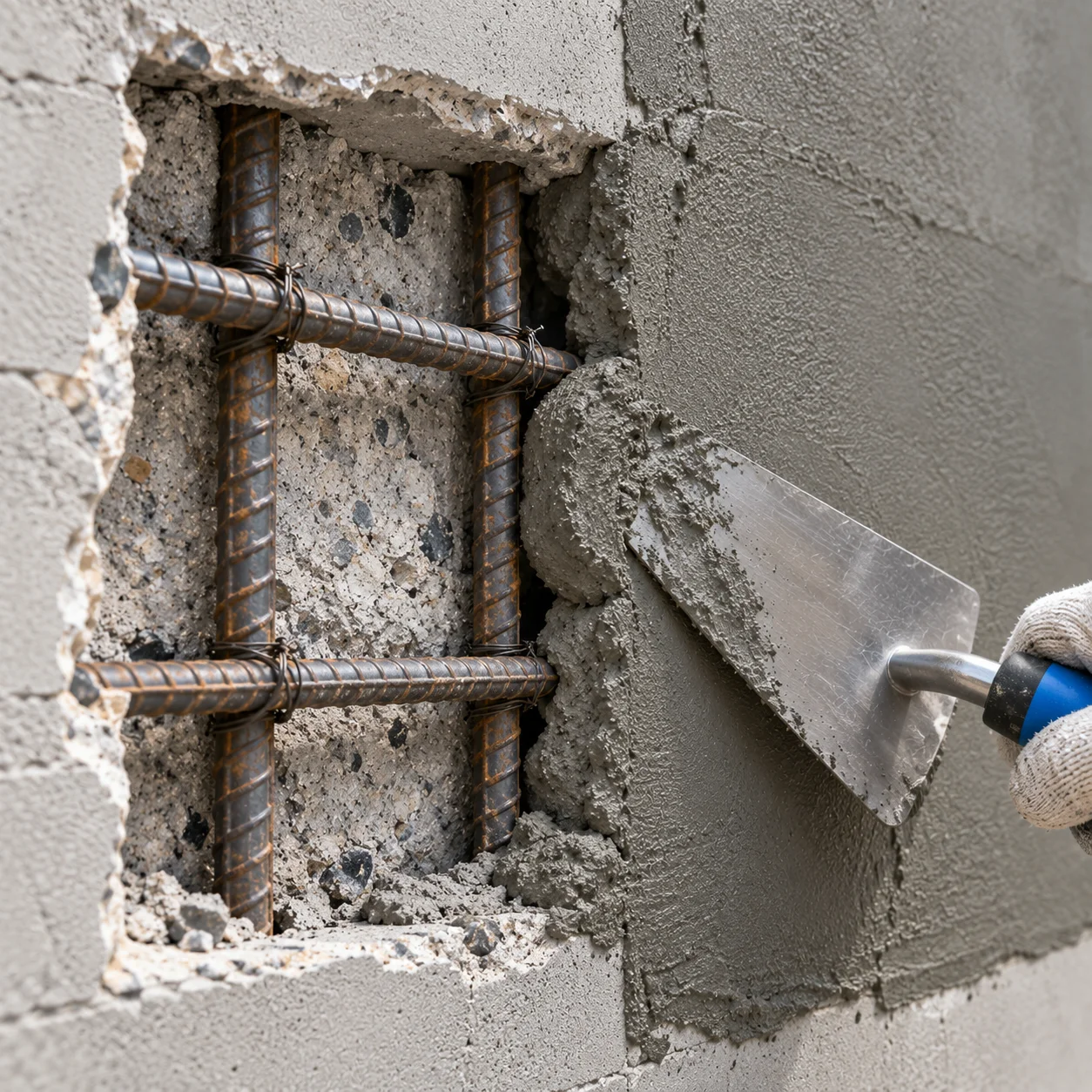
Reduces unwanted air during mixing, helping limit internal voids and improve finished surface quality.
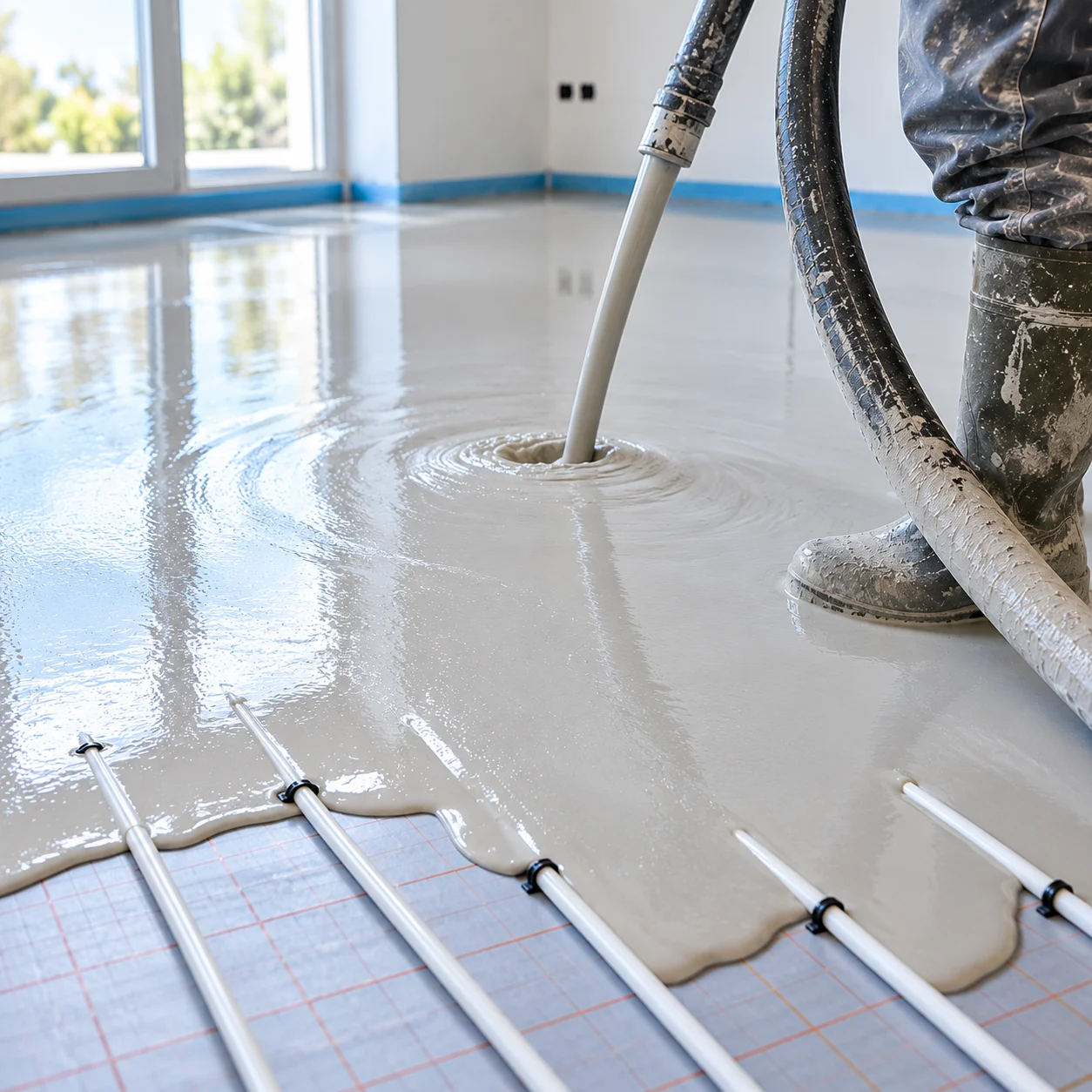
Controls unwanted air in cementitious screed formulations, supporting a more compact matrix and consistent finished surfaces.
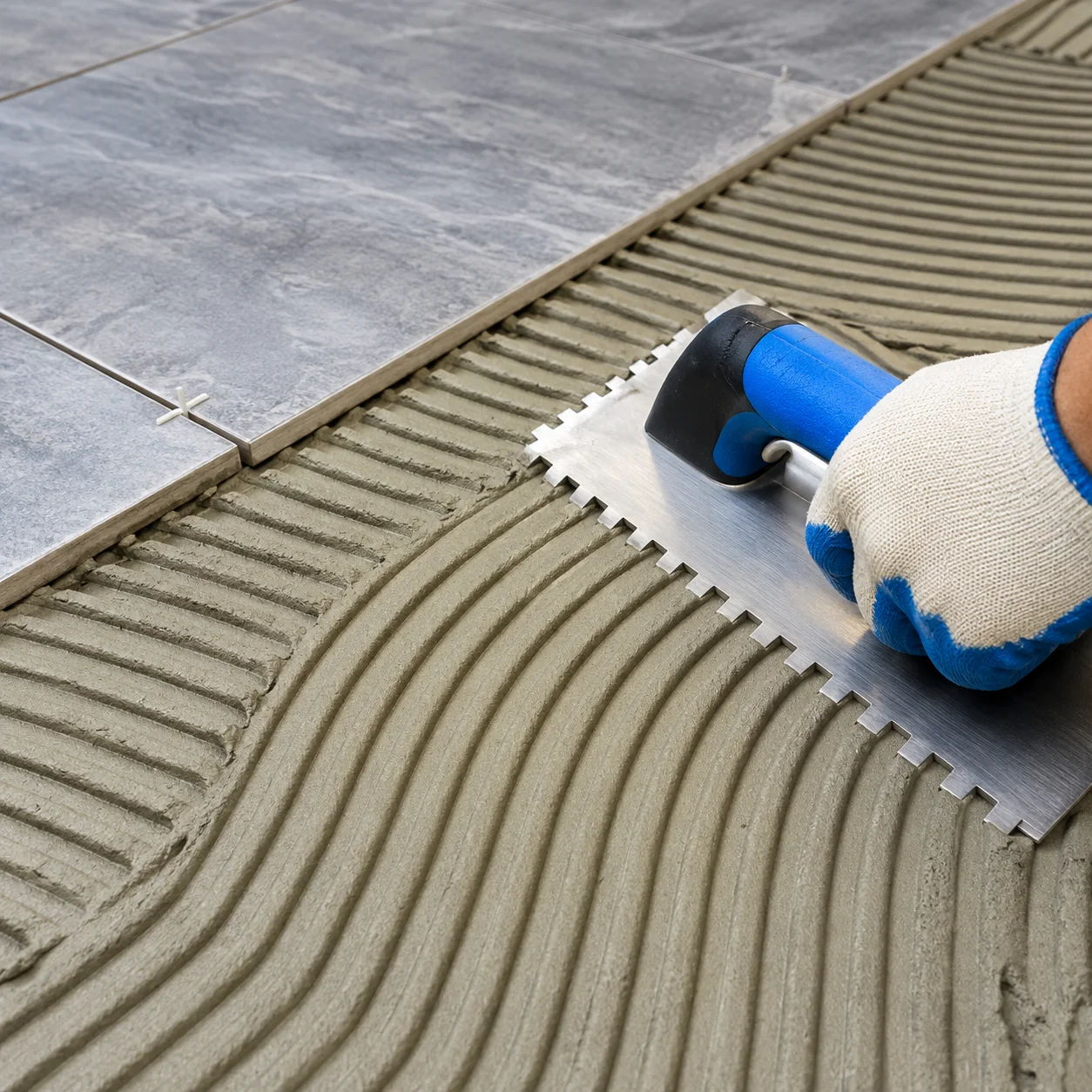
Controls unwanted air in polymer-modified tile adhesive formulations containing HPMC and RDP, supporting consistent application performance.
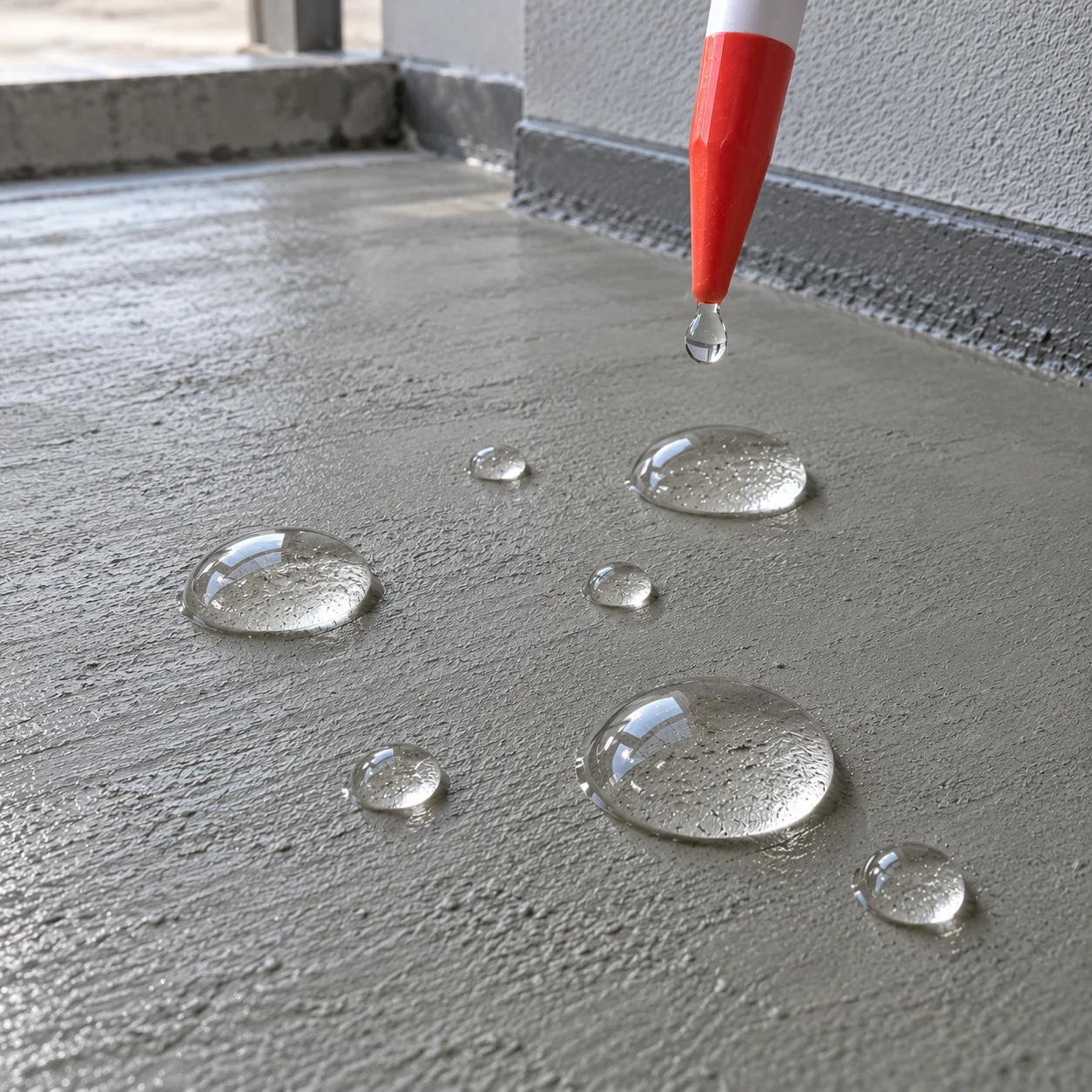
Reduces unwanted entrained air, supporting a more compact and uniform cementitious matrix.
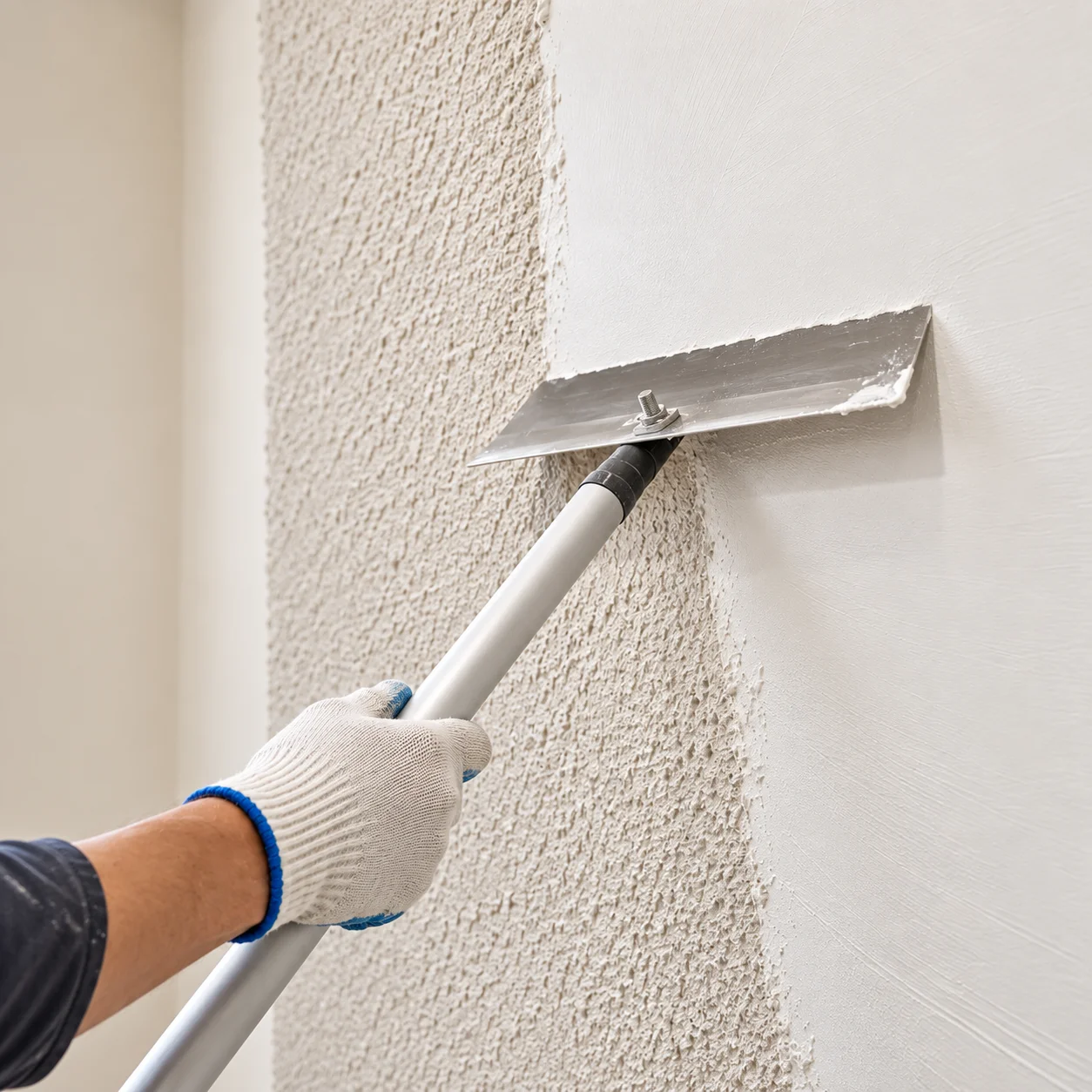
Helps minimize air-related pinholes and surface defects for a smoother, more consistent finish.
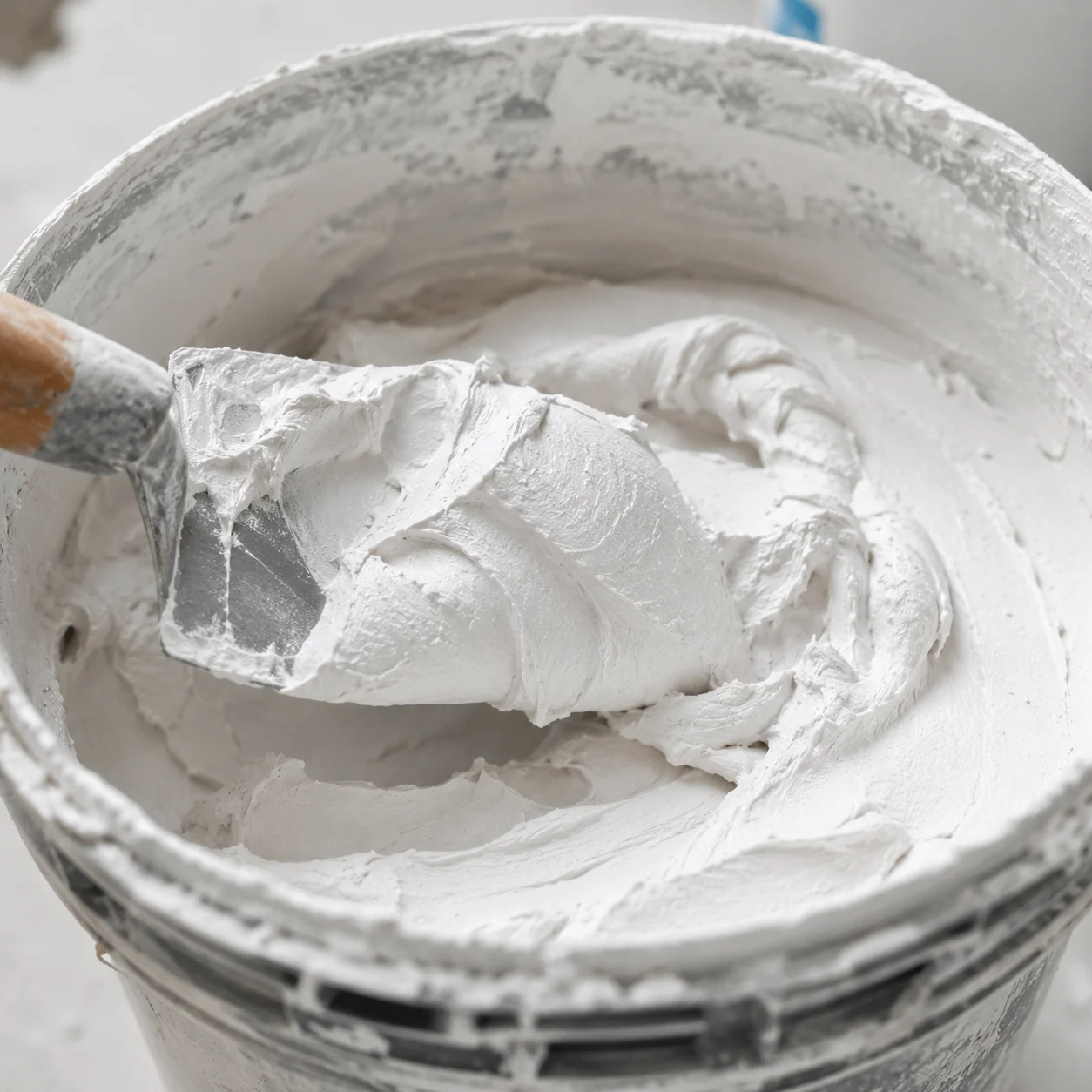
Controls foam and residual air in gypsum formulations, supporting consistent structure and surface quality.
Application Note: Defoamer performance should be evaluated within the complete formulation, as binder chemistry, HPMC, RDP, PCE Superplasticizer and other functional additives can influence foam stability, air release and overall system behavior.
Effective air control is not only about removing visible foam. By limiting unwanted air and supporting air release during mixing and placement, powder defoamer can help develop a denser, more uniform mortar matrix.
Helps control excessive foam and entrained micro-air generated during mixing and formulation processing.
Reduced unwanted air allows the fresh mortar to develop a more compact and consistent internal structure.
Improved air release helps limit unnecessary voids that can remain within the hardened cementitious matrix.
Better air control supports more consistent material distribution and matrix continuity throughout the mortar system.
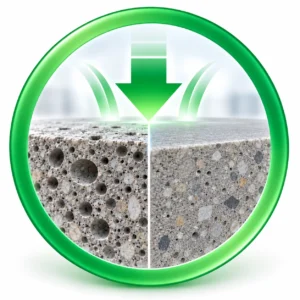
A more controlled air structure can help reduce pinholes and support a cleaner, more uniform finished surface.
Performance Note: Effective control of unwanted air can improve matrix compactness and support density-dependent performance. Final properties depend on defoamer dosage, formulation composition, mixing conditions and curing.
Powder defoamer performance is governed by the complete dry-mix formulation—from foam generation and stabilization to bubble mobility and final air release.
The optimum defoamer should reduce unwanted air while maintaining the required flow, rheology, setting behavior and surface quality of the finished system.
Cement, gypsum and blended binders influence foam formation, interfacial behavior and overall defoamer response.
HPMC and MHEC modify viscosity and water retention, affecting bubble stability, mobility and air release.
RDP and other polymers can stabilize air interfaces and change the defoaming demand of polymer-modified mortars.
PCE and other dispersants influence particle dispersion, flow and air behavior within highly fluid mortar systems.
Water content influences foam formation, bubble mobility and the ability of entrained air to escape during mixing.
System viscosity determines how easily bubbles coalesce, rise and escape from the fresh mortar matrix.
Mixing speed, time and equipment affect the amount, size and distribution of air introduced into the formulation.
Select grade and dosage to reach the target air content without unnecessarily disturbing flow or application behavior.
Formulation Note: In polymer-modified dry-mix systems, Powder Defoamer is commonly evaluated alongside HPMC, RDP and PCE Powder to balance air control, rheology, flow and application performance.
From Grade Selection to Formulation Optimization

Product properties, dosage and recommended applications.
Download ↓
Handling, storage and safety information.
Download ↓
Grade selection, dosage and air-control recommendations.
Download ↓
Batch-specific quality documentation.
Download ↓Powder Defoamer is a dry-form functional additive designed to control unwanted foam and entrained air in cementitious, gypsum-based and other dry-mix formulations.
It is incorporated directly into the dry blend and becomes active after water addition and mixing.
Dry-mix formulations containing surfactants, polymers and rheology modifiers can generate or stabilize unwanted air during mixing.
Powder Defoamer helps suppress foam and release entrained air, supporting wet density, matrix compactness and surface quality.
Defoaming primarily refers to destabilizing and collapsing foam, while air release refers to removing entrained bubbles from within the fresh mortar.
Effective air control often requires both mechanisms because visible foam can disappear while residual micro-air remains in the system.
For self-leveling and other highly flowable systems, a grade with efficient foam control, air release and surface-defect control is generally preferred.
Within the POLYVIA™ range, DF300 is positioned for high-performance air control in self-leveling, flooring and other high-flow mortar systems.
Yes. Powder Defoamer can be formulated alongside HPMC, RDP and PCE in dry-mix systems.
Because these additives can influence rheology, interfacial behavior, foam stability and air release, defoamer grade and dosage should be evaluated within the complete formulation.
The optimum dosage depends on the defoamer grade, binder system, polymer content, target air level and application requirements.
As a starting point, follow the recommended dosage range for the selected POLYVIA™ grade and optimize it through formulation testing.
Yes. Excessive dosage may disturb the intended balance of the formulation and can influence flow, rheology, setting behavior or surface characteristics, depending on the system.
The objective is therefore not maximum defoaming power, but the lowest effective dosage that achieves the required air-control performance.
Select the grade according to the foam tendency, residual air, flow characteristics and surface requirements of the formulation.
General dry-mix systems may require balanced foam control, while self-leveling and other high-flow systems typically demand more efficient air release and surface-defect control. Final selection should be confirmed through formulation testing.
Start With Your Air-Control Problem. Share your application, binder system, current additive package and observed foam or surface problem. POLYVIA™ can help evaluate the interaction between defoamer, cellulose ether, polymer powder and superplasticizer to identify an appropriate grade and starting dosage for formulation testing.