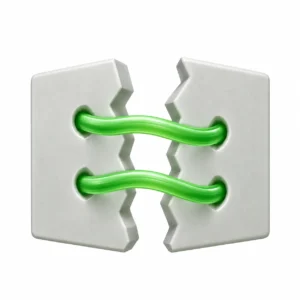
Shrinkage Cracking
Shrinkage and restrained movement can generate tensile stress within concrete. Distributed PAN fibers help bridge developing microcracks and limit localized crack propagation.

POLYVIA™ Polyacrylonitrile Fiber (PAN Fiber) is a high-performance synthetic microfiber designed for crack control, distributed reinforcement and durability enhancement in concrete and cementitious materials.


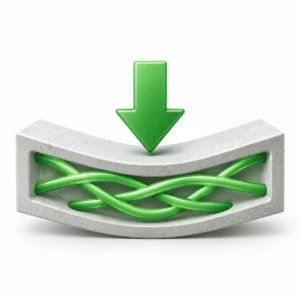

PAN Fiber is a synthetic fiber used in concrete, mortar and cementitious materials. It disperses throughout the matrix to control microcracks, reduce crack propagation and improve durability.
Micro-Reinforcement · Crack Control · Toughness · Durability
Cracking in concrete is rarely caused by a single factor. Shrinkage, restraint, tensile stress, temperature change and local stress concentration can interact throughout the service life of a cementitious system. PAN Fiber provides distributed reinforcement to help manage these performance challenges.
Shrinkage and restrained movement can generate tensile stress within concrete. Distributed PAN fibers help bridge developing microcracks and limit localized crack propagation.

Small microcracks can develop into wider cracks under continued stress. PAN Fiber provides distributed bridging points that help redistribute stress and control crack development.

Cementitious materials can lose integrity as cracking develops. Fiber bridging and pull-out mechanisms help absorb energy and support toughness during crack propagation.

Cracks can create pathways for water and aggressive substances. By supporting crack-width control and matrix integrity, PAN Fiber contributes to a broader concrete durability strategy.
PAN Fiber selection should consider the complete cementitious system rather than tensile strength alone.
Fiber length, diameter and aspect ratio influence fiber population, dispersion, crack interception and bridging behavior, while also affecting the workability and mixing characteristics of the fresh material. The appropriate geometry therefore depends on both the reinforcement objective and the characteristics of the matrix.
| Selection Direction | Typical Applications | Primary Consideration |
|---|---|---|
| Short Fiber (0.5-3mm) | Repair Mortar / Fine Cementitious Systems | Fine dispersion and microcrack interception |
| Medium Fiber (6-12mm) | Precast / Flooring / General Concrete | Balance of dispersion and crack bridging |
| Longer Fiber | Concrete / Shotcrete / Engineering Systems | Crack bridging and mixing compatibility |
Application → Matrix Characteristics → Crack-Control Requirement → Fiber Geometry → Dosage → Trial Mix
Longer fiber does not automatically provide better performance, and increasing dosage does not necessarily improve reinforcement efficiency.
The optimum selection is the combination of fiber geometry and dosage that provides effective distributed reinforcement while maintaining acceptable dispersion, workability and mixing consistency.
PAN Fiber works as a distributed reinforcement system inside the cementitious matrix.
Individual fibers separate during mixing and distribute throughout the fresh concrete or mortar. Uniform dispersion is fundamental to effective fiber reinforcement.
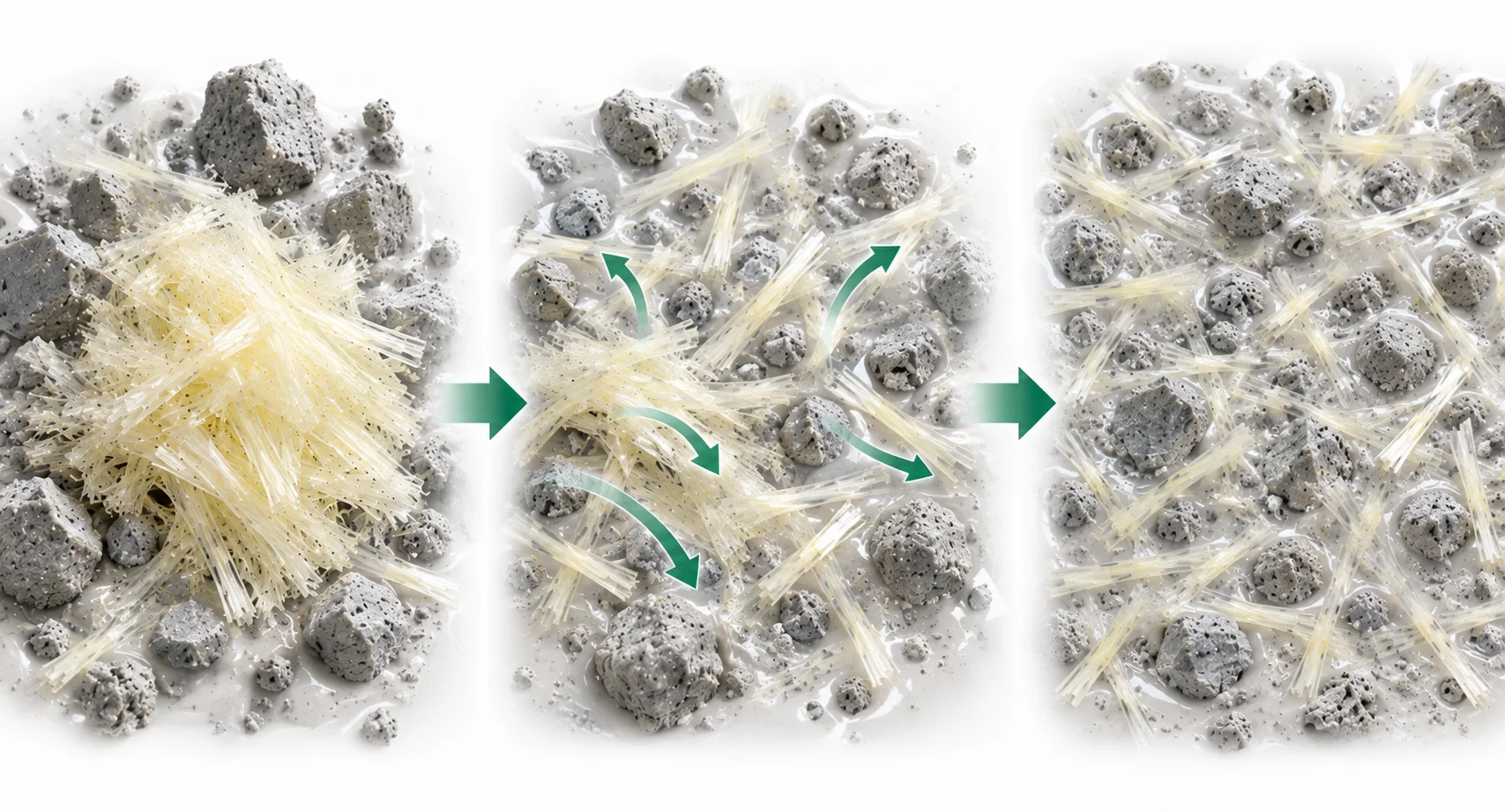
Dispersed fibers create a randomly oriented three-dimensional network throughout the matrix, increasing the probability that developing cracks encounter reinforcement.
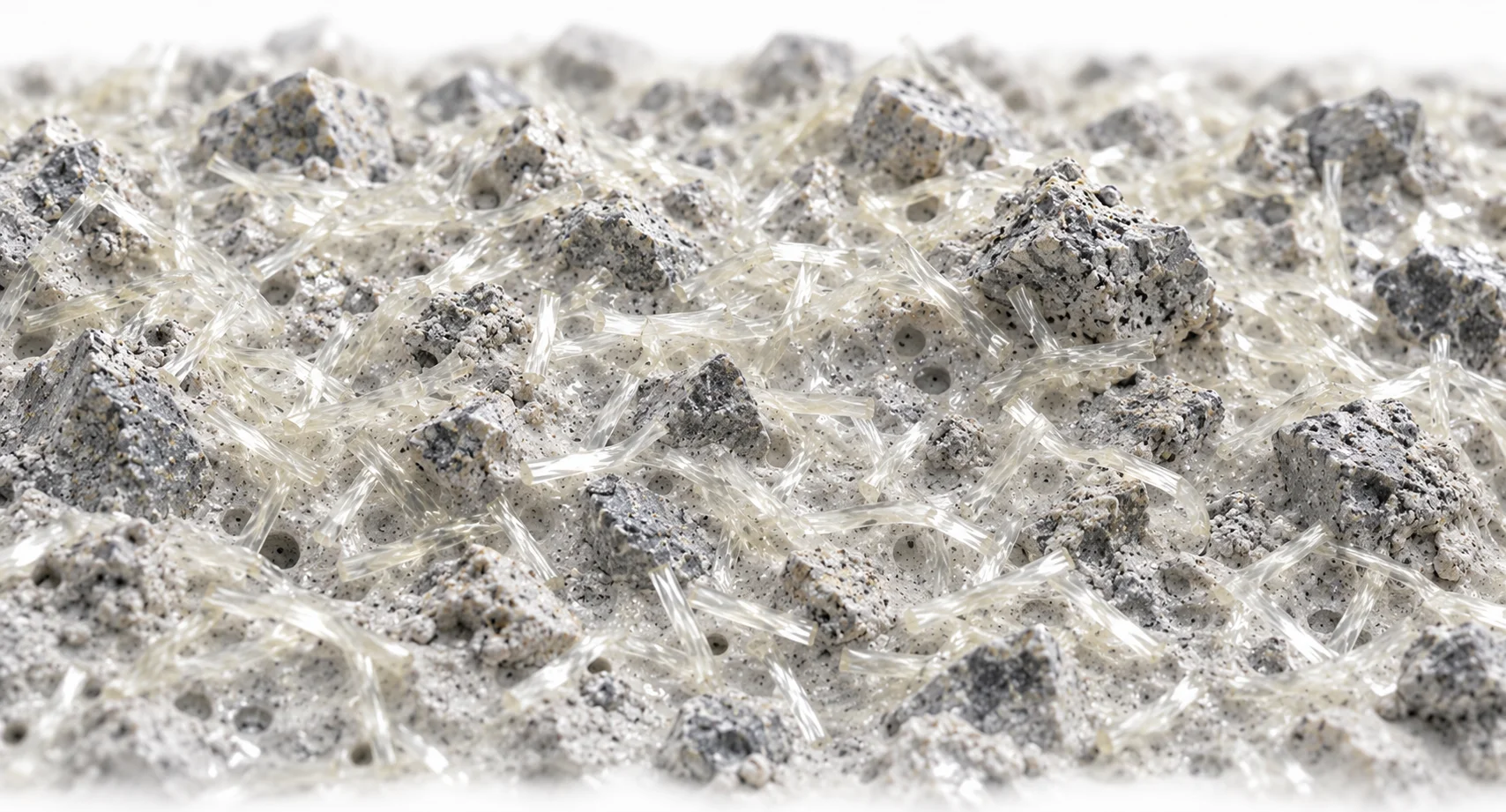
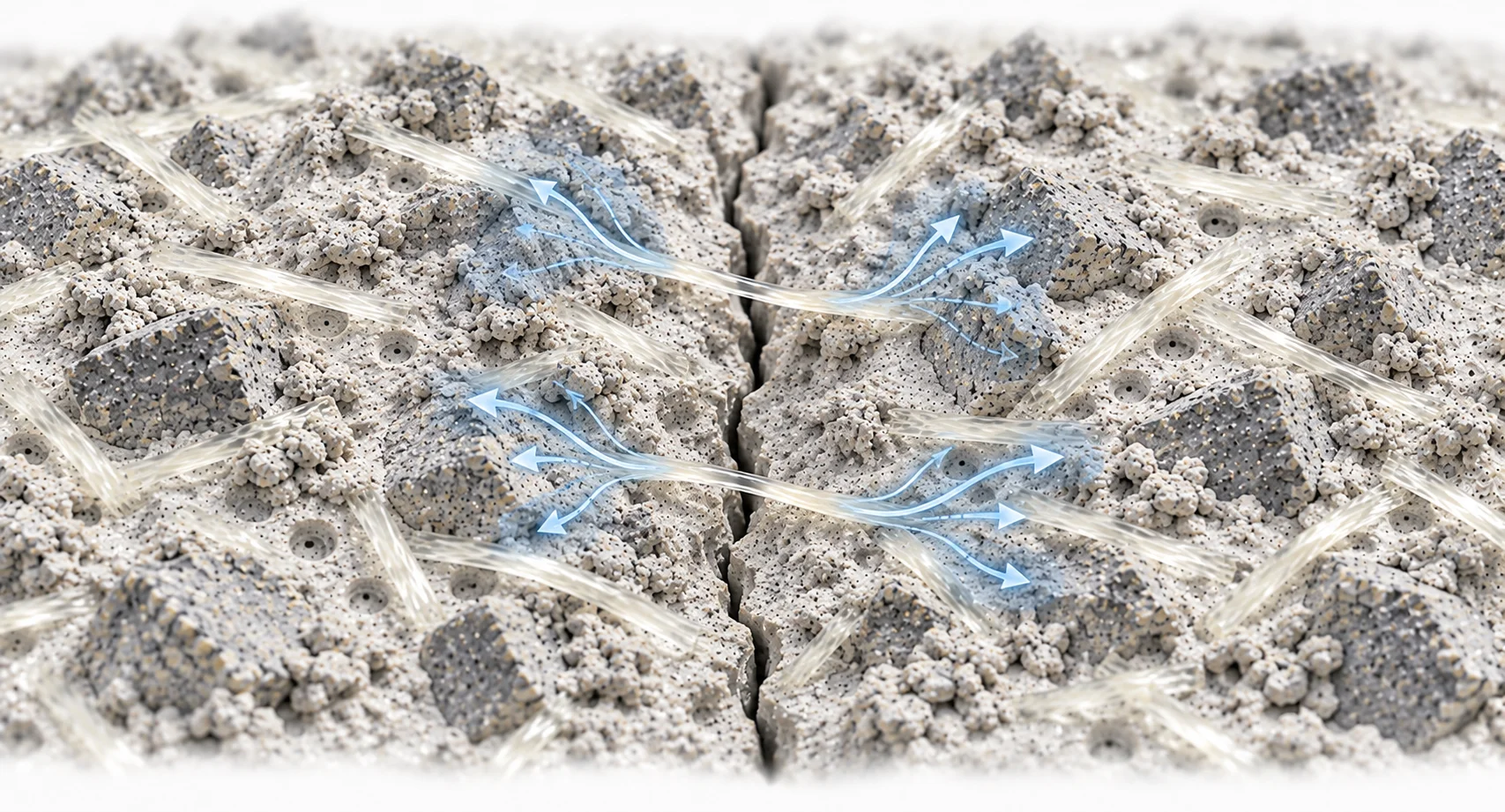
As shrinkage or tensile stresses initiate microcracks, PAN fibers crossing the crack plane bridge the surrounding matrix.
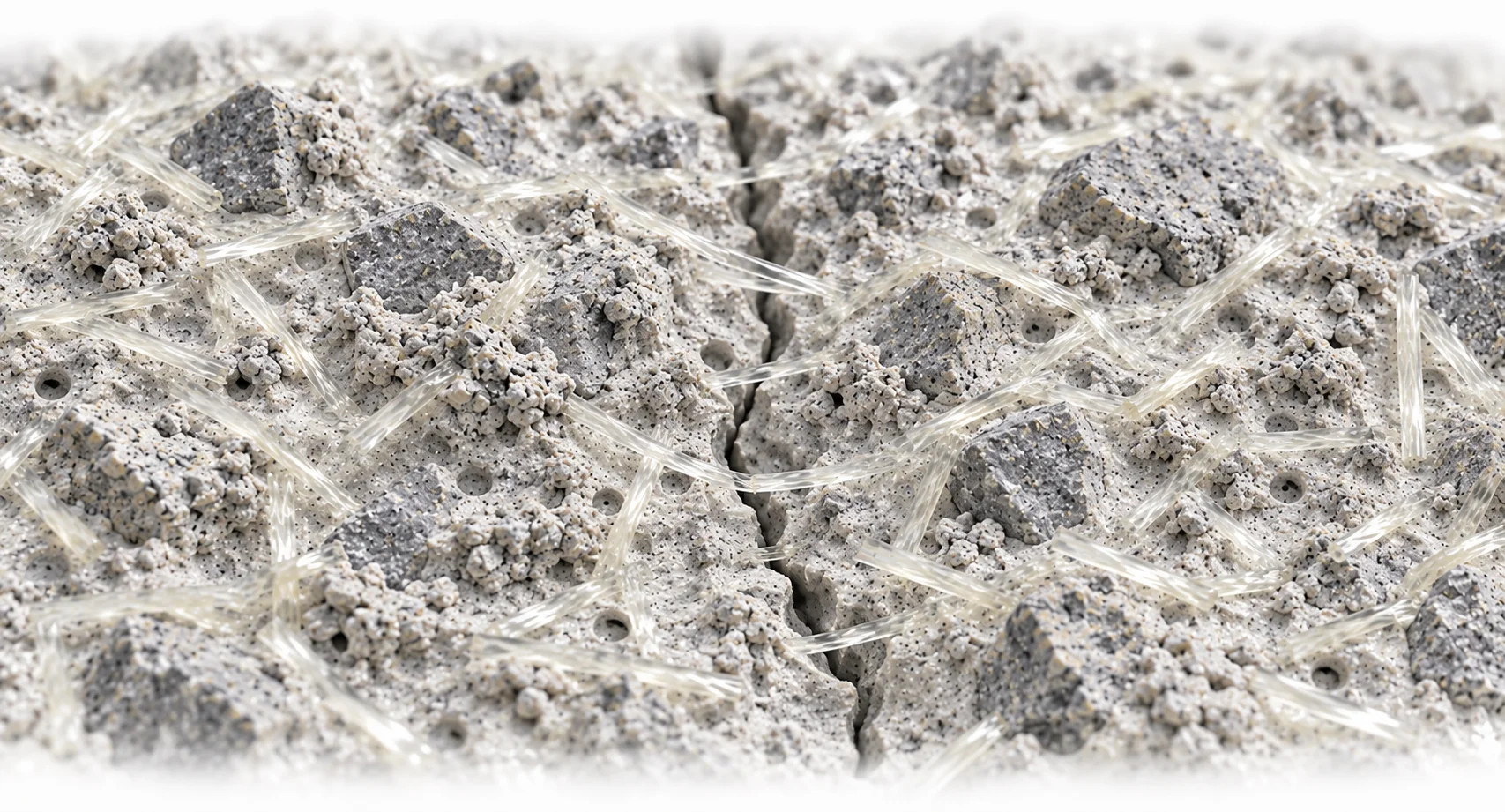
The fiber–matrix interface transfers part of the localized stress away from the developing crack, helping restrain crack opening and propagation.
| Property | Specification |
|---|---|
| Composition | 100% Polyacrylonitrile (PAN) |
| Fiber Form | Bundled Monofilament |
| Equivalent Diameter | 13–20 μm |
| Color | White to Light Yellow |
| Length, mm | 0.5 / 3 / 6 / 19 or customized |
| Tensile Strength | ≥ 900 MPa |
| Density | 1.18 g/cm³ |
| Elongation at Break | 15 ± 5% |
| Elastic Modulus | ≥ 13 GPa |
| Acid & Alkali Resistance | ≥ 95% |
| Heat Resistance | ≥ 220°C |
| Water Absorption | Non-Absorbent |
The value of PAN Fiber comes from more than the mechanical strength of an individual fiber. Effective performance depends on the interaction between fiber geometry, fiber population, dispersion and the surrounding cementitious matrix.
Fine PAN fibers intersect developing microcracks throughout the matrix, helping restrain crack opening and propagation before localized cracking develops further.
Randomly oriented fibers create reinforcement throughout the cementitious matrix rather than at a single reinforcement plane.
Fibers crossing a developing crack can transfer part of the localized tensile stress into the surrounding matrix, supporting more controlled crack development.
Fiber bridging, interfacial bonding and pull-out mechanisms can contribute to energy absorption as cracking develops, helping maintain matrix integrity.
PAN Fiber can support crack management in concrete and mortar exposed to shrinkage, restraint and dimensional movement.
As a synthetic polymer fiber, PAN Fiber does not create the corrosion mechanism associated with conventional metallic reinforcement.
The performance of PAN Fiber in concrete and mortar depends not only on the fiber itself, but also on its interaction with the surrounding cementitious system.
Fiber geometry, matrix rheology, aggregate grading, water-to-binder ratio and admixture chemistry should therefore be considered together when optimizing dispersion, workability and crack-control performance.
Cement chemistry, fly ash, slag and silica fume influence matrix rheology, particle packing and fiber dispersion within the cementitious system.
The W/B ratio affects matrix consistency and fiber mobility. Lower W/B systems may require greater attention to dispersion and workability control.
Aggregate size and particle distribution influence fiber movement and distribution during mixing. Balanced grading helps reduce localized fiber accumulation.
PCE helps control water demand and workability in fiber-reinforced concrete while maintaining the target water-to-binder ratio.
In mortar and dry-mix systems, cellulose ether and RDP can complement PAN Fiber for rheology, adhesion and crack-control performance.
Mixer type, addition sequence, mixing energy and mixing time directly influence fiber separation, distribution and overall reinforcement consistency.
Binder System → W/B Ratio → Aggregate Grading → Admixture System → Fiber Dosage → Mixing Conditions → Trial Validation
PAN, PP and PVA are all synthetic fibers, but they should not be treated as interchangeable reinforcement technologies.
| Selection Factor | PAN Fiber | PP Micro Fiber | PVA Fiber |
|---|---|---|---|
| Polymer | Polyacrylonitrile | Polypropylene | Polyvinyl Alcohol |
| Fiber Type | Synthetic Microfiber | Synthetic Microfiber | High-Performance Synthetic Fiber |
| Primary Role | Crack Control / Distributed Reinforcement | Plastic Shrinkage / General Crack Control | Engineered Cementitious Reinforcement |
| Matrix Interaction | Application Dependent | Primarily Mechanical | Typically Strong |
| Corrosion Risk | None | None | None |
| Typical Positioning | Performance Concrete / Mortar | General Concrete / Mortar | Specialized High-Performance Systems |
| Selection Basis | Geometry + Dosage + Matrix | Geometry + Dosage + Cost | Bond + Mechanical Requirements |
Choose according to:
Crack Type · Required Performance · Fiber Geometry · Matrix Compatibility · Workability · Dosage · Project Economics
For general plastic-shrinkage control, PP microfiber may provide a practical solution.
PAN Fiber can be considered where a different combination of fiber mechanical properties, distributed reinforcement and cementitious-system performance is required.
PVA Fiber is commonly considered for specialized cementitious systems where stronger fiber–matrix interaction is important.
PAN Fiber dosage should be selected according to the application, fiber geometry, mix proportions, workability requirements and target reinforcement performance. Effective reinforcement depends not only on dosage, but also on achieving uniform fiber dispersion throughout the cementitious matrix.
| Application | Recommended Dosage |
|---|---|
| General Cement Concrete | 0.6–2.0 kg/m³ |
| Bridge Decks & High-Impact Applications | 1.5–1.8 kg/m³ |
Recommended dosage should be confirmed through trial mixing. The optimum level may vary with fiber grade, concrete composition, construction method and required performance.
Aggregates + PAN Fiber → Dry Mix → Cement → Water → Admixtures → Final Mixing
PAN Fiber can be introduced together with the aggregates to promote early separation and distribution. As a practical guideline, dry mix the fiber with the aggregates for approximately 20 seconds before introducing the remaining components.
Maintain sufficient final mixing to achieve uniform fiber distribution. The total mixing time should not be less than 60 seconds, subject to mixer type, batch size and actual dispersion conditions.
Uniform dispersion is essential for effective distributed reinforcement. Avoid introducing a large compacted mass of fiber directly into a low-mobility mixture, as insufficient dispersion may result in fiber agglomeration, uneven distribution and inconsistent reinforcement performance.
Increasing fiber dosage may also increase internal resistance and reduce fresh-mix flowability. Dosage should therefore be balanced with the required workability, placement behavior and reinforcement performance.
Do not compensate for reduced workability through uncontrolled addition of water.
Where necessary, optimize the mix proportions and PCE superplasticizer system while maintaining the specified water-to-binder ratio and required fresh-mix performance.
Final dosage should be validated using the customer’s actual cement, SCMs, aggregates, water-to-binder ratio, admixture system, mixing equipment and construction conditions.
Evaluate fiber dispersion, workability and required hardened performance before confirming the production dosage.

Product specifications, properties and recommended dosage.
Download ↓
Safety, handling, storage and transportation information.
Download ↓
Application, dosage and usage guidance.
Download ↓
Batch-specific quality and test results.
Download ↓Polyacrylonitrile fiber, commonly called PAN Fiber, is a synthetic fiber used as distributed reinforcement in concrete and mortar. When properly dispersed, the fibers form a three-dimensional network that can bridge developing microcracks and help control crack propagation.
PAN Fiber is primarily used for crack control and distributed micro-reinforcement. Depending on the fiber specification and concrete system, it can also contribute to toughness, dimensional stability, impermeability and long-term matrix integrity.
As microcracks develop, PAN fibers crossing the crack plane provide a bridging mechanism that transfers part of the localized tensile stress into the surrounding matrix. This can help restrain crack opening and propagation.
Not universally. PAN and PP fibers have different physical and mechanical characteristics. PP microfiber is widely used for general plastic-shrinkage crack control, while PAN Fiber provides a different reinforcement option for performance-driven cementitious systems. Selection should be based on application requirements rather than polymer type alone.
PAN Fiber grades intended for concrete are designed for use in cementitious environments. Product-specific chemical and alkali-resistance values should be confirmed from the corresponding POLYVIA™ TDS.
The appropriate dosage depends on fiber geometry, concrete or mortar composition, required performance and workability. POLYVIA recommends determining the final dosage through laboratory or production trials rather than applying one universal dosage to every system.
Yes. PAN Fiber can be evaluated for shotcrete where distributed crack control and matrix reinforcement are required. Fiber length and dosage should be selected with consideration for pumping, spraying, fresh-concrete rheology and the accelerator system.
PAN Fiber should be introduced through a mixing sequence that allows individual fibers to separate and distribute uniformly. Adequate mixing time and controlled addition help minimize fiber agglomeration. The exact procedure should be adapted to the mixer, fiber dosage and concrete formulation.
Choosing the right PAN Fiber involves more than comparing tensile strength or fiber length. Tell us your application, mix design, W/B ratio, aggregate system, target performance and current admixture system. POLYVIA™ can help evaluate the appropriate fiber specification, dosage window and formulation compatibility.