Crack Initiation
Shrinkage, restraint and tensile stresses can exceed the tensile capacity of concrete, initiating cracks within the matrix.

POLYVIA™ PP Twisted Bundle Fiber is an engineered polypropylene macro synthetic fiber designed for distributed reinforcement, crack bridging and improved toughness in concrete.
Suitable for industrial floors, pavements, precast concrete, shotcrete, tunneling and infrastructure applications.
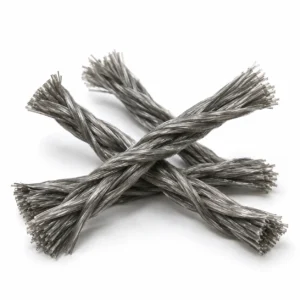
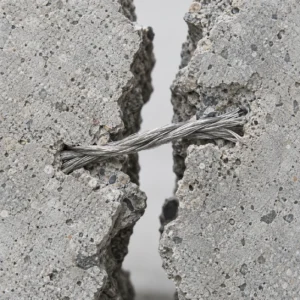
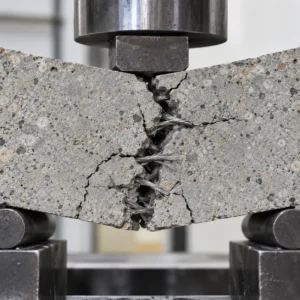

PP Twisted Bundle Fiber is an engineered polypropylene macro synthetic fiber with a twisted bundle structure, designed for distributed reinforcement in concrete.
During mixing, the fiber bundles separate and disperse throughout the matrix, helping bridge cracks, transfer stress and improve toughness and post-crack performance.
Concrete performs strongly in compression, but tensile stresses, shrinkage and repeated loading can initiate and propagate cracks.
The challenge is not simply whether concrete cracks — but how cracking develops and how effectively the matrix maintains integrity after cracking begins.
Shrinkage, restraint and tensile stresses can exceed the tensile capacity of concrete, initiating cracks within the matrix.
Once formed, cracks can widen and propagate under continued tensile, flexural or repeated loading.
Plain concrete has limited post-crack capacity and can rapidly lose continuity and integrity as cracks open under load.
Open cracks can provide pathways for water and aggressive substances, potentially affecting long-term concrete durability.
Distributed fiber reinforcement bridges developing cracks throughout the concrete matrix, helping control crack opening and support toughness and post-crack integrity.
Available in multiple lengths to support different concrete reinforcement requirements.
| Fiber Length | Selection Focus | Typical Applications | Selection Guidance |
|---|---|---|---|
| 40 mm | Balanced Dispersion | General Concrete / Precast / Pavements | For applications prioritizing fiber distribution and practical mixing performance |
| 50 mm | Balanced Reinforcement | Industrial Floors / Pavements / Precast | Balanced option for fiber engagement, toughness and overall reinforcement performance |
| 56 mm | Enhanced Crack Bridging | Heavy-Duty Floors / Pavements / Shotcrete | For demanding applications requiring greater fiber engagement and post-crack performance |
| Custom Length | Project-Specific | Application Dependent | Fiber length can be evaluated according to concrete mix design and project requirements |
Engineering Note: Fiber length should not be selected independently. Aggregate size, concrete workability, mixing and pumping conditions, fiber dosage and target performance should be evaluated together.
From fiber dispersion to crack bridging, reinforcement develops throughout the concrete matrix.
The twisted bundles progressively open during mixing, allowing individual fibers to separate and distribute throughout the fresh concrete matrix.
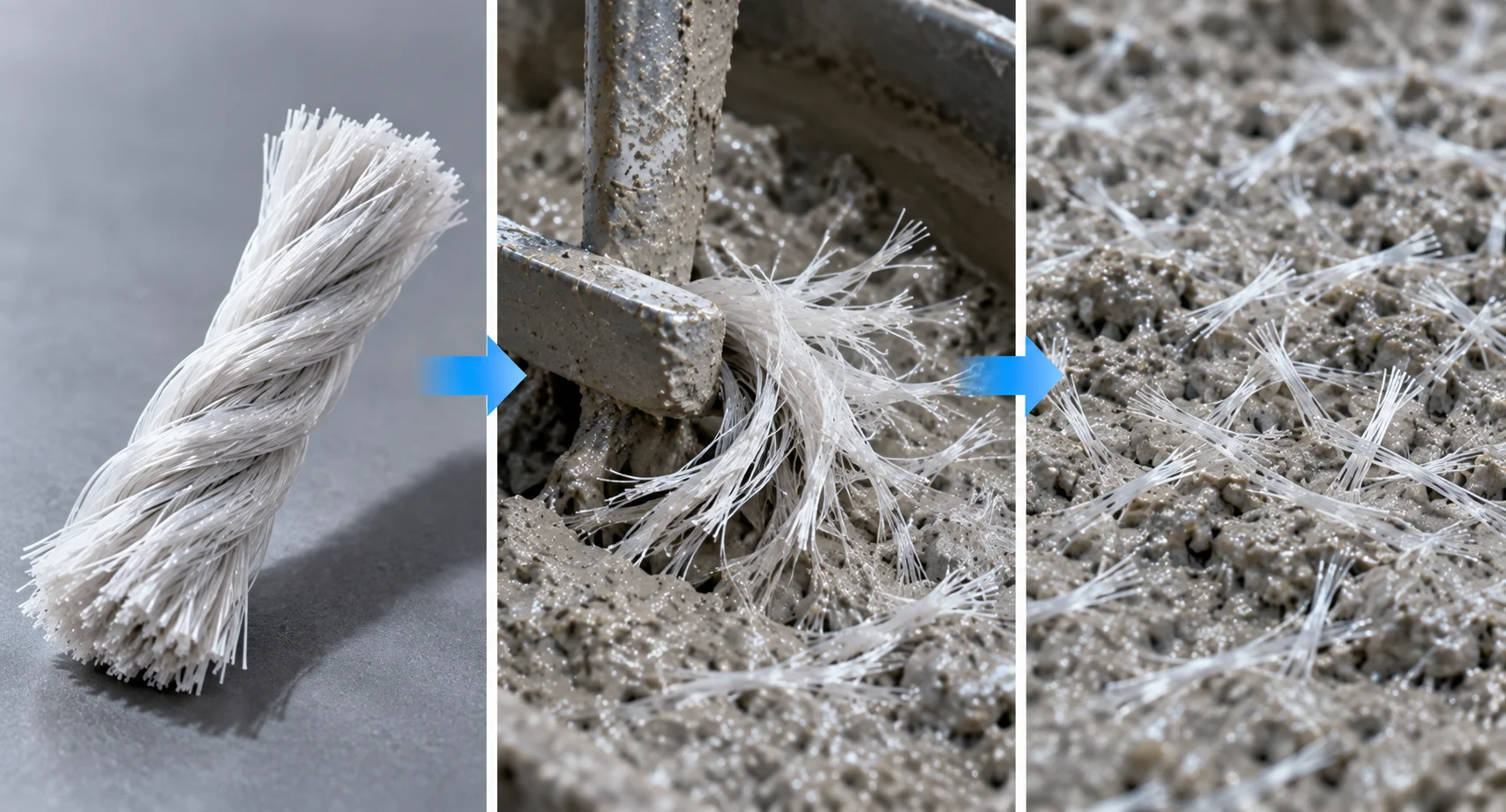
Dispersed fibers become randomly oriented throughout the concrete volume, creating multidirectional reinforcement across multiple potential crack planes.
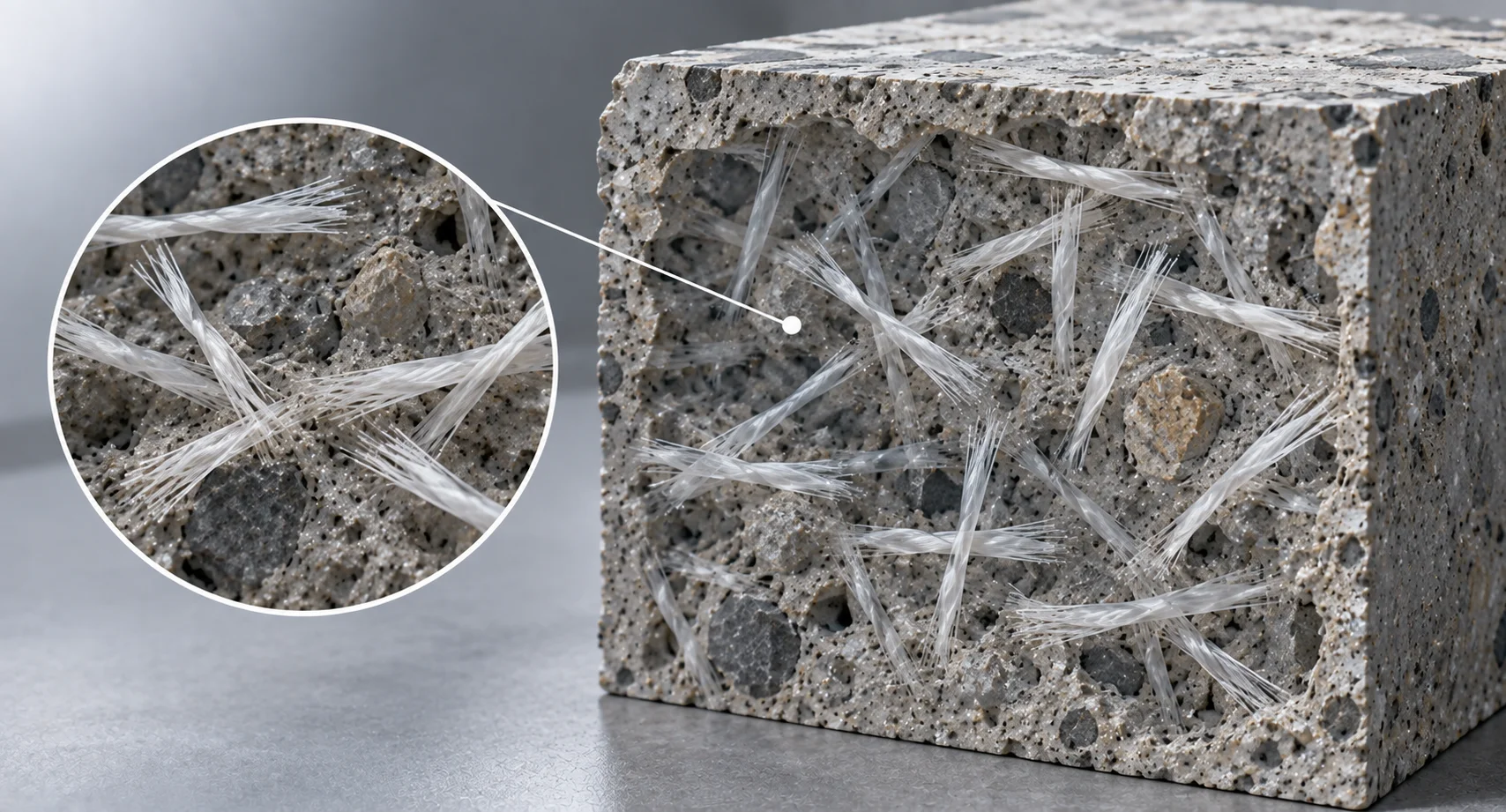
As cracks develop, fibers crossing the crack plane engage with the surrounding matrix and transfer tensile stress across the opening.
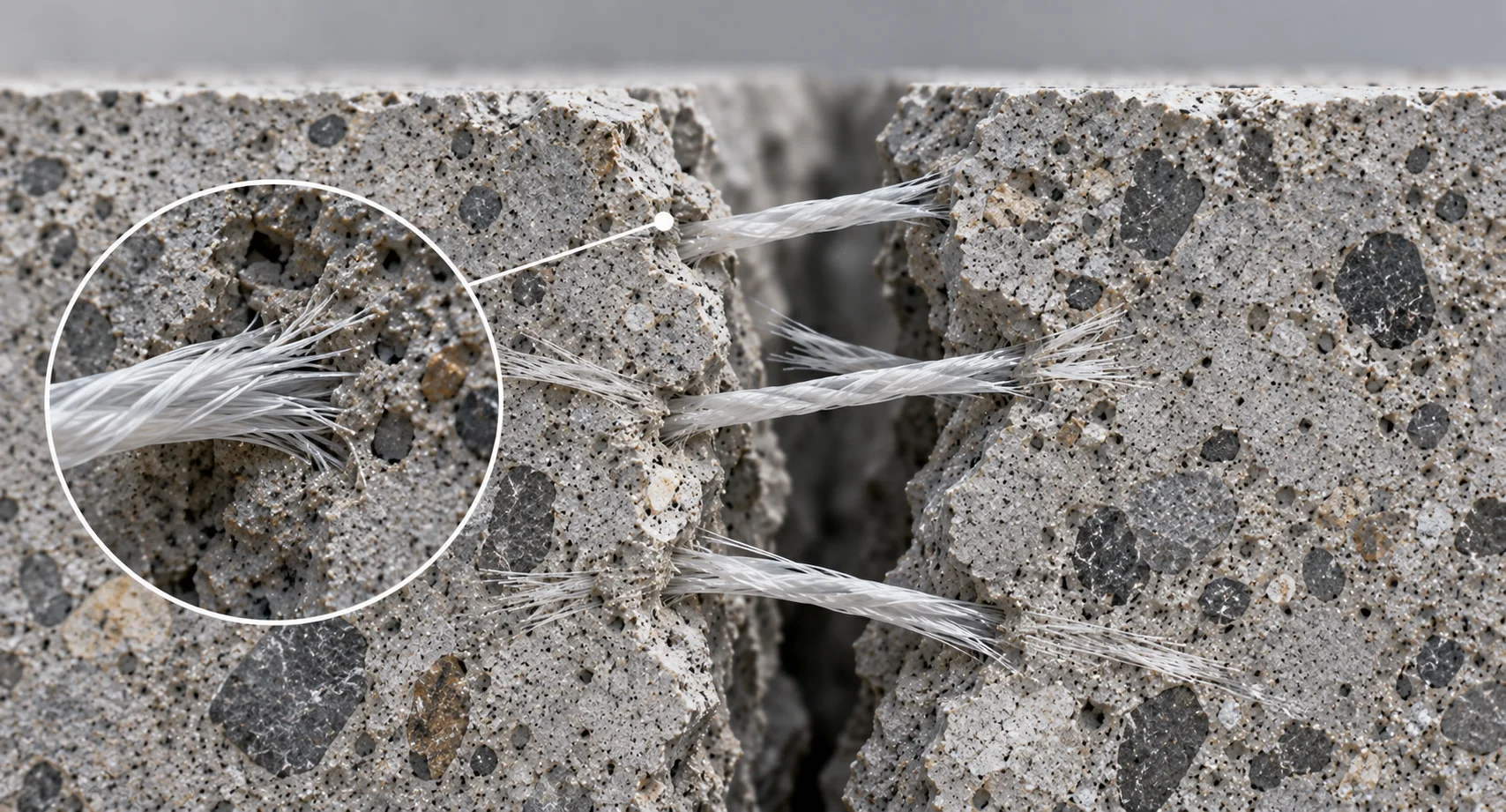
After matrix cracking begins, engaged fibers continue bridging crack faces, helping control crack opening and maintain concrete integrity under continued loading.
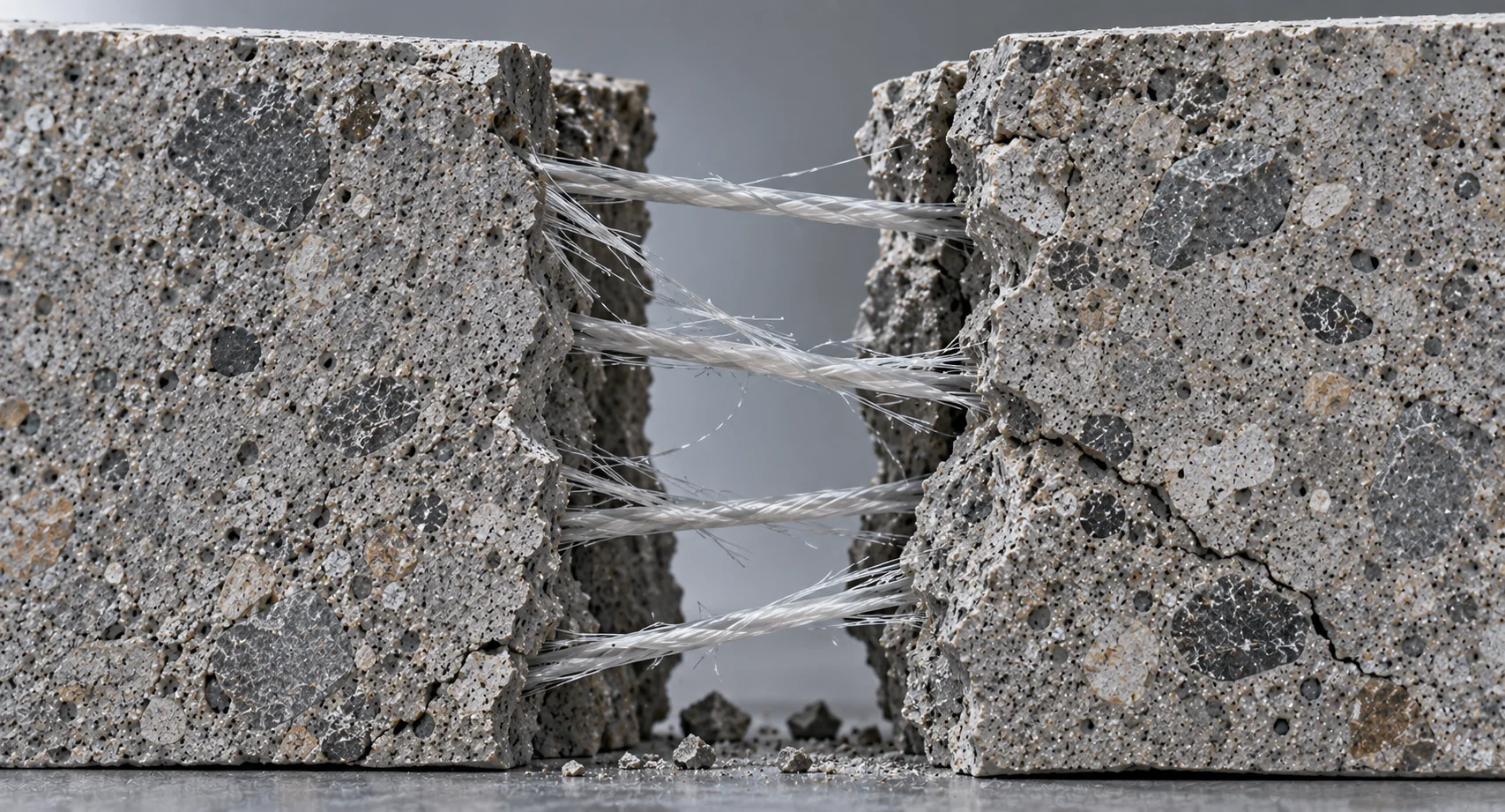
Fiber geometry, dispersion, dosage and matrix interaction work together to determine crack-bridging efficiency and the resulting reinforcement performance.
| Property | Specification |
|---|---|
| Material | 100% Polypropylene |
| Appearance | White / Grey Twisted Bundle Fiber |
| Density, g/cm³ | 0.91-0.98 |
| Equivalent Diameter, mm | 0.60 ± 0.05 |
| Length, mm | 40 / 50 / 56 / Customized |
| Tensile Strength, MPa | ≥ 500 |
| Elastic Modulus, MPa | > 4,500 |
| Elongation at Break, % | 20 ± 5 |
| Melting Point, °C | 160–170 |
| Chemical Resistance | Excellent Resistance to Acids & Alkalis |

For warehouse floors, factory floors, logistics facilities and heavy-duty slabs requiring improved crack control, toughness and performance under service loading.
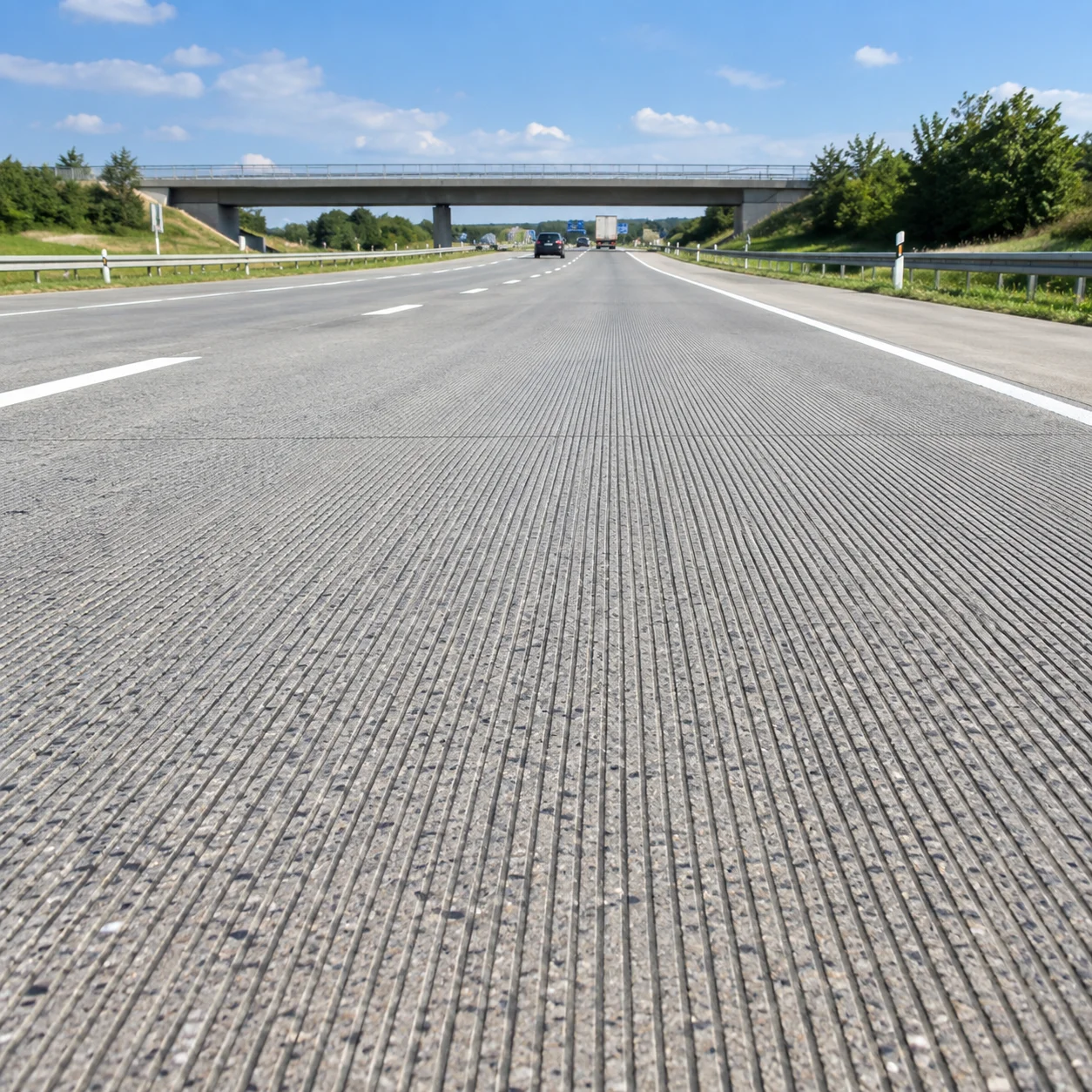
For roads, yards, parking areas and other concrete pavements exposed to traffic, repeated loading and demanding service conditions.
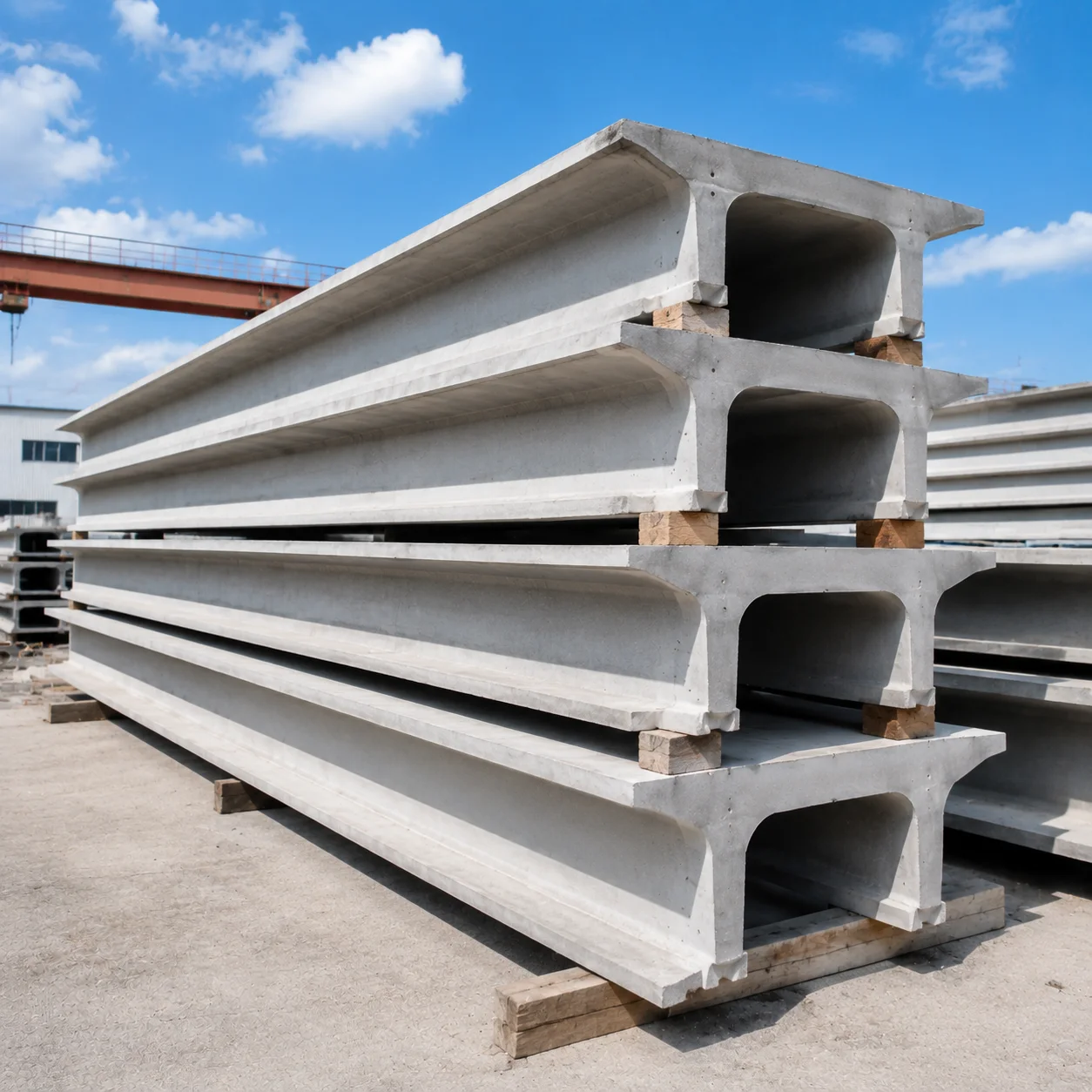
For pipes, panels, drainage components and other precast products where distributed fiber reinforcement can support crack control and component integrity.

For slabs, roofs, basements, foundations and other concrete elements requiring multidirectional reinforcement and improved resistance to crack development.
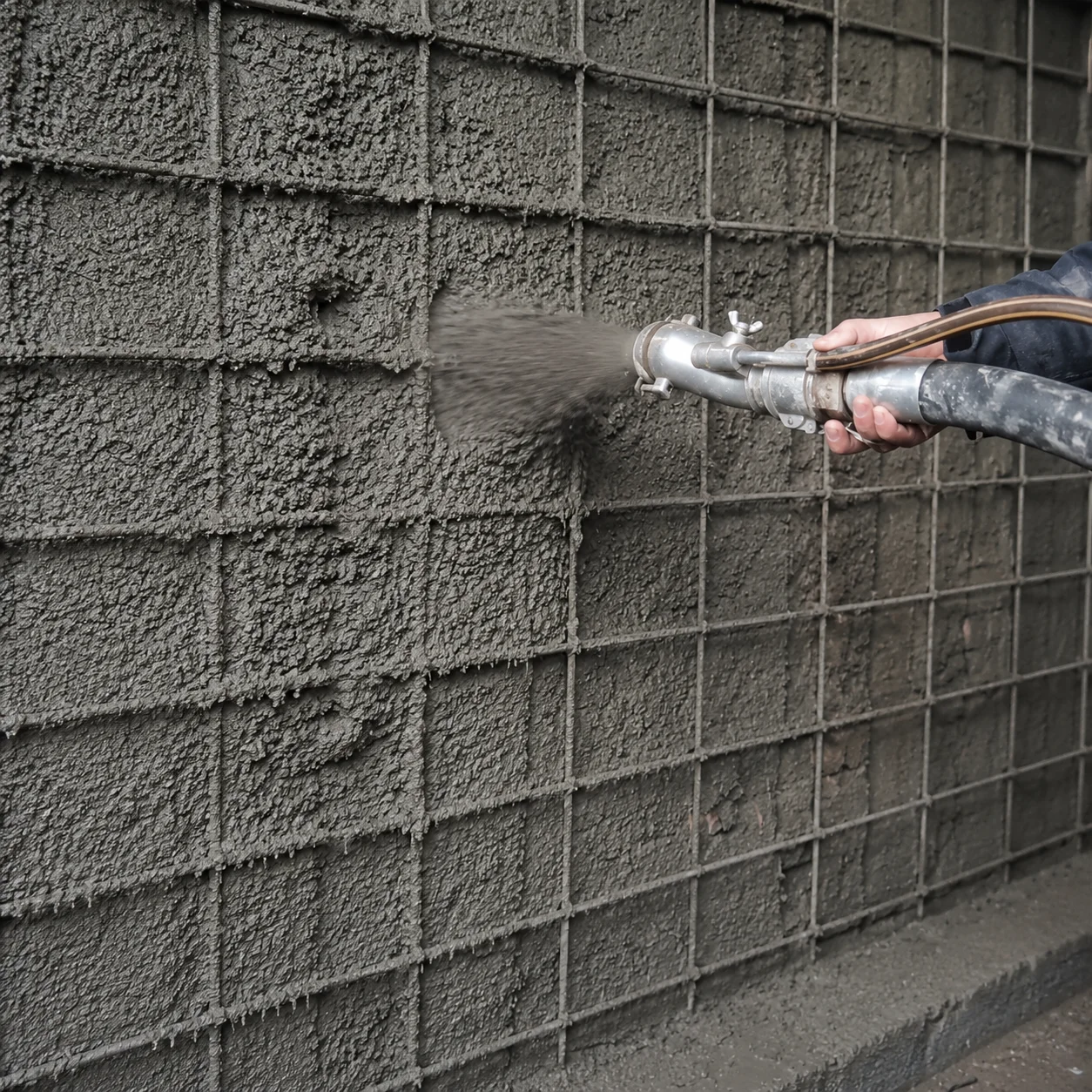
For tunnels, underground structures and sprayed-concrete systems where fiber reinforcement supports crack control, toughness and post-crack performance.

For ports, coastal structures and marine concrete applications requiring improved crack control, toughness and long-term durability.

For bridge decks and civil infrastructure exposed to repeated loading and demanding service conditions where crack control and long-term performance are important.

For channels, reservoirs, pools and other hydraulic concrete applications where controlling crack development can contribute to structural integrity and durability.
Distributed macro synthetic reinforcement supports toughness, crack control and post-crack performance throughout the concrete matrix.

Help control crack opening and propagation through distributed fiber bridging across developing crack planes.
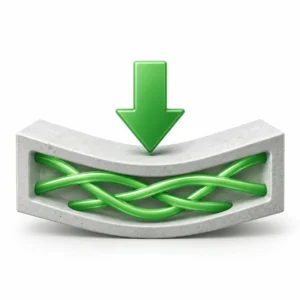
Improve energy absorption and support a less brittle response as the concrete matrix cracks and deforms.
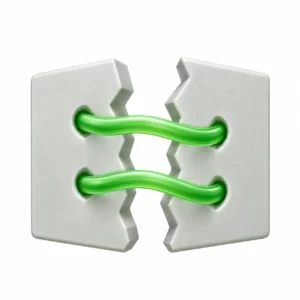
Fibers remain engaged across opened cracks, helping maintain matrix integrity and continued stress transfer after cracking.

Improve resistance to localized damage under impact and other dynamic loading conditions.

Support concrete integrity under repeated loading by helping control progressive crack development.
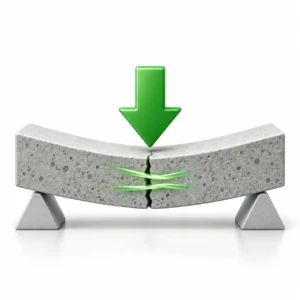
Support behavior under bending through fiber bridging and continued load transfer across developing cracks.
Performance depends on fiber length, dosage, concrete mix design, fiber dispersion, curing conditions and project-specific requirements.
PP Twisted Bundle Fiber performance is governed by the complete concrete system—from fiber selection and mix design to dispersion, placement and final reinforcement performance.
The optimum fiber system should provide effective dispersion, crack bridging and post-crack reinforcement while maintaining the required workability, pumping and placement performance.
Fiber length and dosage influence fiber population, distribution and engagement across potential crack planes.
Matrix properties influence fiber–concrete interaction, crack development and post-crack behavior.
Aggregate size and grading affect concrete workability, fiber distribution and placement performance.
Water-to-binder ratio influences rheology, matrix properties and the overall response of fiber-reinforced concrete.
A compatible PCE Superplasticizer can support water reduction and workability where required, helping maintain effective fiber dispersion and placement.
Mixing sequence, time and energy influence bundle opening, fiber separation and uniform distribution throughout the concrete.
Pumping, placing and finishing conditions should be considered to maintain workability and consistent fiber distribution.
Fiber selection should reflect the required crack control, toughness, post-crack behavior and project-specific performance targets.
Selecting PP twisted bundle fiber should start with the required concrete performance—not fiber length alone. The appropriate fiber configuration and dosage depend on the reinforcement target, concrete mix, application method and service conditions.
| Performance Target | Reinforcement Objective | Key Selection Factors |
|---|---|---|
| Crack Control | Control crack development and limit propagation | Fiber distribution · Dosage · Mix compatibility |
| Post-Crack Performance | Maintain reinforcement after matrix cracking | Fiber geometry · Anchorage · Fiber content |
| Flexural Toughness | Improve energy absorption and deformation capacity | Fiber length · Bond · Dosage |
| Industrial Flooring | Provide distributed reinforcement across concrete slabs | Loading · Slab design · Fiber dosage |
| Shotcrete & Tunneling | Support toughness and post-crack integrity | Dispersion · Pumpability · Energy absorption |
| Precast Concrete | Support crack control during handling and service | Fiber distribution · Concrete workability |
| Durability-Focused Systems | Provide non-corrosive distributed reinforcement | Exposure conditions · Reinforcement requirements |
Selection Note:
Fiber length and dosage should be determined according to the required performance, concrete mix design, construction conditions and applicable project requirements. Final selection should be verified against the target performance of the concrete system.

Key specifications and technical information.
Download ↓
Handling, storage and safety information.
Request SDS ↓
Practical guidance for product use and application.
Request Guide ↓
Batch-specific quality and specification results.
Request COA ↓PP Twisted Bundle Fiber is a polypropylene macro synthetic fiber designed to provide distributed reinforcement in concrete. Its twisted bundle structure opens during mixing, allowing fibers to disperse throughout the concrete matrix and contribute to crack control, toughness and durability.
Ordinary fine PP fibers are commonly used primarily for plastic shrinkage and early-age crack control.
PP Twisted Bundle Fiber uses a longer macro fiber geometry designed to provide reinforcement across developing cracks and contribute to hardened-concrete toughness and post-crack behavior.
During mixing, the twisted bundles open and fibers distribute throughout the concrete. Randomly oriented fibers form multidirectional reinforcement and can bridge developing cracks, helping transfer stress and control crack propagation.
Fiber length should be selected according to the concrete mix, aggregate size, application, mixing and pumping conditions, required dosage and reinforcement target.
POLYVIA can support fiber-length selection based on the specific application.
For general crack-control applications, 1.0–1.5 kg/m³ can be used as a recommended starting range.
For applications requiring enhanced reinforcement performance, 3–6 kg/m³ can be evaluated.
Final dosage should be confirmed through concrete trials and project requirements.
Yes. PP Twisted Bundle Fiber can be used in concrete systems containing PCE superplasticizers.
Because fiber addition can influence fresh-concrete rheology and workability, the complete concrete formulation should be evaluated to achieve suitable dispersion, pumping, placement and finishing performance.
Macro fiber addition can influence concrete rheology and apparent workability, particularly as fiber dosage increases.
Appropriate aggregate grading, PCE selection, mix design and mixing procedure can help achieve the required balance between fiber reinforcement and construction performance.
PP Twisted Bundle Fiber may serve as an alternative to certain conventional secondary reinforcement systems in suitable applications.
However, replacement of welded wire mesh, steel fiber or other reinforcement should be determined through engineering evaluation, required concrete performance and applicable project/design requirements.
Not Sure Which Fiber Fits Your Concrete? Share your concrete application, mix design, aggregate size and target performance. Our technical team can help evaluate fiber length, dosage and mix compatibility for your project.

FROM FIBER SELECTION TO CONCRETE PERFORMANCE