Stress Concentration
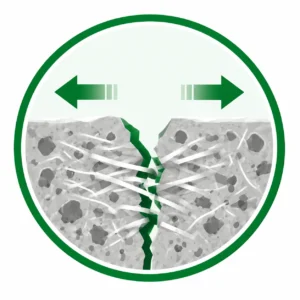
Localized loads can concentrate stress within the asphalt matrix.
Recommended:
Distributed Stress Transfer

POLYVIA™ Polyester Fiber is a bundled monofilament synthetic fiber designed for asphalt mixtures, pavement systems and compatible construction materials. Its fine fiber structure disperses throughout the matrix to provide distributed reinforcement, supporting mixture integrity, stress distribution and crack control.
Available in 0.5 mm, 3 mm, 6 mm, 9 mm and 12 mm, with customized lengths available to match different mixture structures and production requirements.
Polyester Fiber is a synthetic reinforcement fiber designed to be dispersed throughout asphalt, concrete and compatible construction matrices. Unlike continuous reinforcement, individual fibers are distributed within the material to form a fine, multidirectional reinforcing network.
POLYVIA™ Polyester Fiber is supplied as bundled monofilament fiber with a diameter of 6–35 μm and selectable lengths of 0.5 mm, 3 mm, 6 mm, 9 mm and 12 mm. Customized lengths are also available for application-specific production requirements.
When properly dispersed, the fine fiber structure provides a large number of reinforcing elements throughout the matrix, supporting more uniform stress distribution and localized crack control.
Asphalt and pavement materials are exposed to repeated loading, temperature variation and localized stresses. POLYVIA™ Polyester Fiber provides distributed reinforcement throughout the matrix to support stress transfer, crack control and mixture integrity.
Localized loads can concentrate stress within the asphalt matrix.
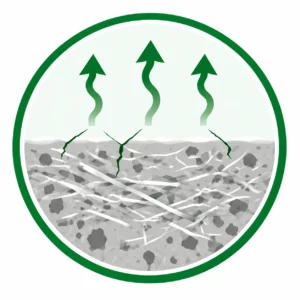
Microcracks can propagate under traffic and temperature stresses.
Repeated traffic creates cyclic stress within pavement layers.
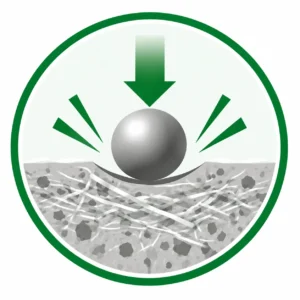
Concentrated loads can deform susceptible asphalt mixtures.
Polyester Fiber functions through uniform dispersion and multidirectional distribution within the surrounding matrix. Proper mixing is essential because reinforcement performance depends not only on the fiber itself, but also on how effectively individual fibers are distributed throughout the material.
Individual polyester fibers disperse uniformly throughout the cementitious matrix during mixing, creating consistent fiber distribution throughout the material.
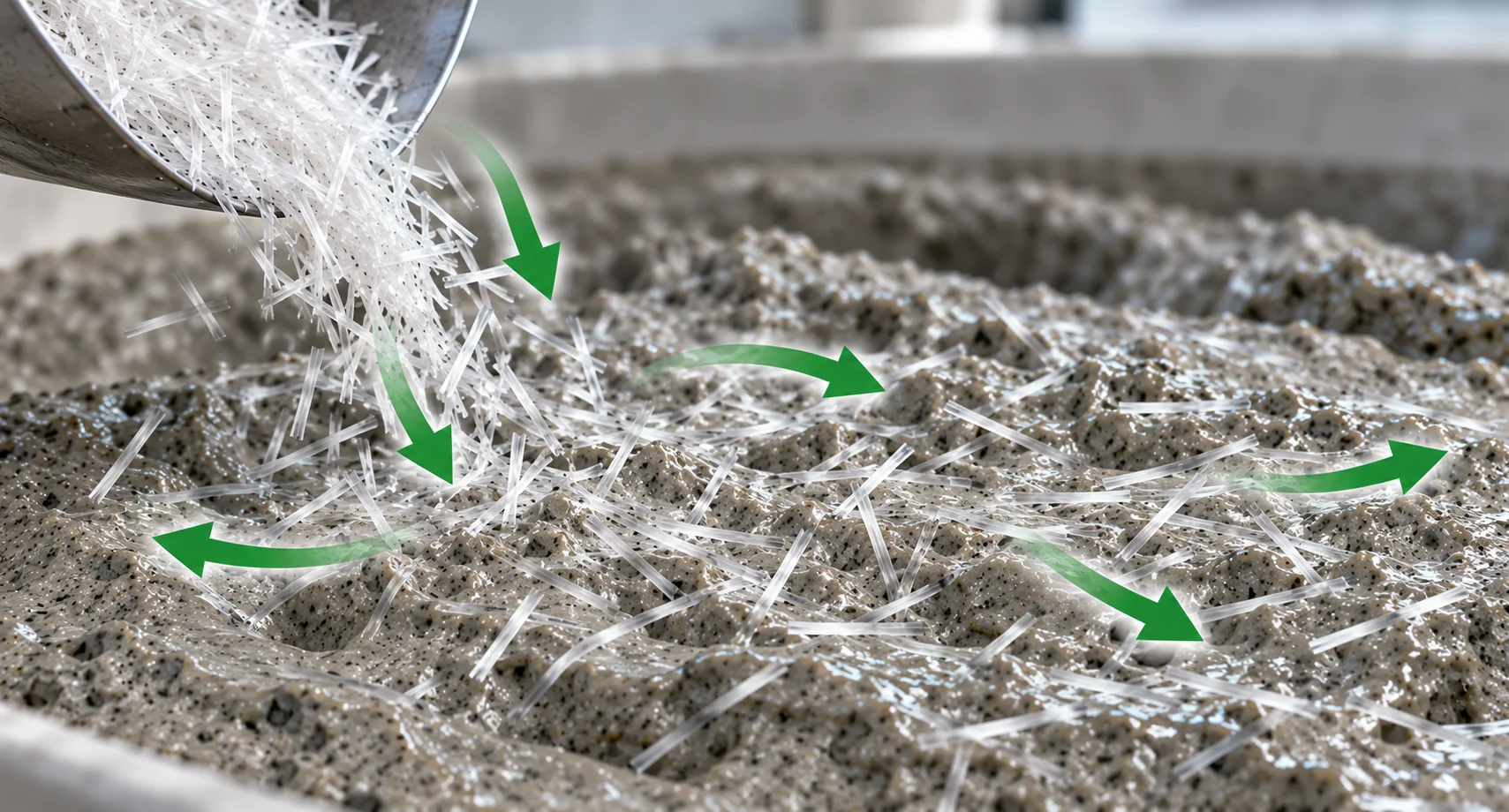
Dispersed fibers develop a random, multidirectional distribution within the matrix, increasing fiber interaction with developing microcracks throughout the material.
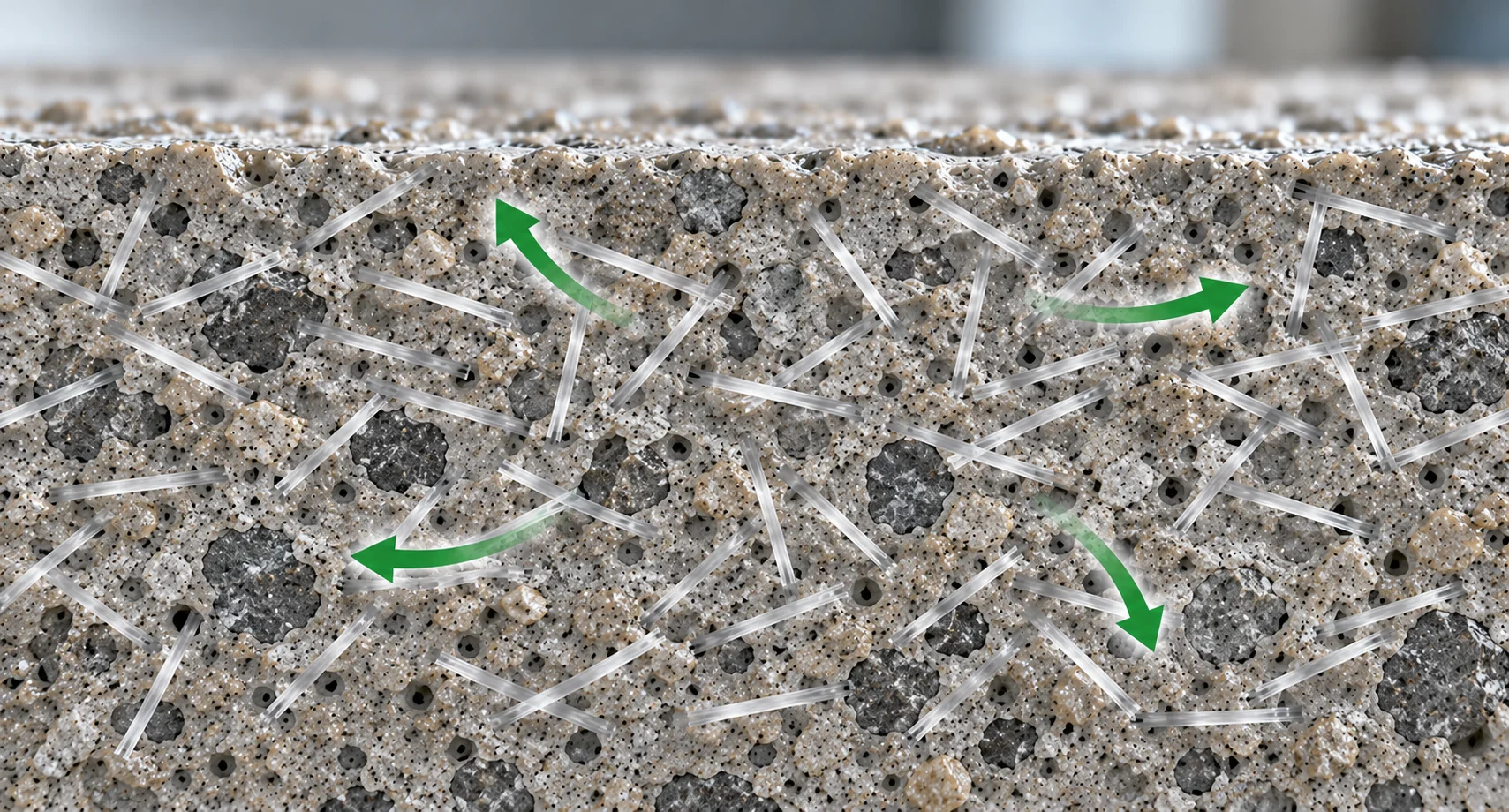
Distributed fibers help redistribute localized stresses around developing microcracks, reducing stress concentration within the surrounding cementitious matrix.
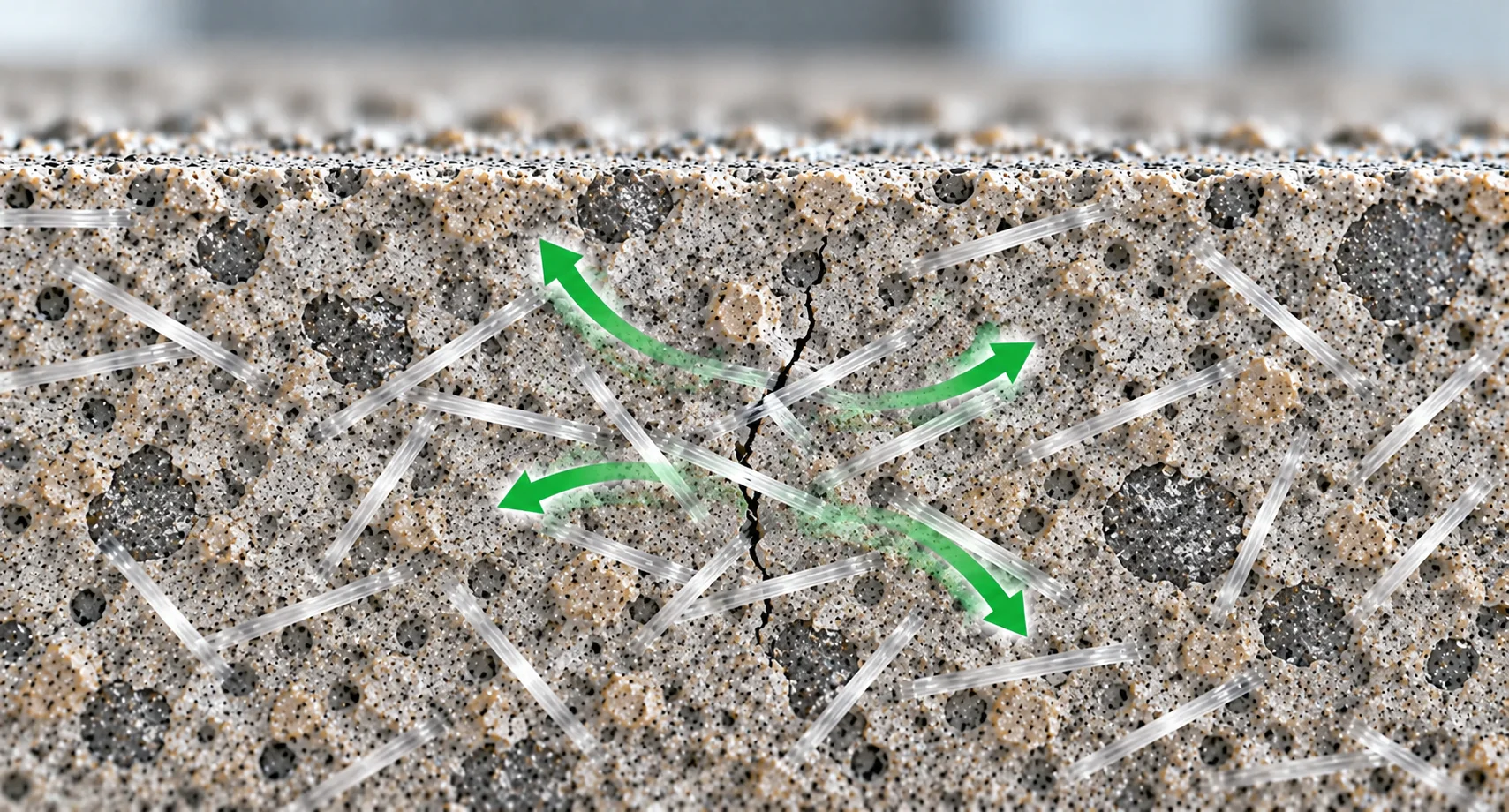
Fibers crossing developing microcracks provide a bridging effect that helps restrict crack opening and propagation while maintaining matrix integrity.
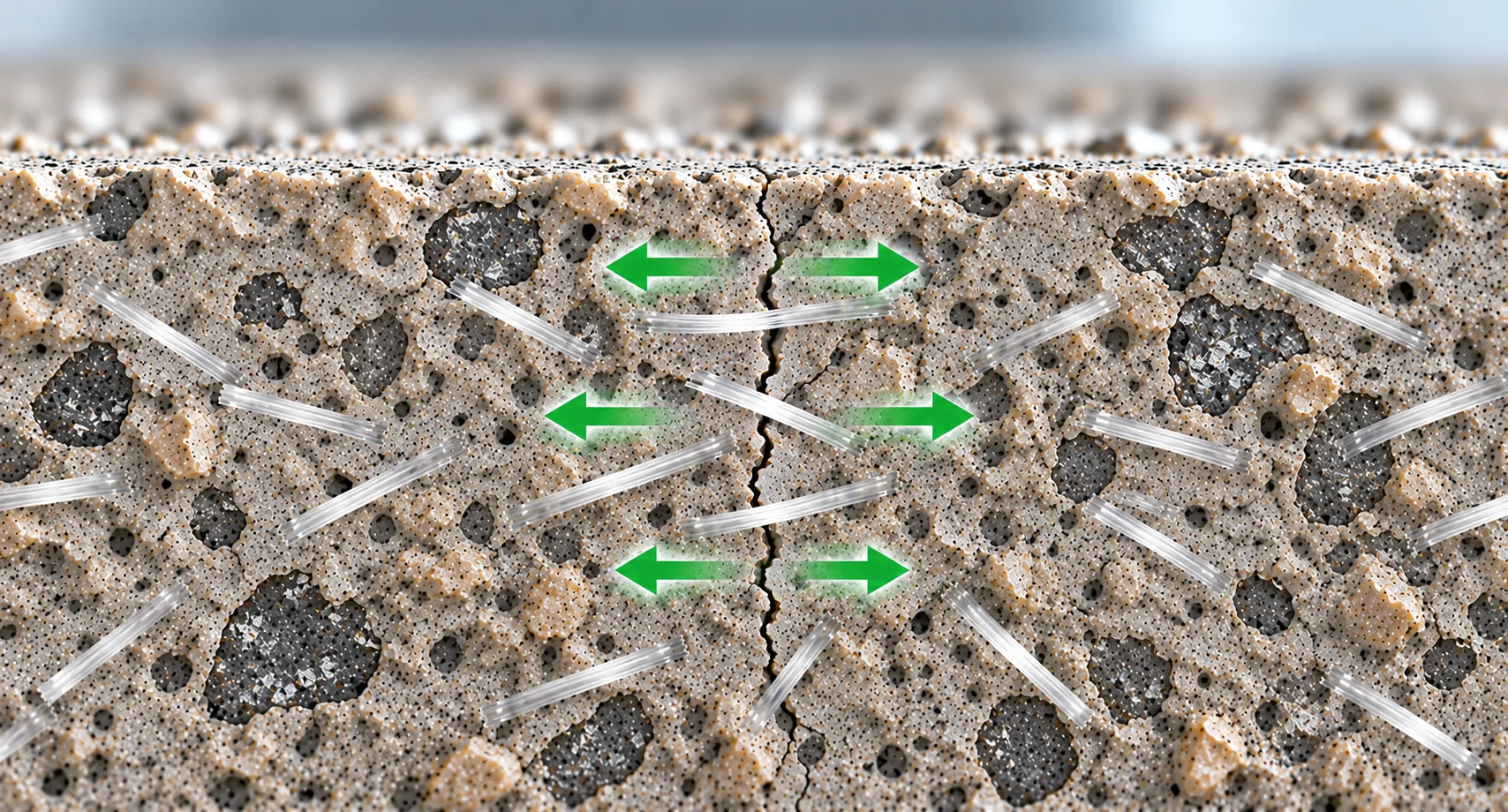
POLYVIA™ Polyester Fiber is designed for use in asphalt mixtures, pavement systems and compatible construction materials where fine, uniformly distributed synthetic fibers are required to support material integrity and performance.
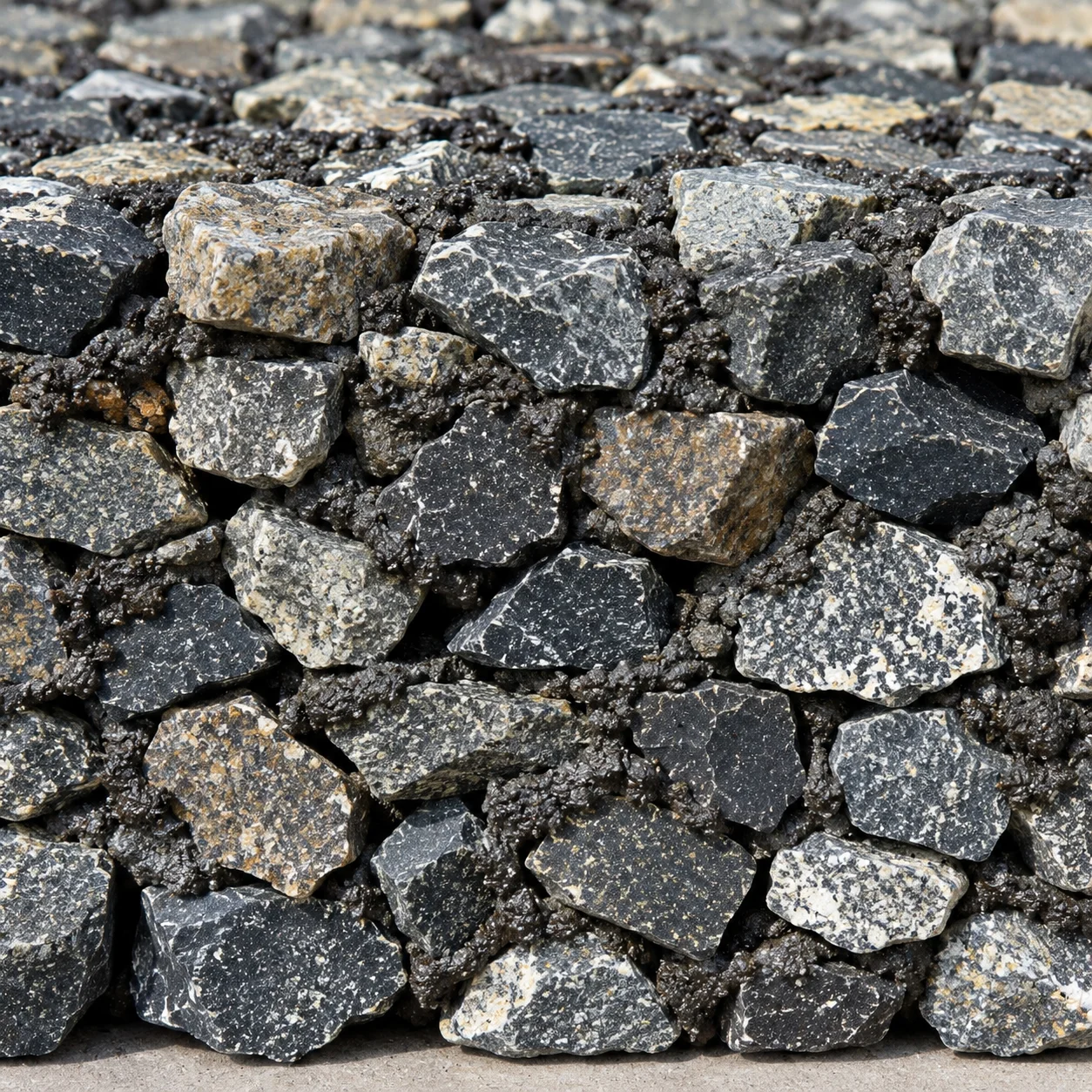
For SMA mixtures requiring uniform fiber distribution to support mixture stability, binder control and overall pavement performance.

For asphalt concrete mixtures requiring distributed fiber reinforcement to support mixture integrity, stress distribution and crack resistance.

For asphalt pavement layers exposed to repeated traffic loading, temperature variation and long-term service conditions.

For asphalt bridge deck systems requiring improved mixture integrity under repeated traffic loading and temperature variation.
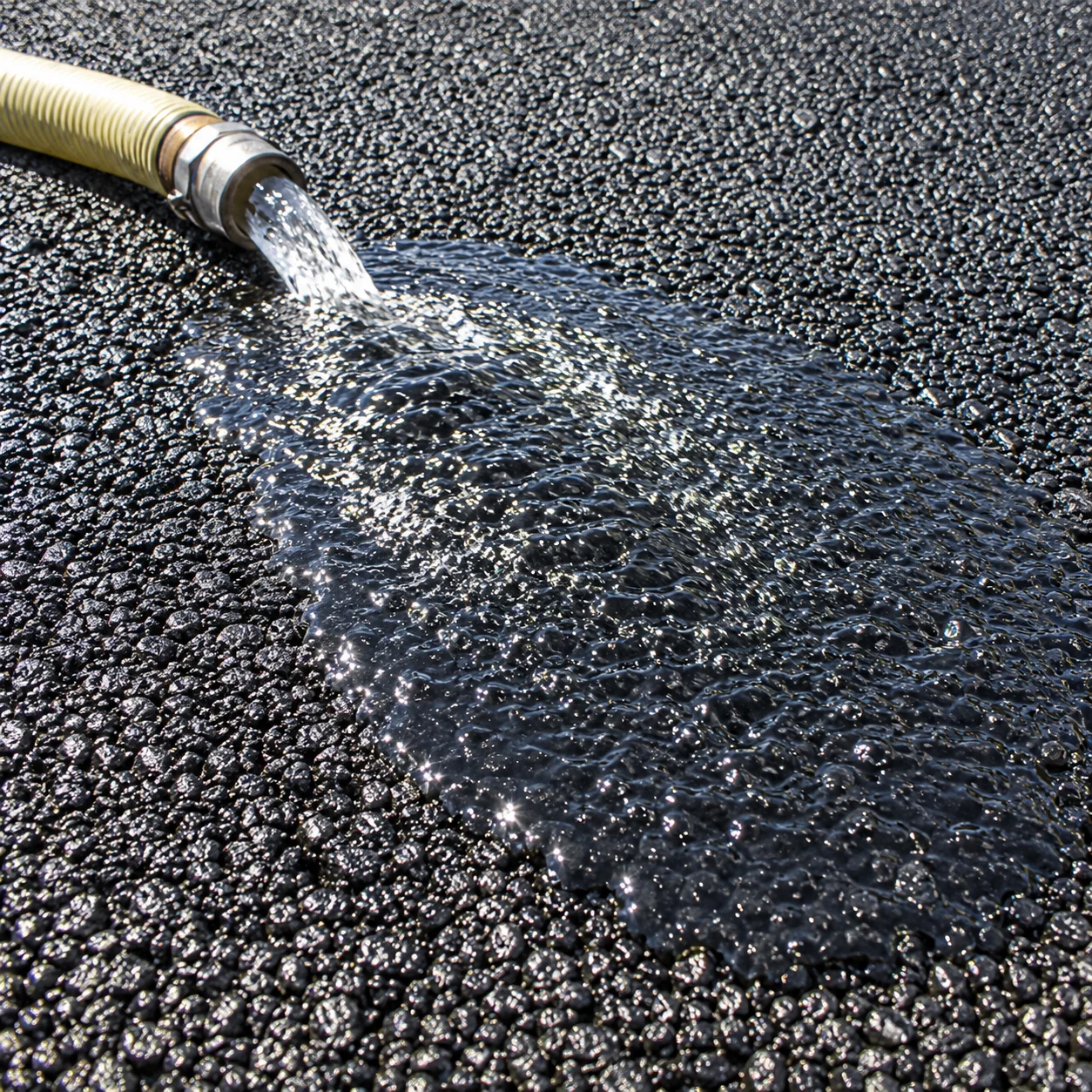
For permeable and porous asphalt mixtures requiring balanced drainage characteristics, mixture integrity and resistance to low-temperature cracking.

For asphalt pavement systems requiring reliable mixture integrity under repeated loading and demanding service conditions.

For heavy-traffic pavements exposed to concentrated wheel loads, repeated braking, acceleration and demanding long-term operating conditions.

For compatible concrete pavements and overlays requiring distributed synthetic fiber reinforcement to support crack control, abrasion resistance and durability.
POLYVIA™ Polyester Fiber is available in 0.5 mm, 3 mm, 6 mm, 9 mm and 12 mm lengths, with customized lengths available for specific production requirements.
Fiber length should be selected according to the material system, mixture structure, dispersion requirements, processing conditions and target reinforcement performance.
| Fiber Length | Selection Consideration | Key Evaluation Point |
|---|---|---|
| 0.5 mm | Ultra-short fiber for systems requiring very fine fiber distribution | Dispersion Uniformity |
| 3 mm | Short fiber where easy incorporation and uniform distribution are priorities | Mixing & Dispersion |
| 6 mm | Medium-length option for compatible asphalt and construction systems | Fiber Distribution |
| 9 mm | Longer fiber where the production system can maintain effective distribution | Mixing Compatibility |
| 12 mm | Extended-length option requiring adequate incorporation and dispersion | Distribution Consistency |
| Custom | Application-specific length according to production requirements | System-Specific Evaluation |
Longer fiber does not automatically mean better reinforcement. The appropriate fiber length should be evaluated together with mixture structure, aggregate grading, mixing equipment, fiber dispersion and target performance.
| Property | Specification |
|---|---|
| Fiber Form | Bundled Monofilament |
| Diameter | 6–35 μm |
| Fiber Length | 0.5 / 3 / 6 / 9 / 12 mm / Customizable |
| Tensile Strength | ≥600 MPa |
| Elastic Modulus | ≥4000 MPa |
| Elongation at Break | 25 ± 5% |
| Melting Point | 257°C |
| Specific Gravity | 1.36 g/cm³ |
| Ignition Point | 554°C |
| Acid & Alkali Resistance | ≥95% |
| Safety | Non-toxic Materia |
Packing: 1-5kg/Bag, 10-25kg/Wowen bag, 500kg/Pallet or customzed
POLYVIA™ Polyester Fiber has a recommended dosage of 1–5 kg/m³. Final dosage should be determined according to the mixture design, selected fiber length, dispersion behavior, production conditions and required performance.
| Production Stage | Guidance | Key Control Point |
|---|---|---|
| 1. Aggregate | Introduce the required aggregate according to the asphalt mixture design. | Prepare the aggregate system |
| 2. Add Polyester Fiber | Add the required quantity of Polyester Fiber to the aggregate. | Control fiber dosage |
| 3. Pre-Mix with Aggregate | Mix the fiber with the aggregate to promote uniform distribution. | Achieve fiber dispersion |
| 4. Add Asphalt Binder | Introduce the asphalt binder after the fiber has been adequately distributed. | Disperse fiber before binder addition |
| 5. Final Mixing | Continue mixing until the fiber, aggregate and binder are uniformly incorporated. | Maintain mixture uniformity |
Aggregate → Add Polyester Fiber → Dry Mix → Add Asphalt Binder → Final Mixing
Production Note: Mixing conditions should be adjusted according to the asphalt plant, batch size, mixture design and actual fiber dispersion performance.

Product specifications, physical properties and application information.
Download ↓
Product handling, storage and safety information.
Download ↓
Batch-specific product information available according to shipment and order requirements.
Download ↓
Application guidance for dosage, mixing, dispersion and material compatibility.
Download ↓Polyester Fiber is used as a dispersed synthetic reinforcement fiber in asphalt mixtures, pavement systems, concrete and compatible construction materials.
When properly dispersed, the fibers form a multidirectional network within the matrix, supporting stress distribution, crack control and material integrity.
Yes. Polyester Fiber can be used in compatible Stone Mastic Asphalt (SMA), asphalt concrete and pavement systems where distributed synthetic fiber reinforcement is required.
Its suitability should be evaluated together with aggregate grading, asphalt binder system, mixture design, processing conditions and target pavement performance.
The recommended dosage of POLYVIA™ Polyester Fiber is 1–5 kg/m³.
Final dosage should be selected according to the mixture type, fiber length, dispersion behavior, processing conditions and required performance.
For the asphalt mixing procedure provided for this product, Polyester Fiber is added to the aggregate system and dry mixed to promote uniform dispersion before the asphalt binder is introduced.
A typical sequence is:
Aggregate → Polyester Fiber → Dry Mixing → Asphalt Binder → Final Mixing
Actual mixing conditions should be adjusted according to the asphalt plant, batch size and mixture design.
POLYVIA™ Polyester Fiber is available in 0.5 mm, 3 mm, 6 mm, 9 mm and 12 mm lengths.
Customized lengths are also available for specific production requirements.
Is longer polyester fiber always better for reinforcement?
POLYVIA™ Polyester Fiber has a specified melting point of 257°C, providing thermal stability for compatible asphalt applications involving elevated processing temperatures.
However, suitability should not be determined by melting point alone. Actual performance should be evaluated according to mixing temperature, exposure time, asphalt formulation, addition method and production conditions.
Polyester Fiber and Polypropylene (PP) fiber are both synthetic fibers, but they differ in polymer chemistry, density, thermal properties, fiber dimensions and application characteristics.
POLYVIA™ Polyester Fiber is particularly suited to compatible asphalt and pavement systems, while PP Fiber is widely used in concrete and cementitious materials for crack control and distributed fiber reinforcement.
Neither material should be treated as a universal substitute for the other. Selection should be based on the material system, processing temperature, fiber geometry and required performance.
Technical Support for Fiber Selection & Application Trials Polyester Fiber performance depends on more than fiber length. Share your application, mixture design, processing conditions and performance requirements with POLYVIA. Our technical team can help evaluate the appropriate: Fiber Length → Starting Dosage → Addition Method → Mixing & Dispersion → Trial Direction