Clay-Induced PCE Performance Loss
Clay minerals can adsorb PCE molecules, reducing their availability for cement particle dispersion.
Recommended:
Clay-Resistant PCE Grade

POLYVIA™ Clay-Resistant Polycarboxylate Superplasticizer (PCE CRS) is a specialized liquid PCE superplasticizer developed for concrete production using clay-bearing sand and aggregates.
Designed to improve PCE tolerance to clay interference, this clay-resistant concrete admixture supports cement particle dispersion, water-reduction performance and concrete workability under challenging aggregate conditions. It provides an alternative admixture solution for ready-mix concrete producers and manufacturers working with manufactured sand and variable aggregate quality.
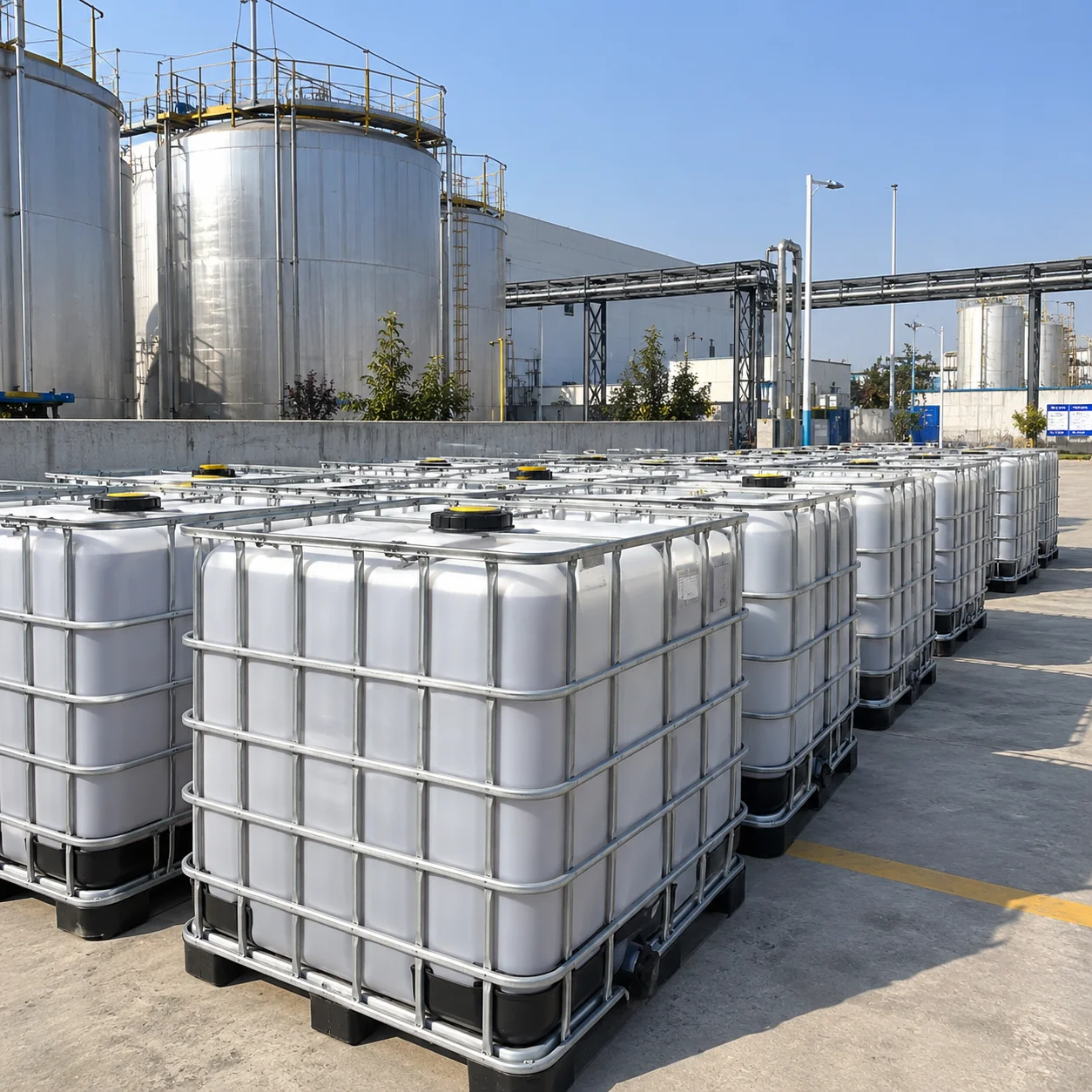
Clay-Resistant Polycarboxylate Superplasticizer, also known as clay-resistant PCE or clay-tolerant PCE, is a specialized concrete admixture developed to improve polycarboxylate ether compatibility with clay-bearing aggregates.
Certain clay minerals can adsorb PCE molecules through surface interactions and, particularly in expandable clay minerals, interlayer interactions. These processes may reduce the amount of PCE available for cement particle dispersion, increasing admixture demand and contributing to workability loss.
POLYVIA™ PCE CRS is designed to improve tolerance to clay interference, supporting more reliable admixture performance in concrete containing clay-contaminated sand and manufactured aggregates.
Clay minerals can adsorb PCE molecules, reducing their availability for cement particle dispersion.
Clay contamination can increase PCE consumption to achieve the required concrete flowability.
Clay interference can reduce admixture efficiency and contribute to faster workability loss.
Variations in clay content and mineral composition can cause inconsistent PCE performance.
Clay minerals have active surface sites and, in some cases, expandable interlayers. PCE molecules may adsorb onto clay surfaces, while their polyether side chains can enter expandable interlayers, particularly in montmorillonite.
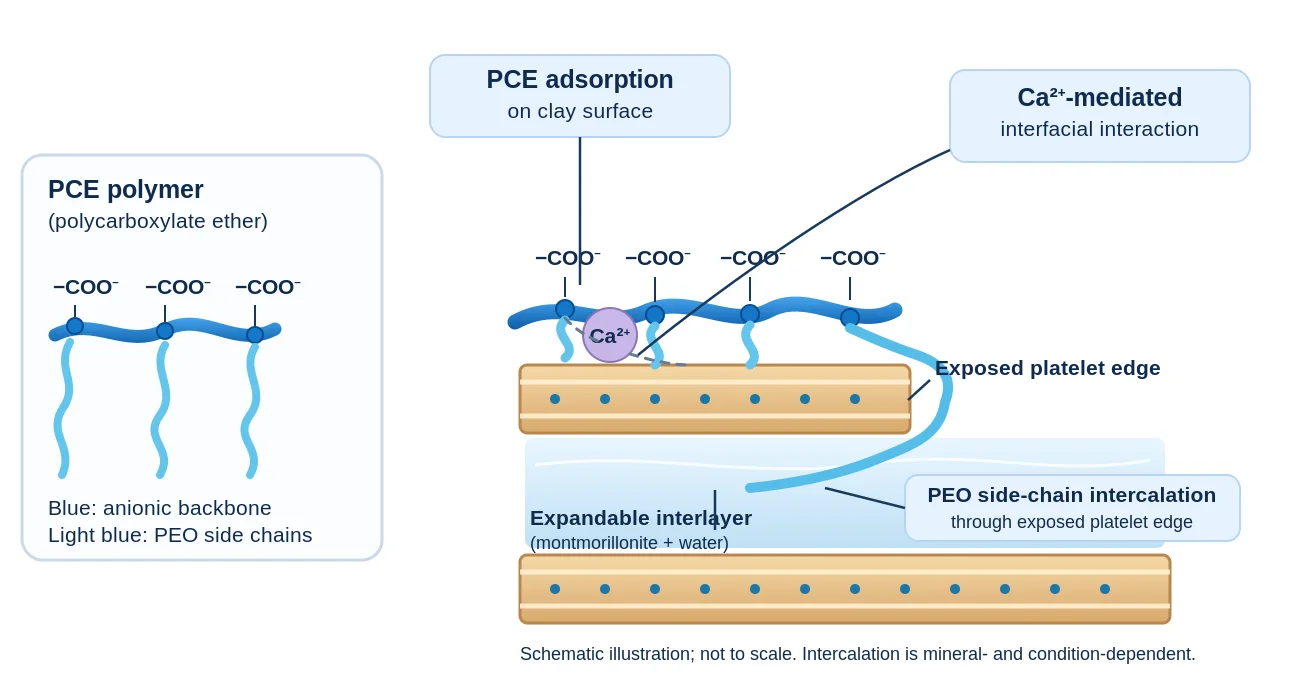
PCE adsorption and intercalation by clay can reduce the amount of polymer available for cement dispersion. Clay-related water absorption and swelling may also increase water demand and admixture requirements.
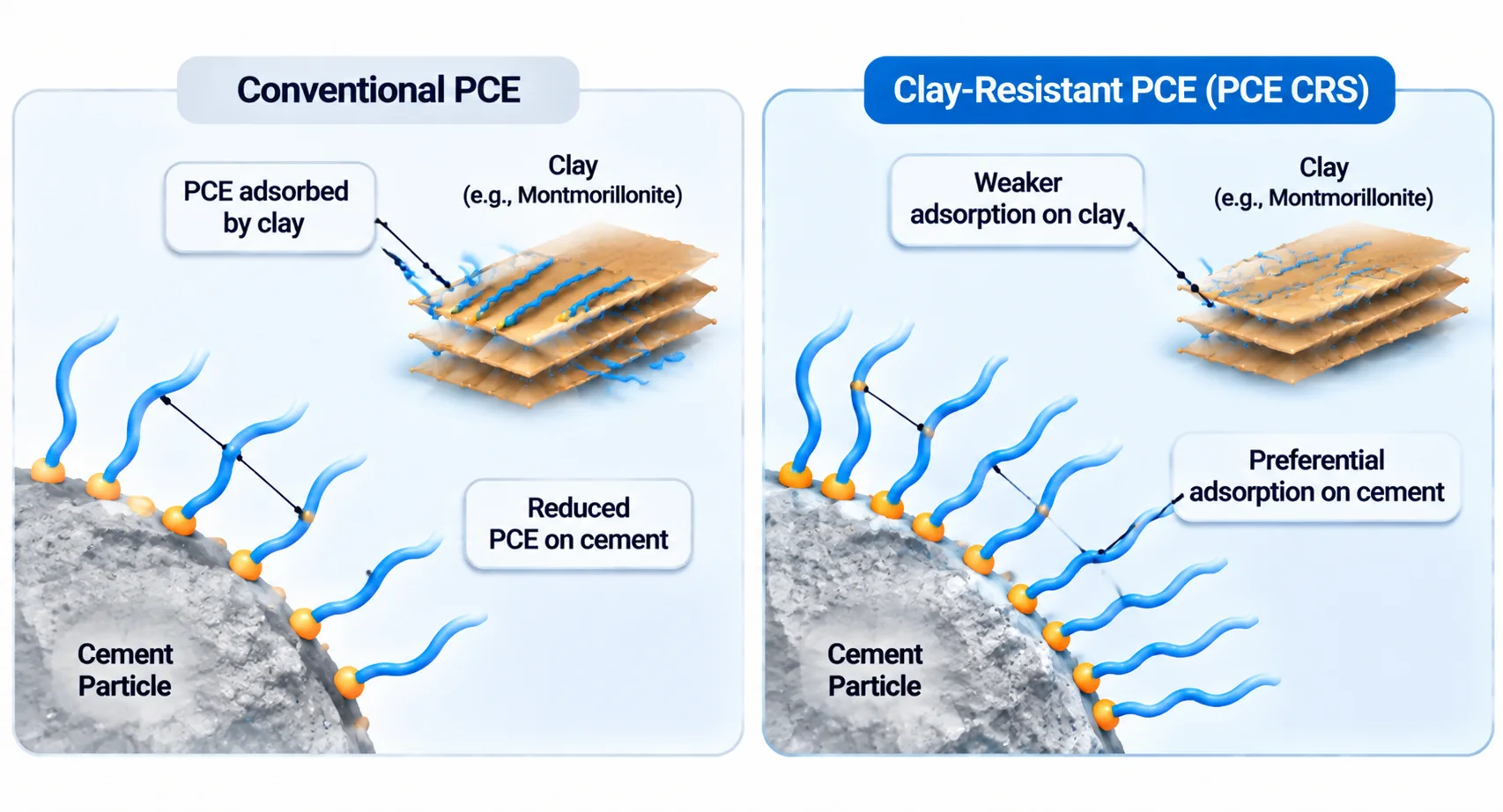
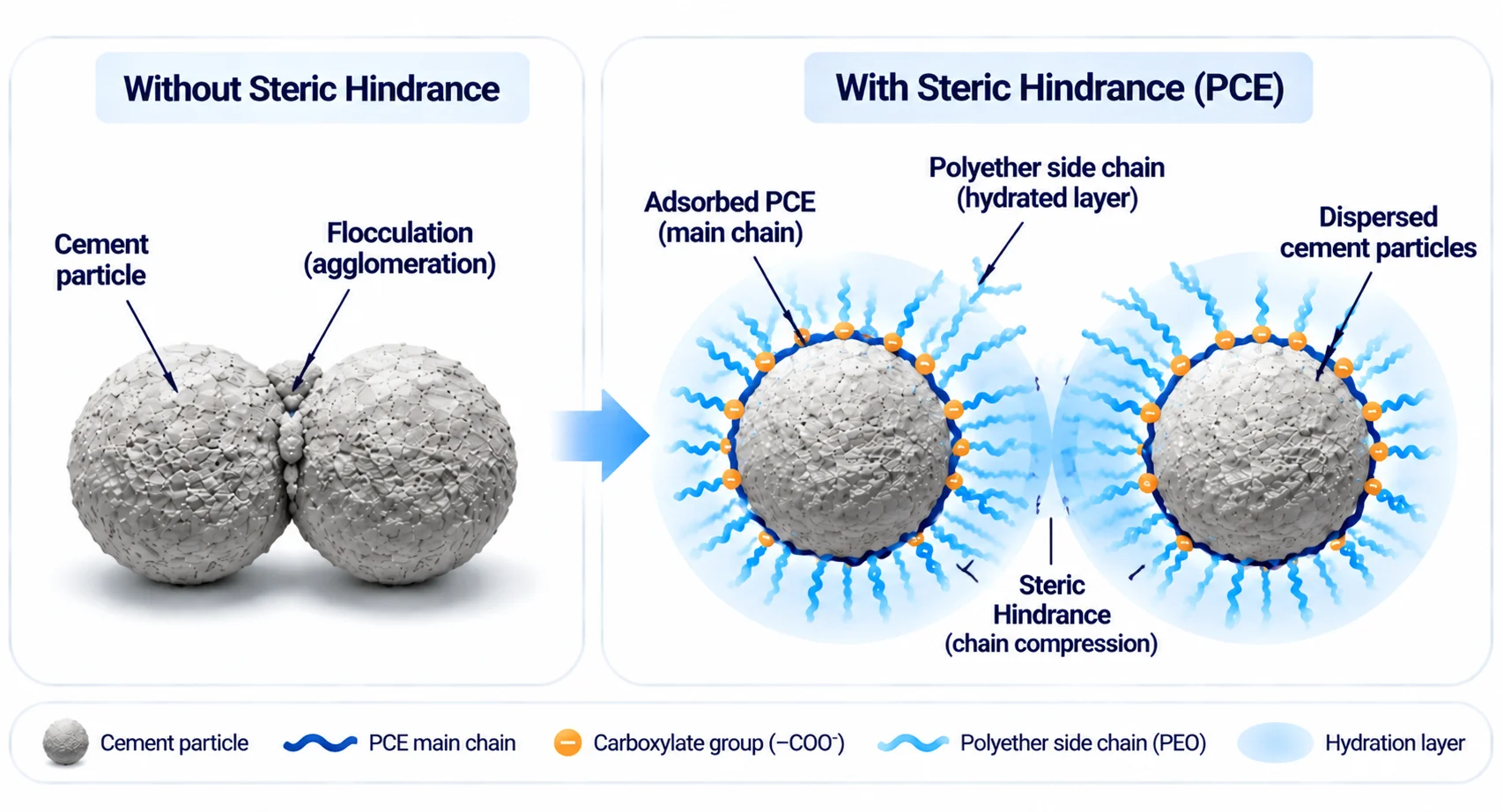
Available PCE molecules adsorb onto cement particle surfaces through interactions involving carboxylate groups (–COO⁻), with calcium ions contributing to interfacial interactions and polymer attachment.
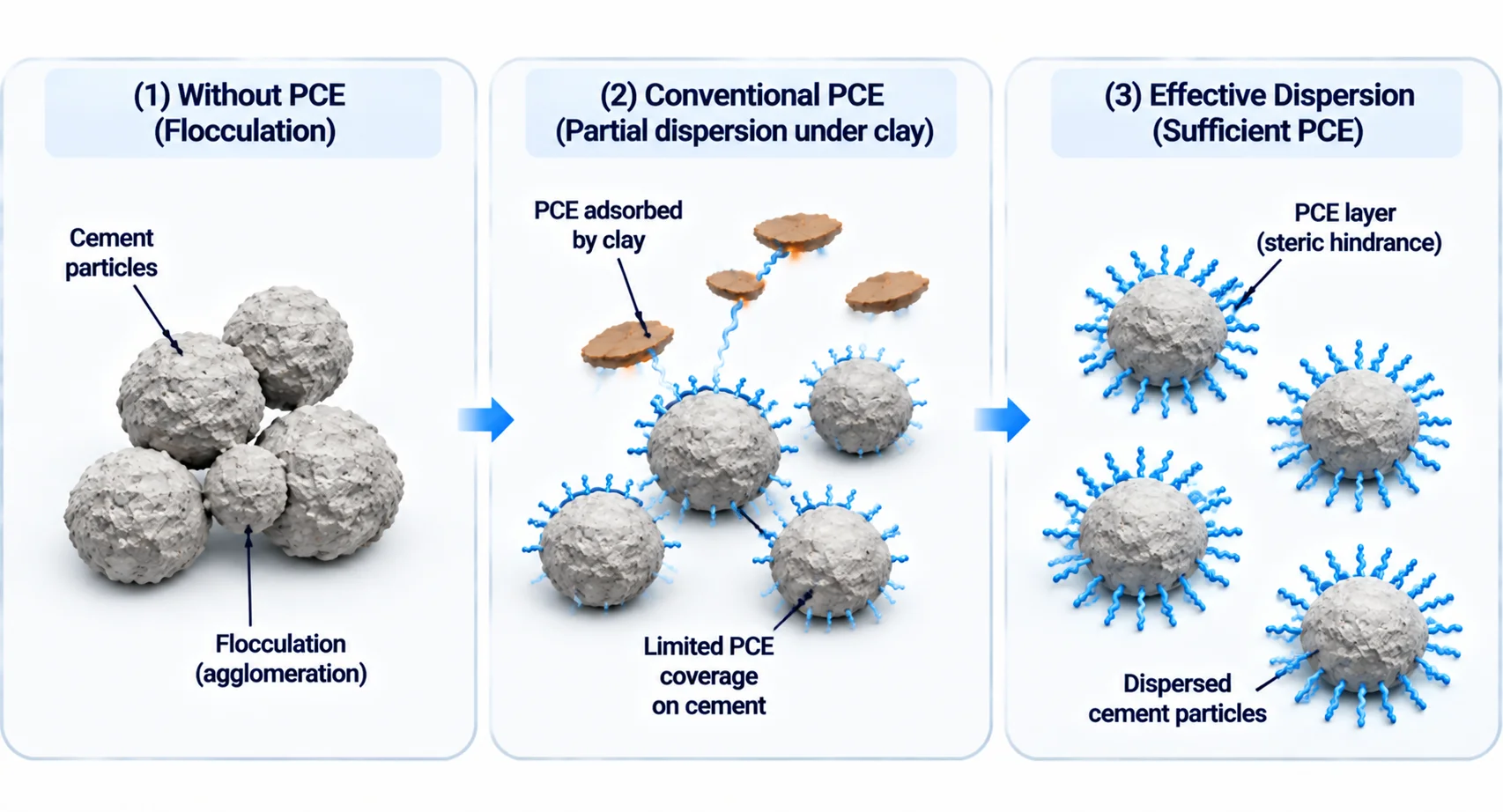
The polyether side chains extend into the surrounding aqueous phase, creating steric barriers between cement particles. This reduces particle flocculation and promotes cement dispersion and fluidity.
| Item | PCE CRS 50 | PCE CRS 40 |
|---|---|---|
| Appearance | Amber to brown liquid | Amber to brown liquid |
| Solid content, %≥ | 50±1 | 40±1 |
| pH value | 4.0±1.0 | 4.0±1.0 |
| Water Reducing Rate, %≥ | 25 | 25 |
| Sodium Sulfate, %≤ | 5.0 | 5.0 |
| Chloride, %≤ | 0.2 | 0.2 |
| Total Alkali Content, %≤ | 10 | 10 |
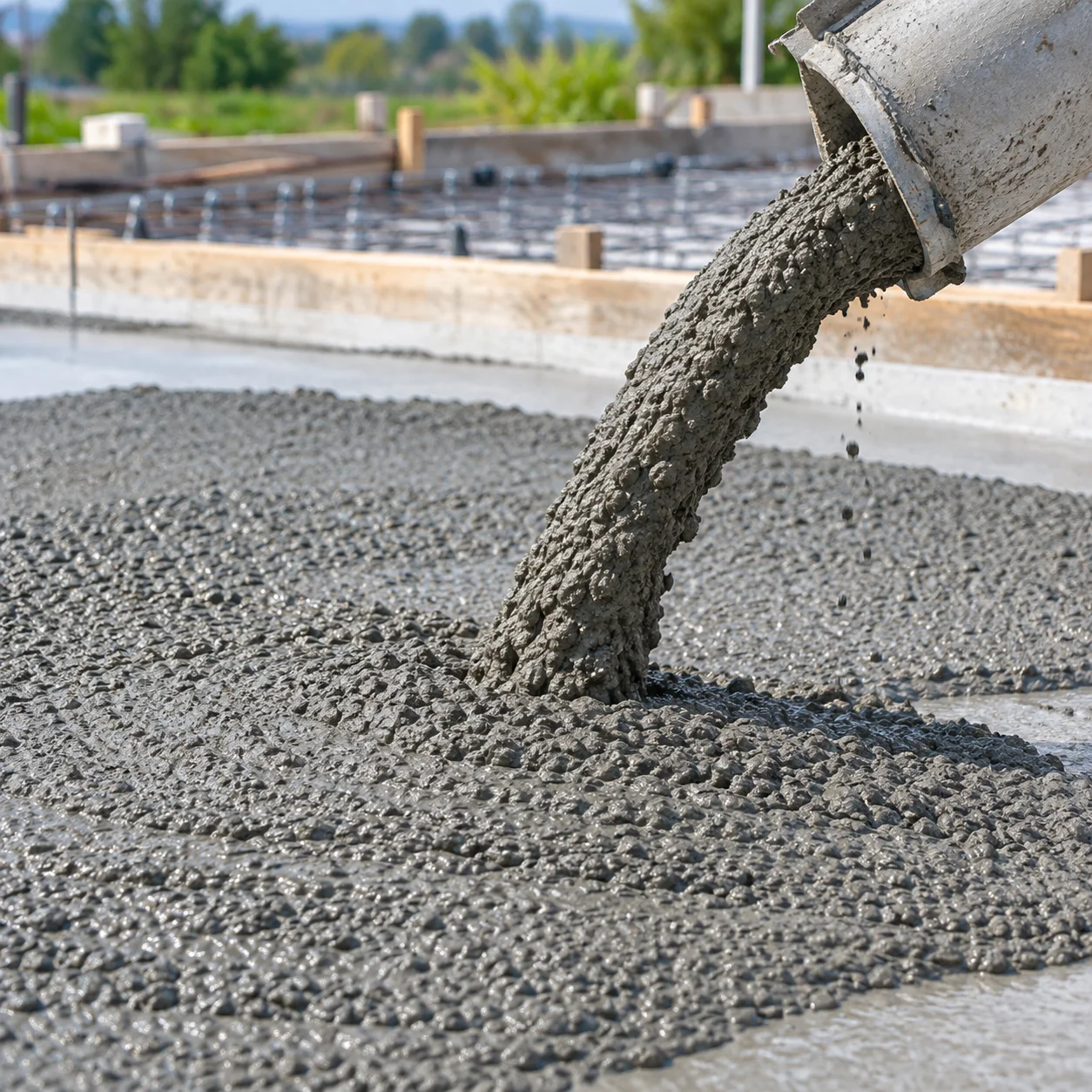
For ready-mix concrete produced with natural or manufactured sand containing clay impurities, where consistent PCE compatibility and workability are required.
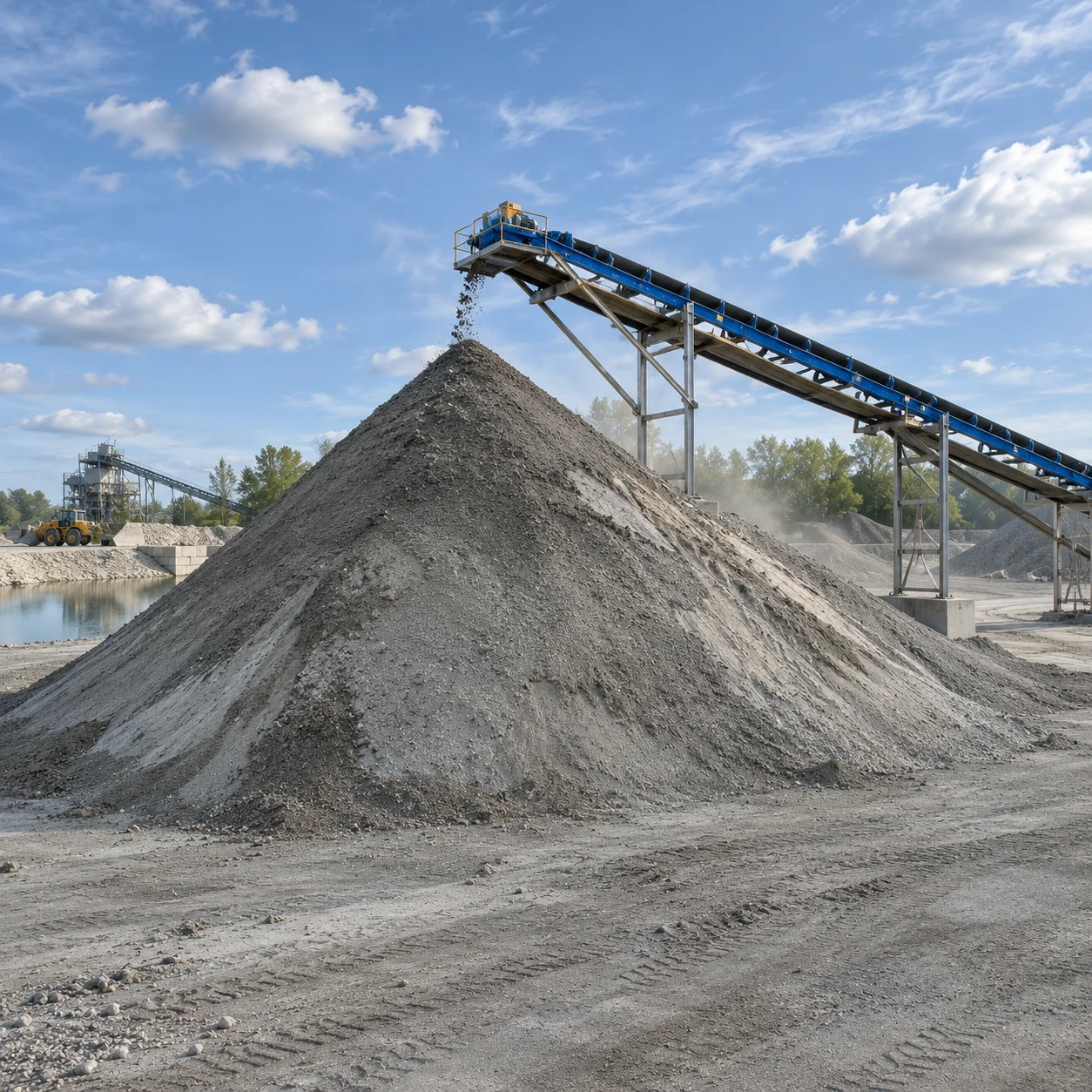
For concrete incorporating crushed sand and manufactured aggregates with varying clay content, mineral composition and particle characteristics.
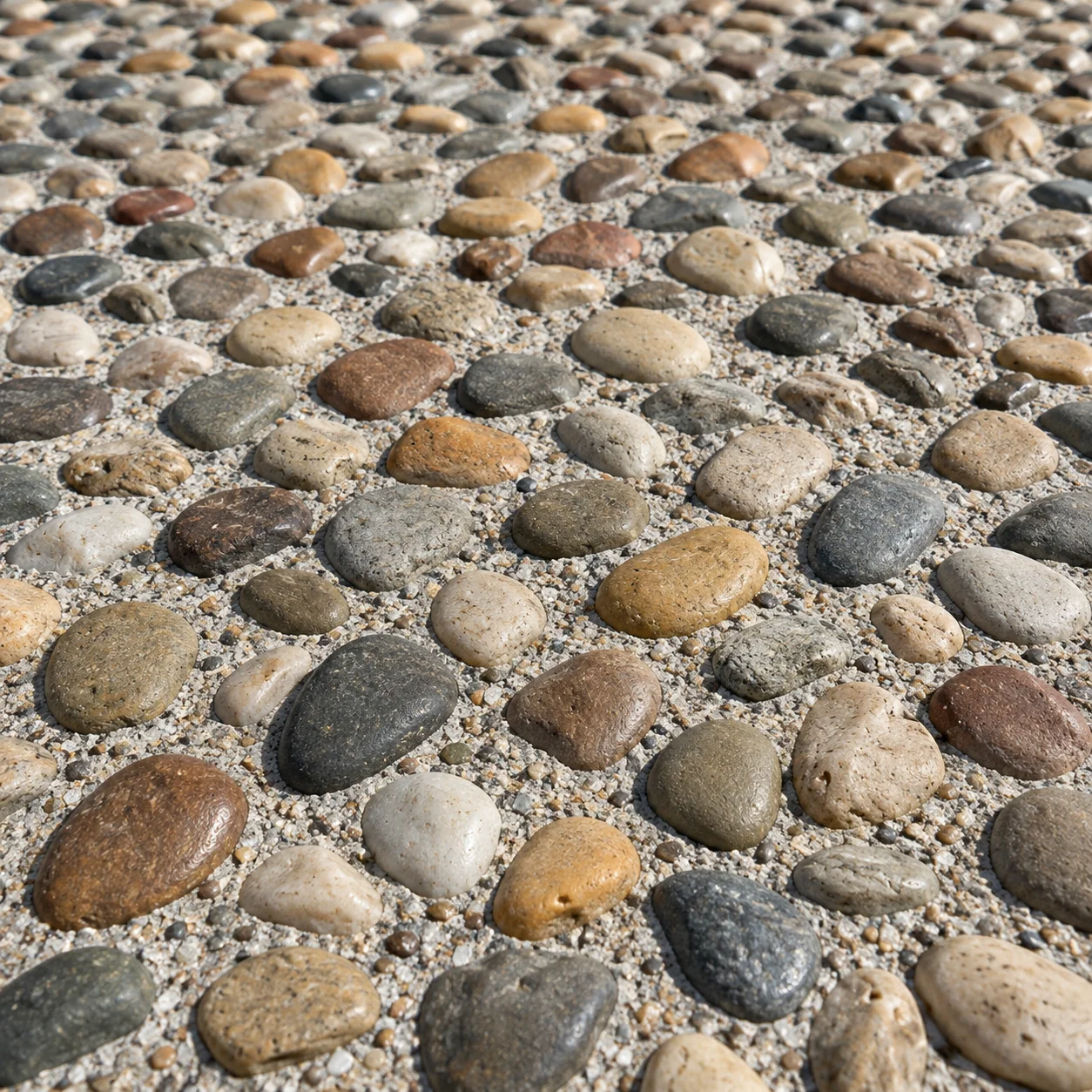
For concrete produced with clay-contaminated aggregates, where conventional PCE performance may be affected by clay adsorption and admixture interaction.
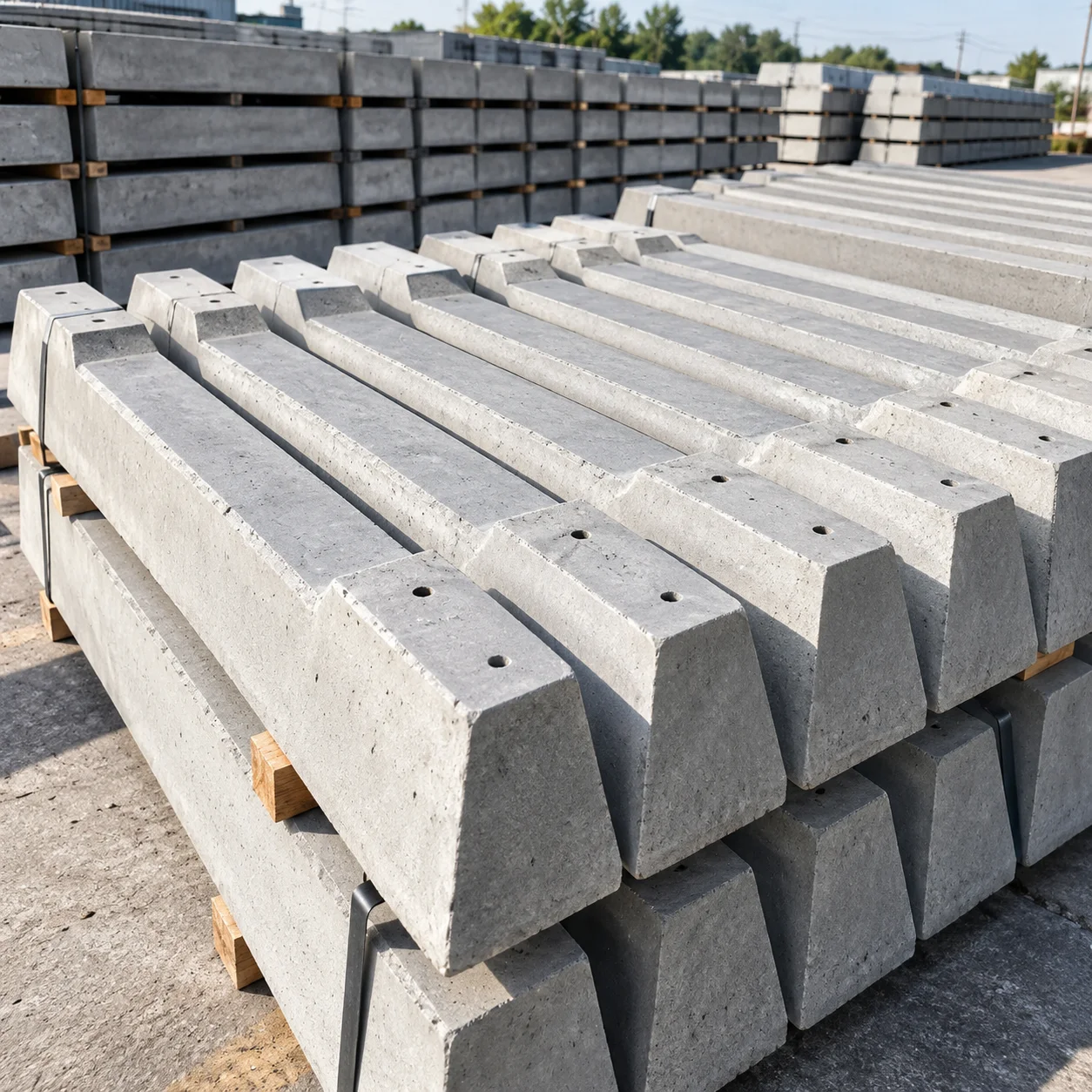
For precast concrete manufactured with clay-bearing aggregates, where consistent admixture compatibility and fresh concrete performance are important.

For pumped concrete requiring suitable flowability, cohesion and workability retention under varying aggregate and production conditions.

For concrete produced at elevated temperatures, where clay interference and temperature-related slump loss may jointly affect workability.
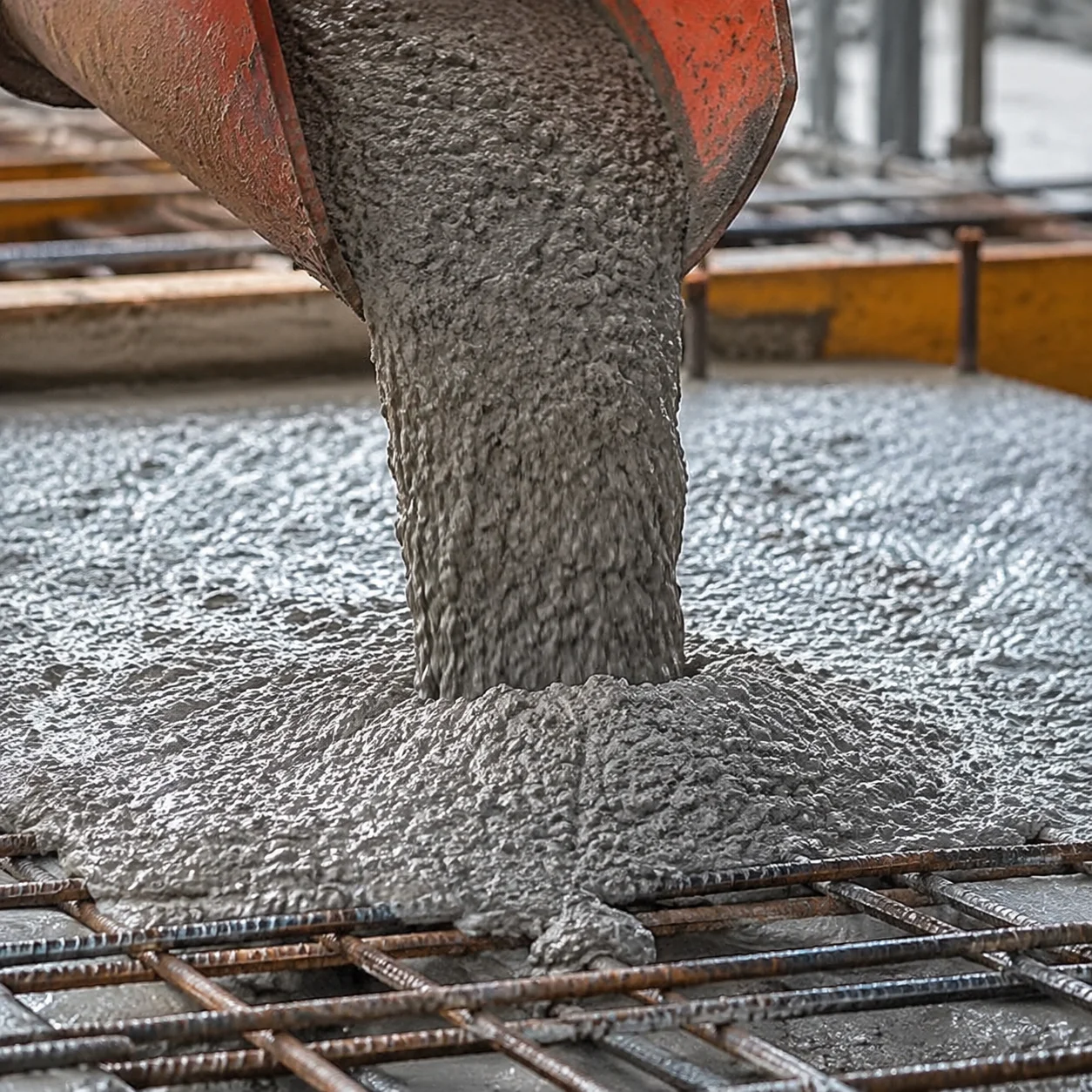
For low water-to-binder ratio concrete requiring controlled dispersion and workability, subject to cement compatibility and dosage optimization.

For large-volume concrete applications using clay-bearing aggregates, where admixture compatibility and consistent fresh concrete performance require evaluation.
Specialized PCE technology designed for concrete systems containing clay-bearing sand and aggregates.
Developed to support more reliable PCE performance when aggregate mineralogy and clay contamination affect conventional admixture systems.
Supports cement particle dispersion and water reduction when optimized for actual raw materials and concrete mix design.
Provides an alternative PCE technology for managing workability challenges associated with clay-bearing aggregates.
PCE CRS 50 and PCE CRS 40 provide flexibility for different liquid admixture concentration requirements.
Allows concrete producers to optimize dosage according to active-solids content, clay characteristics and target concrete performance.
Selecting a clay-resistant PCE is only the first step. Its performance depends on the interaction between the admixture, clay-bearing aggregates, cementitious materials, mix proportions and production conditions. A systematic evaluation helps establish suitable dosage, compatibility and concrete performance.
Evaluate sand source, particle-size distribution, fines content, clay content and, where available, Methylene Blue Value (MBV) and dominant clay minerals.
Review cement type, cement chemistry, supplementary cementitious materials and other mix constituents that may influence PCE compatibility and concrete performance.
Prepare a control mix using the existing admixture system. Maintain consistent mix proportions and testing conditions, recording water-to-binder ratio, initial slump and workability retention.
Choose PCE CRS 50 or PCE CRS 40 according to solid content, active-solids dosage, admixture handling requirements and concrete production conditions.
For PCE CRS 50 (50% ± 1% solids), the recommended dosage range is 0.4%–0.9% of total cementitious material weight. For PCE CRS 40 (40% ± 1% solids), the equivalent nominal dosage range is 0.5%–1.2%, subject to laboratory verification and concrete performance requirements.
Measure initial slump and retention at specified time intervals under controlled temperature conditions. Also assess air content, bleeding, segregation and concrete cohesion.
Evaluate setting time and compressive strength at relevant testing ages. Compare results against project requirements to confirm dosage suitability and overall concrete performance.
Conduct production-scale trials under actual batching, mixing, temperature, transportation and placement conditions. Confirm consistent performance before adopting the selected formulation for routine production.
POLYVIA™ provides liquid polycarboxylate superplasticizer solutions for concrete admixture manufacturers, ready-mix concrete producers and construction material suppliers.
Our technical team supports product selection, raw material compatibility, dosage optimization and concrete performance evaluation to help customers develop suitable admixture formulations.

Detailed product specifications, solid-content grades, recommended dosage ranges and key technical parameters.
Download ↓
Essential information on product identification, safe handling, storage conditions and recommended safety precautions.
Download ↓
Practical guidance on product selection, dosage adjustment, raw material compatibility and concrete performance evaluation.
Download ↓
Batch-specific inspection records covering product specifications, quality parameters and relevant test results.
Download ↓Contact our technical team to discuss your cement type, sand source, clay characteristics and concrete performance requirements.
Clay-resistant PCE is a specialized polycarboxylate ether admixture formulated to improve tolerance to clay interference in concrete containing clay-bearing sand and aggregates. It supports cement particle dispersion, water reduction and workability when properly selected and dosed.
Certain clay minerals can adsorb PCE molecules or interact with their molecular structures. Swelling clay minerals, particularly montmorillonite, can also incorporate PCE side chains into their interlayer spaces, reducing the polymer available for cement dispersion and potentially increasing admixture demand and workability loss.
PCE CRS 50 has a solid content of 50% ± 1%, while PCE CRS 40 has a solid content of 40% ± 1%. Both belong to the POLYVIA™ clay-resistant PCE series, but their liquid dosage ranges differ and should be adjusted according to active-solids content and actual concrete performance.
For PCE CRS 50 (50% ± 1% solids), the recommended initial trial dosage range is 0.4%–0.9% of total cementitious material weight. For PCE CRS 40 (40% ± 1% solids), the corresponding nominal equivalent-solids range is 0.5%–1.2%. Final dosage should be established through laboratory testing using actual raw materials.
For example, a concrete mix containing 400 kg of total cementitious materials per cubic metre would require 2.0 kg of PCE CRS 50 at a 0.5% dosage.
Yes. PCE CRS is designed for evaluation in concrete containing manufactured sand and clay-bearing aggregates. Its suitability depends on sand grading, fines content, clay characteristics, cement compatibility and concrete mix proportions, which should be assessed through laboratory trials.
No. Clay-resistant PCE is formulated to improve admixture tolerance to clay interference, not remove clay from aggregates or guarantee complete immunity to all clay minerals. Excessive clay contamination may still require aggregate washing, raw material adjustment or other concrete mix-design measures.
Different clay minerals, including montmorillonite, illite and kaolinite, have different structures, surface properties and adsorption characteristics. Their effects on PCE performance can vary significantly, so laboratory evaluation using representative local aggregates is recommended before selecting a suitable grade.
Evaluate sand grading, fines content, clay content and, where available, Methylene Blue Value (MBV) and clay mineral composition. Establish a reference mix and compare PCE CRS grades at appropriate active-solids dosages, testing slump retention, air content, setting time and compressive strength.
Tell us about your cement type, sand source, clay characteristics, total cementitious material content and target concrete workability. POLYVIA™ can help evaluate a suitable PCE CRS grade and dosage strategy based on your raw materials and concrete production requirements.