Surface Interlock
The milled surface profile and crescent-shaped cross-section promote mechanical engagement with the surrounding concrete, contributing to interfacial bond and resistance to fiber slip.
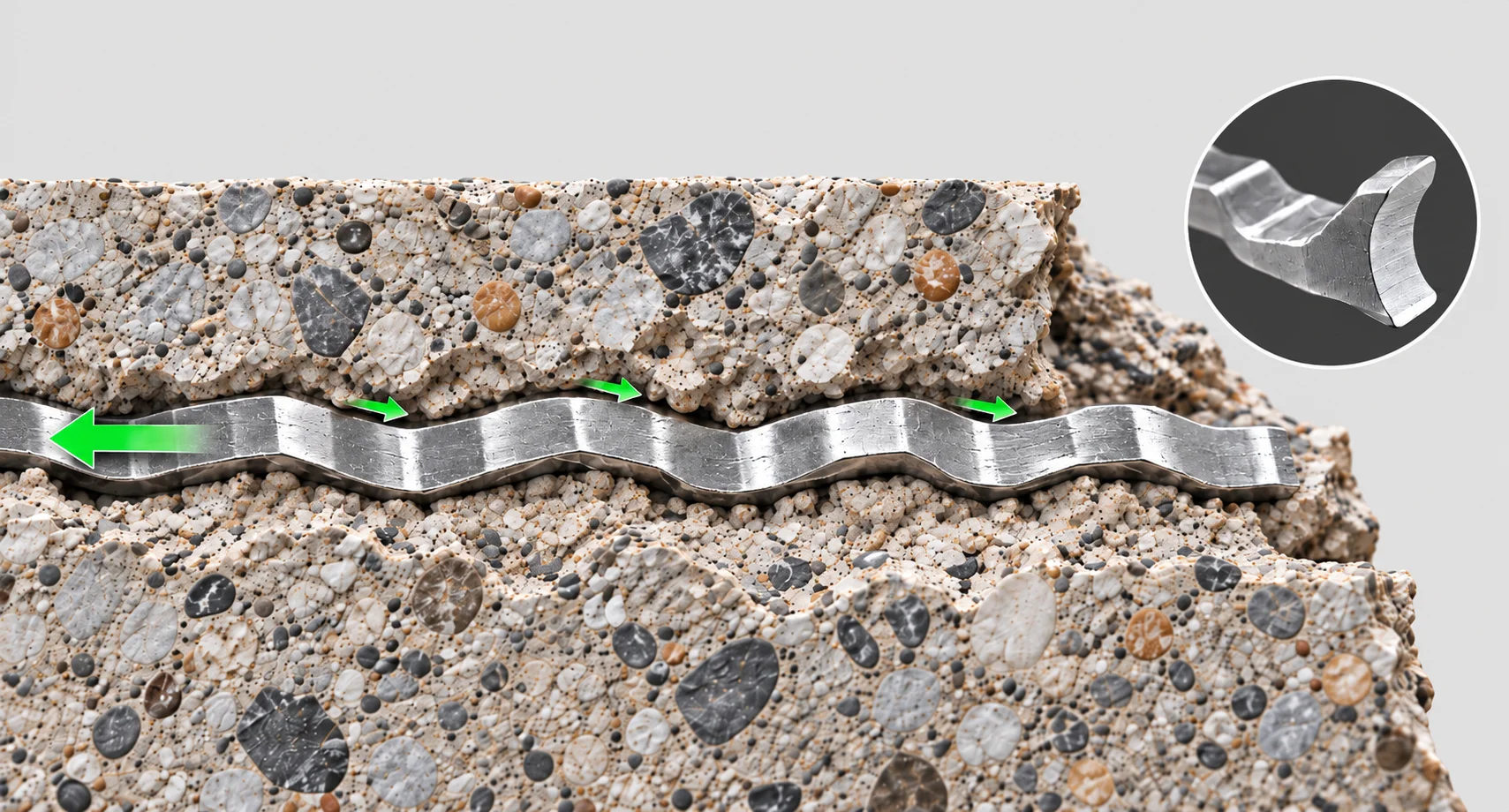

POLYVIA Milling Steel Fiber is produced by mechanically milling thick steel plate or steel ingots, forming a corrugated surface and crescent-shaped cross-section. Designed for steel fiber reinforced concrete (SFRC), it supports crack control, residual flexural performance and toughness in industrial flooring, concrete pavements, precast components and infrastructure applications.
Milling Steel Fiber is a discrete steel reinforcement produced through mechanical milling of thick steel plate or steel ingots. Unlike conventional wire-derived fibers, it features an irregular corrugated surface and crescent-shaped cross-section created during manufacturing.
These geometric characteristics promote mechanical interaction between the fiber and surrounding concrete matrix. When properly distributed, the fibers provide reinforcement across potential crack paths, contributing to tensile stress transfer after matrix cracking.
Milling Steel Fiber reinforces concrete through surface interlock, crack bridging and progressive pullout resistance. Its corrugated surface and crescent-shaped cross-section contribute to interfacial resistance, allowing embedded fibers to transfer tensile forces and dissipate energy as concrete cracks develop.
The milled surface profile and crescent-shaped cross-section promote mechanical engagement with the surrounding concrete, contributing to interfacial bond and resistance to fiber slip.
Fibers intersecting a developing crack remain embedded on both sides, transferring tensile forces across the crack plane and helping control crack opening.
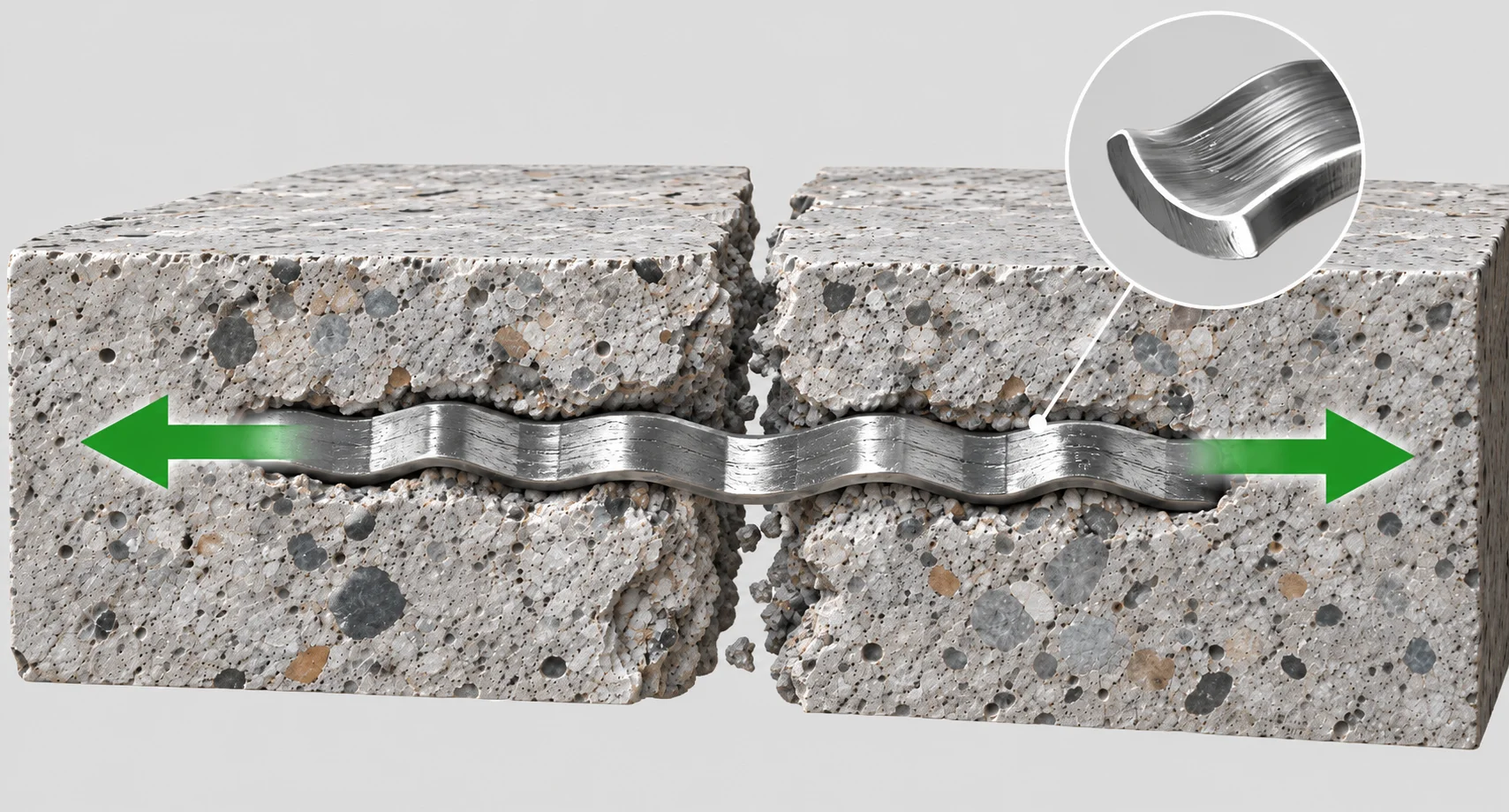
After matrix cracking, fiber–matrix bond and mechanical interlock continue transferring tensile forces, contributing to residual flexural strength and post-cracking load resistance.
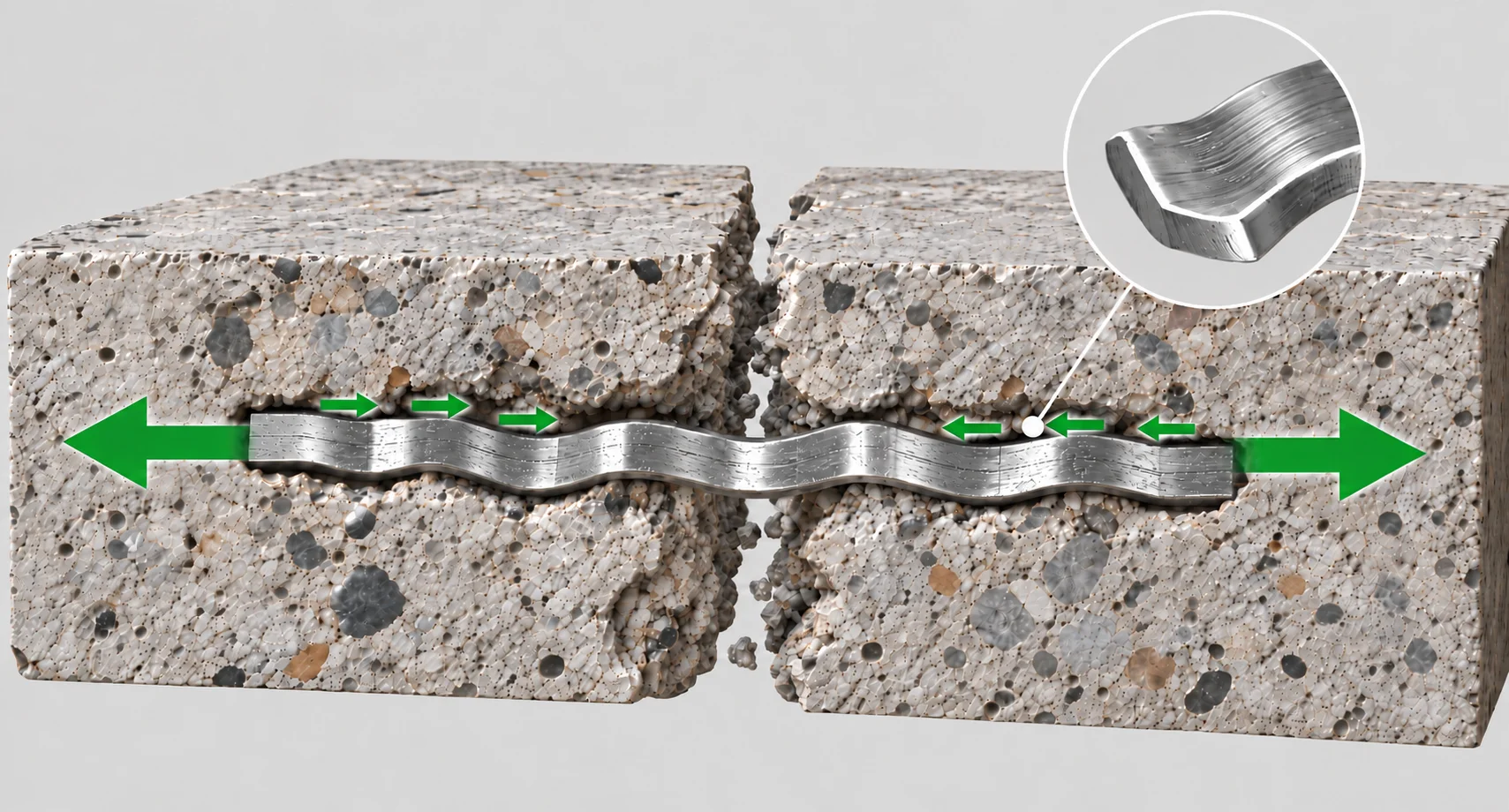
As cracks widen, progressive interfacial debonding, frictional sliding and fiber pullout dissipate energy, contributing to concrete toughness and a less brittle failure response.
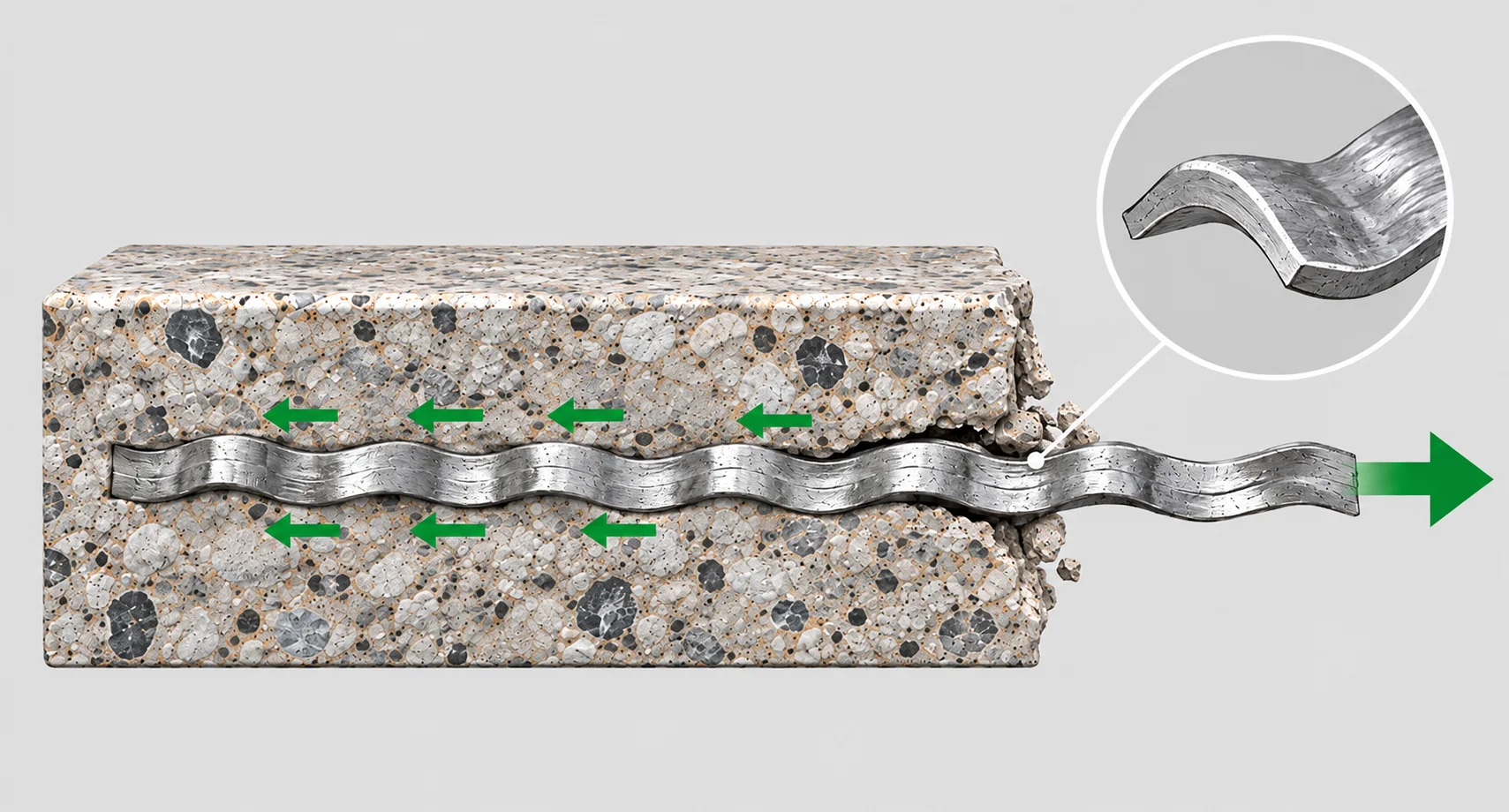
| Property | Specification |
|---|---|
| Raw Material | Thick Steel Plate or Steel Ingot |
| Fiber Length | 32 / 45 / 50 mm |
| Diameter | 1.1 mm |
| Tensile Strength | >600 MPa |
| Surface Profile | Corrugated |
| Cross-Section | Crescent-Shaped |
Selecting the appropriate Milling Steel Fiber requires consideration of fiber length, aggregate size, concrete workability and residual strength requirements. POLYVIA supplies 32 mm, 45 mm and 50 mm options to support different concrete mix designs and placement conditions.
| Fiber Length | Selection Guidance | Key Consideration |
|---|---|---|
| 32 mm | Consider for mixes where shorter fibers may improve handling and accommodate restricted section dimensions. | Section geometry and dispersion |
| 45 mm | Evaluate where crack-bridging requirements must be balanced with concrete workability and placement. | Reinforcement and workability balance |
| 50 mm | Consider for mixes capable of accommodating longer fibers while maintaining uniform distribution. | Aggregate compatibility and mixing efficiency |
Start with the fiber length compatible with the concrete mix and placement conditions, then optimize dosage based on workability, dispersion and required post-cracking performance. POLYVIA can support product selection and mix-design evaluation for specific applications.

Reinforces factory floors, warehouses and heavy-duty slabs, supporting crack control and residual load resistance under concentrated loads and repeated traffic.
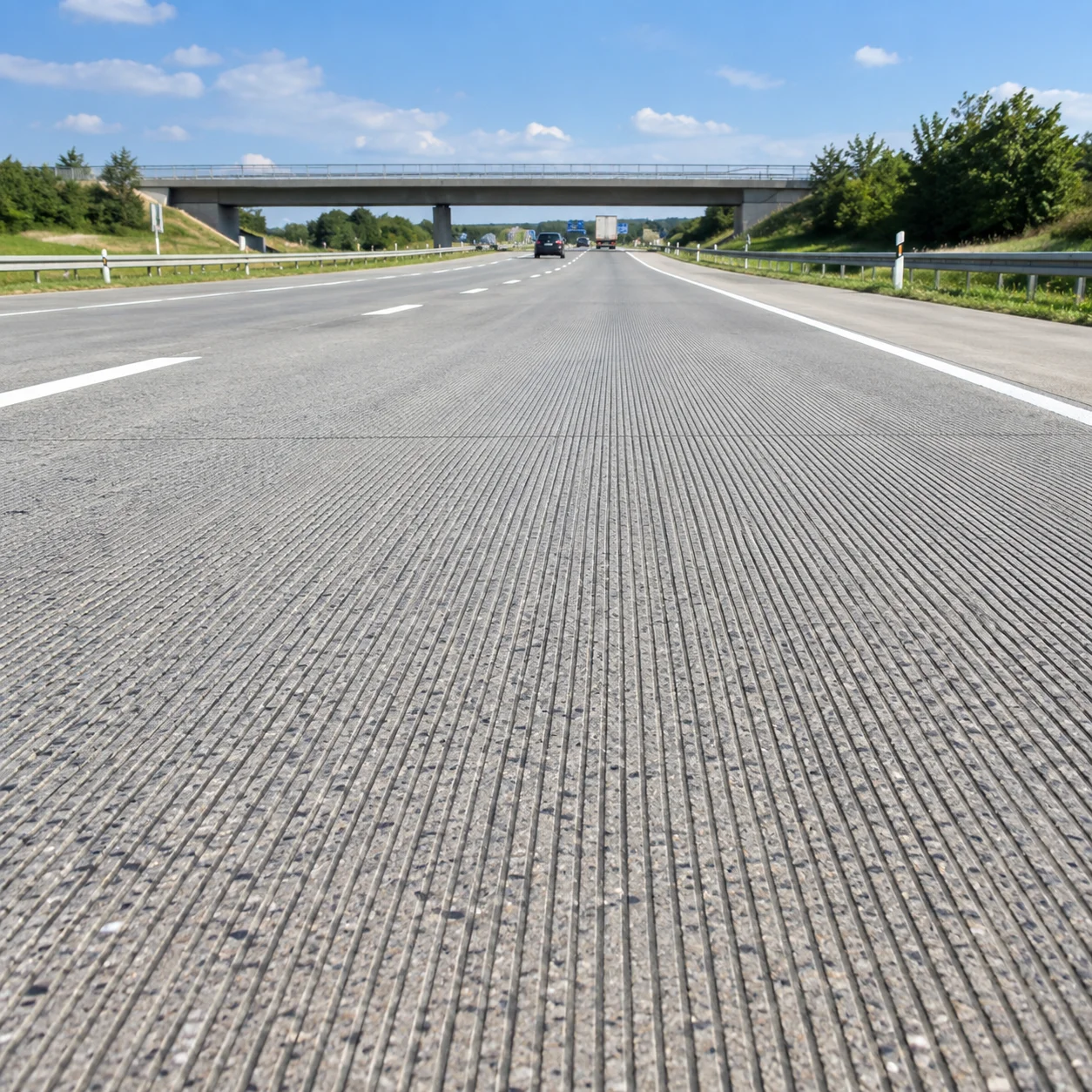
Supports post-crack load transfer and toughness in concrete roads, transport yards and pavements subjected to repeated vehicle loading.
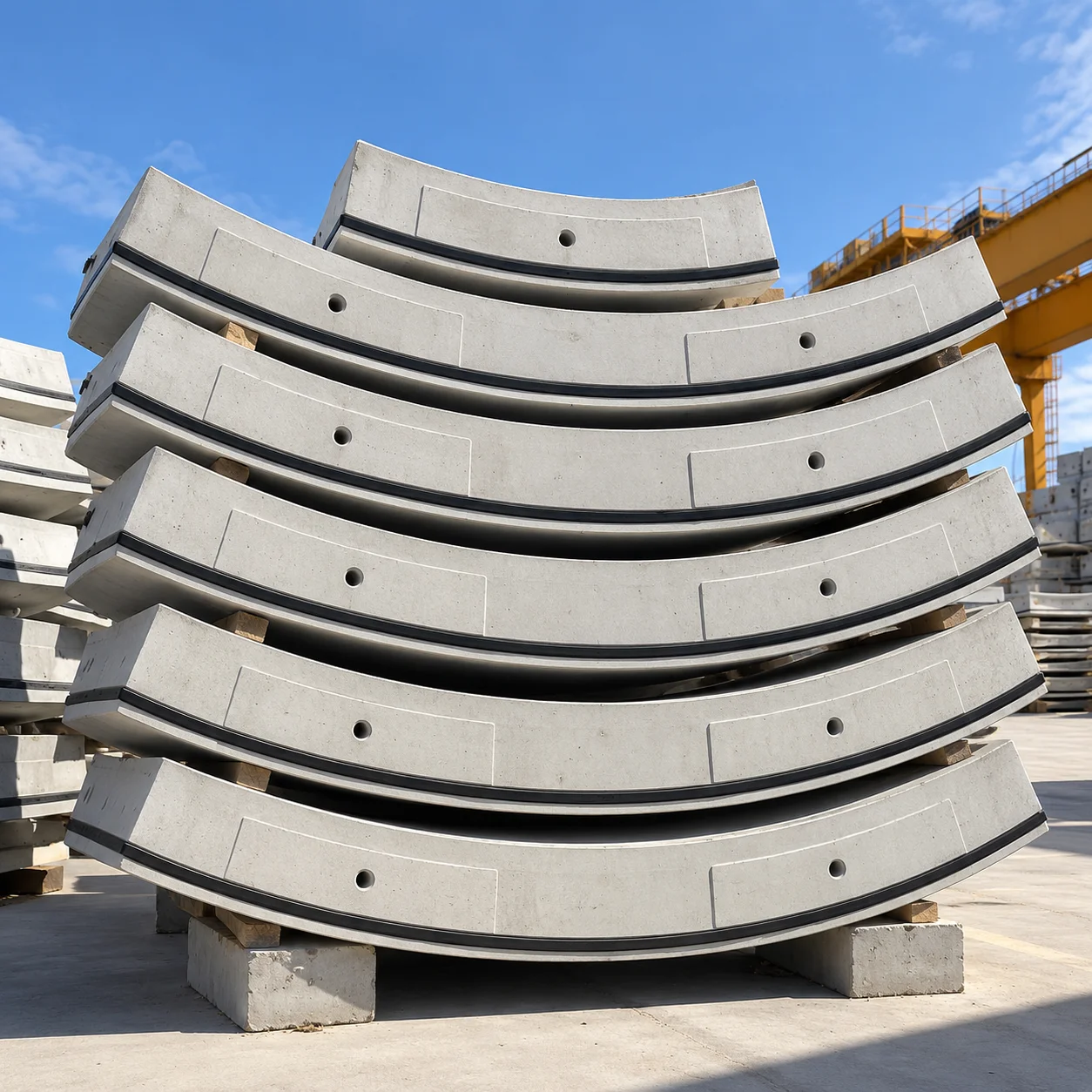
Provides distributed reinforcement for precast panels, beams and engineered components requiring verified residual strength in controlled factory production.
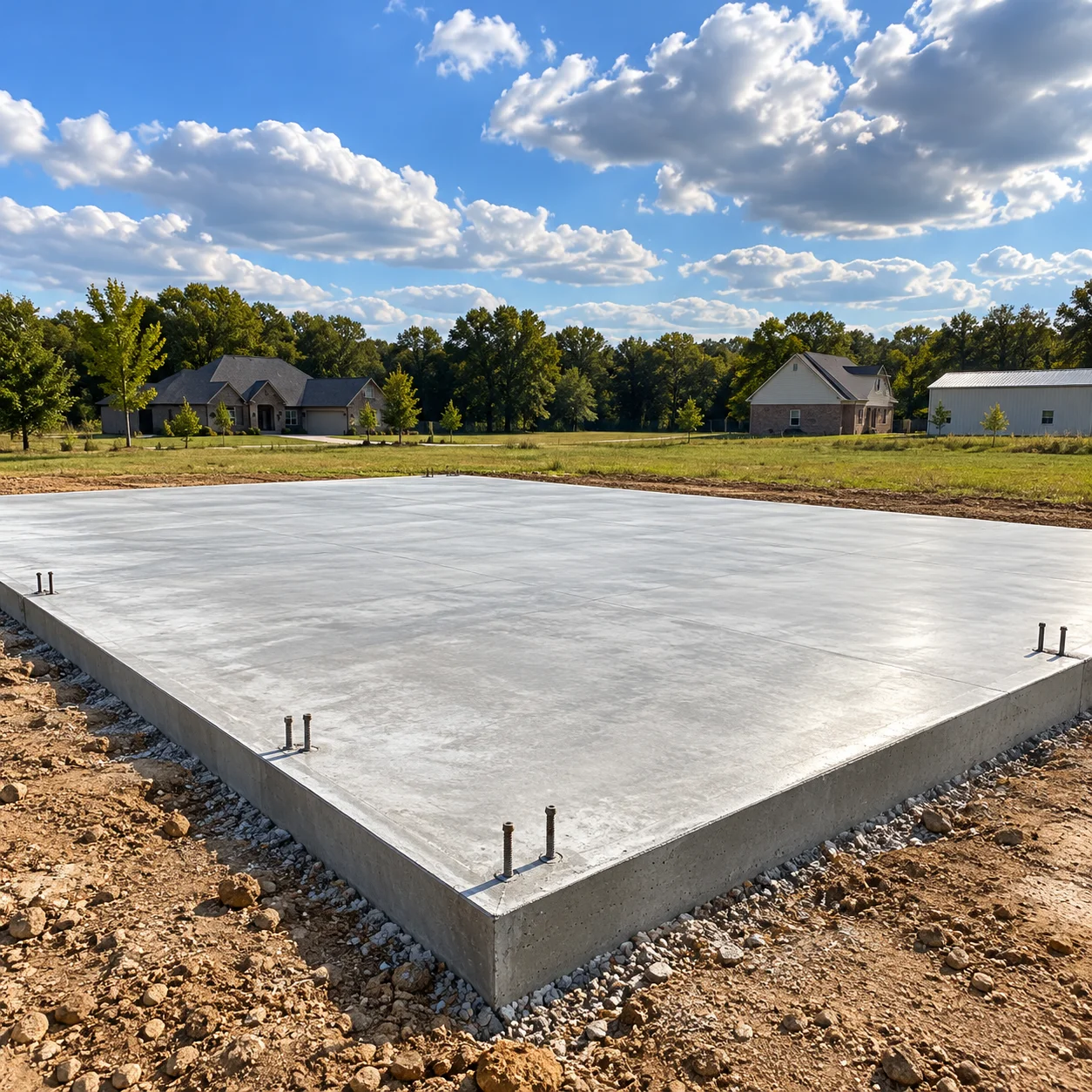
Offers supplementary reinforcement for machinery bases and equipment foundations exposed to localized stresses, repeated loading and vibration.
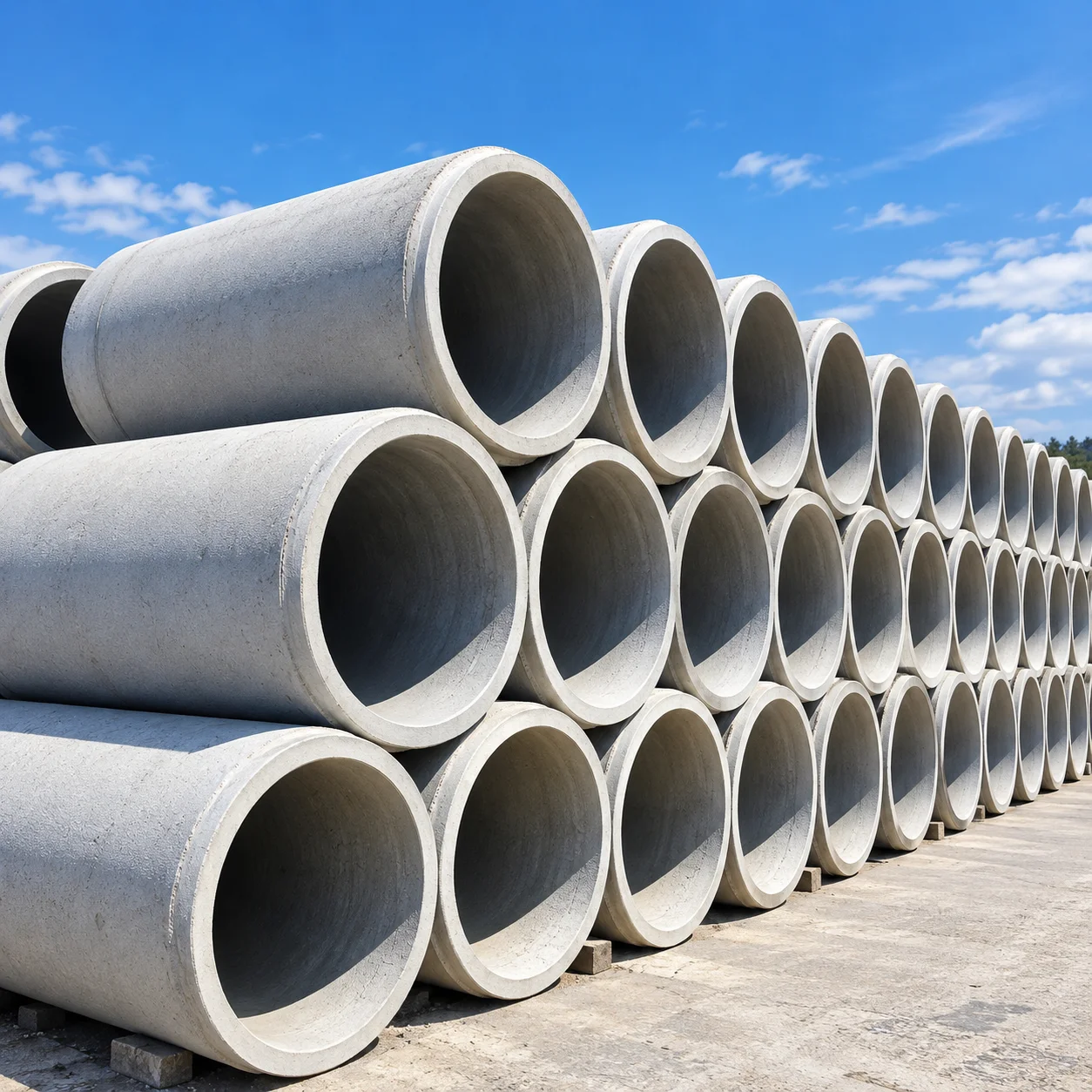
Contributes to crack control and post-cracking resistance in drainage pipes, box culverts and utility structures where performance is verified.

Can be evaluated for bridge decks, girders and structural components requiring controlled cracking and project-specific strength verification.
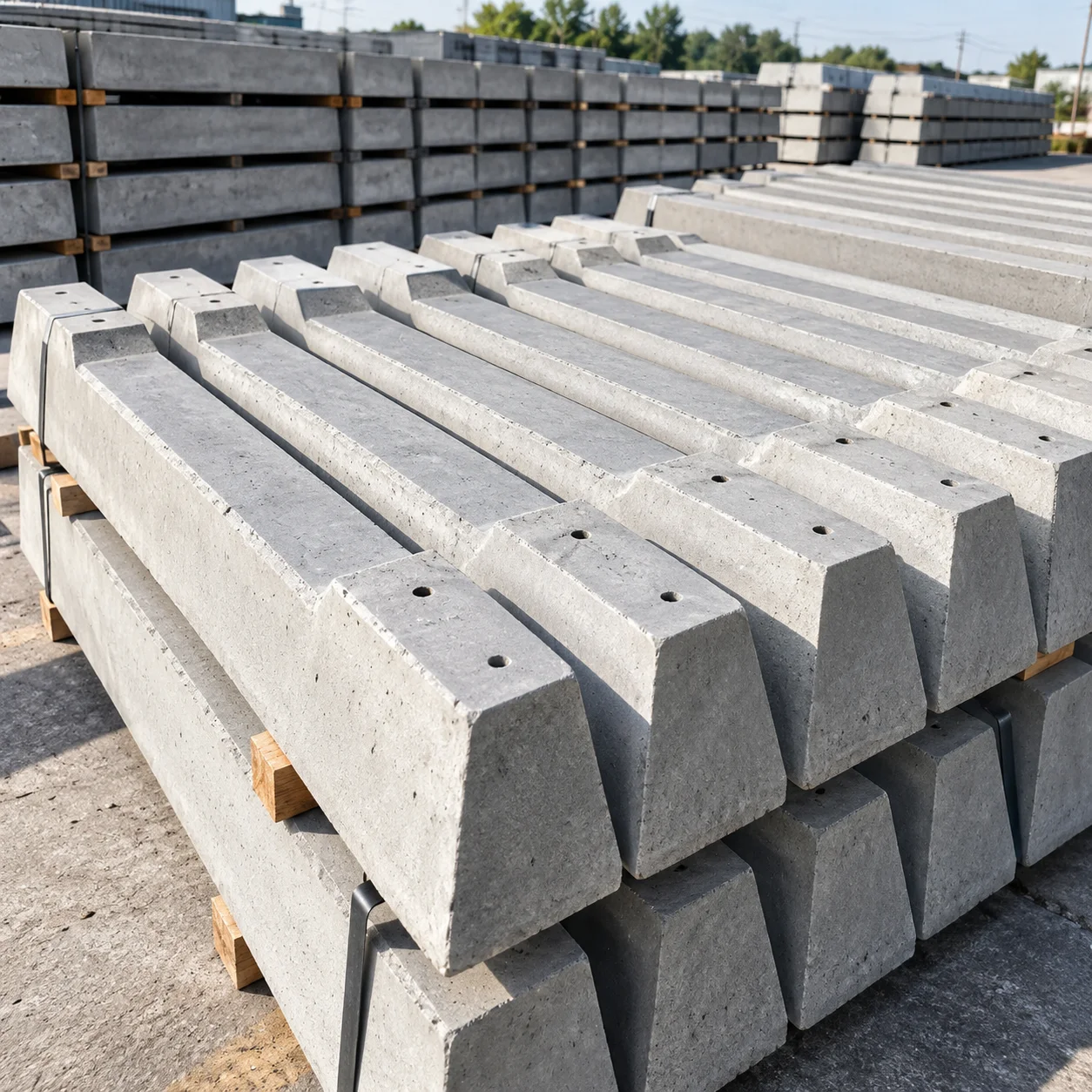
Can be assessed for railway sleepers and precast railway elements requiring crack resistance and verified performance under repeated loading.
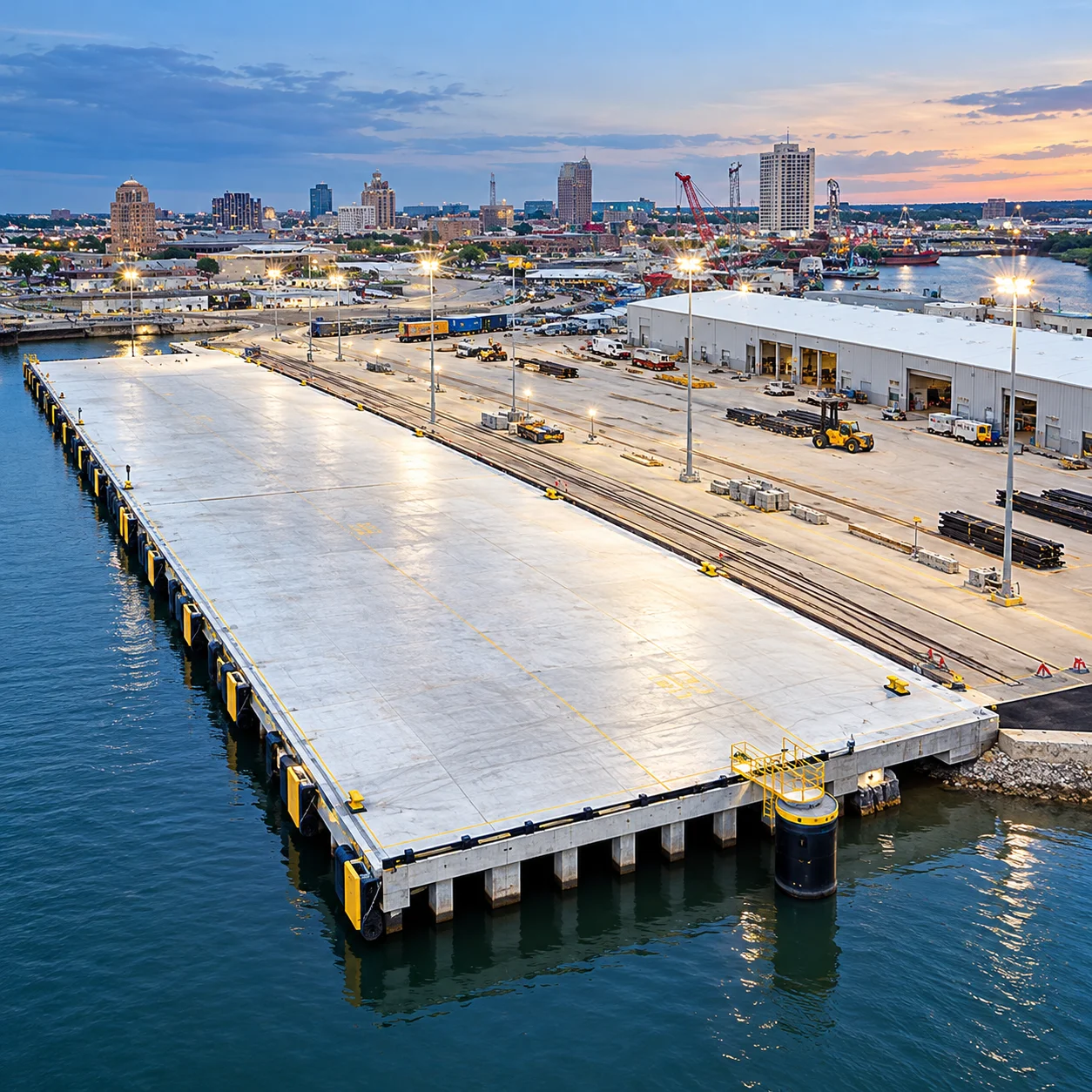
Can be evaluated for port pavements, wharf decks and selected marine concrete works, subject to corrosion protection and exposure requirements.
POLYVIA Milling Steel Fiber provides distributed reinforcement for concrete exposed to repeated loading, impact and cracking. Its mechanically milled geometry contributes to fiber–matrix interaction and post-cracking performance in appropriately designed concrete systems.
Distributed steel fibers help concrete resist damage from repeated loading and impact, supporting toughness under demanding service conditions.
The discrete fiber form allows distribution throughout the concrete matrix when properly mixed, helping minimize localized fiber concentration.
Fibers crossing developing cracks transfer tensile forces and contribute to residual flexural capacity, supporting post-cracking load resistance.
In suitable engineered applications, steel fiber reinforcement can simplify reinforcement installation and concrete placement, supporting efficient construction procedures.
Proper dosage and mixing help ensure uniform fiber dispersion and consistent concrete performance. The following guidelines are based on the supplied product specifications.
GENERAL DOSAGE RANGE
RECOMMENDED DOSAGE
Final dosage depends on concrete mix design, required performance and project specifications.
Cement Grade: 42.5 or higher
Water-to-Cement Ratio: ≤0.50
Maximum Coarse Aggregate Size: ≤2/3 of selected fiber length
01 — Fiber & Coarse Aggregate | 30 seconds
Add Milling Steel Fiber and coarse aggregate into the mixer and mix together.
02 — Sand & Cement | 30 seconds
Add sand and cement, then continue mixing.
03 — Water Addition | 3 minutes
Add mixing water and mix until fibers are uniformly distributed.
Ensure uniform fiber distribution, continuous placement, proper compaction and timely curing. Avoid fiber balling and unintended cold joints.
Milling Steel Fiber and Hooked End Steel Fiber differ in their manufacturing processes, fiber geometries and primary mechanical interlocking features.
Milling Steel Fiber has a corrugated surface and crescent-shaped cross-section created through mechanical milling. Hooked End Steel Fiber uses mechanically formed end hooks that provide additional anchorage against fiber pullout.
| Feature | Milling Steel Fiber | Hooked End Steel Fiber |
|---|---|---|
| Manufacturing Method | Mechanical milling of steel plate or ingots | Steel wire processing and end forming |
| Fiber Geometry | Corrugated surface, crescent-shaped cross-section | Straight body with hooked ends |
| Anchorage Characteristics | Surface interlock and interfacial resistance | Hooked-end anchorage and interfacial resistance |
| Tensile Strength | >600 MPa | ≥1000 MPa |
| Available Lengths | 32 / 45 / 50 mm | 25–60 mm |
| Selection Basis | Fiber geometry, dispersion and residual performance | Hook geometry, dispersion and residual performance |
Milling Steel Fiber can be evaluated where its corrugated geometry and fiber–matrix interaction suit the concrete reinforcement system.
Hooked End Steel Fiber can be evaluated where mechanically anchored ends help achieve specified residual strength or pullout performance.
Neither material is universally superior. Product selection should be based on concrete composition, structural requirements, mixing conditions and verified test results—not nominal fiber tensile strength alone.
Milling Steel Fiber is produced by mechanically milling thick steel plate or steel ingots, creating a corrugated surface and crescent-shaped cross-section. Unlike conventional wire-derived fibers, its irregular geometry promotes mechanical interaction with the concrete matrix.
The general reference dosage is 5–30 kg/m³ of concrete, with 15–25 kg/m³ as the recommended range. Final dosage depends on concrete mix design, required residual strength and project specifications.
POLYVIA offers 32 mm, 45 mm and 50 mm fibers. Selection should consider aggregate grading, concrete dimensions and mixing conditions. The supplied guidance limits maximum coarse aggregate size to two-thirds of the selected fiber length.
The supplied product guidance specifies cement grade 42.5 or higher, a water-to-cement ratio not exceeding 0.50, and maximum coarse aggregate size not exceeding two-thirds of the fiber length. Final mix design must also satisfy project performance requirements.
Yes. Fiber length, dosage and aggregate grading can influence concrete consistency and fiber dispersion. The supplied mixing procedure introduces steel fibers with coarse aggregate before adding sand, cement and water.
Partial or complete replacement may be possible in certain engineered applications. However, reinforcement replacement requires structural calculations, applicable standards and verified concrete performance. Milling Steel Fiber is not a universal replacement for reinforcing bars.
Yes. Milling Steel Fiber can be incorporated into concrete containing compatible polycarboxylate ether (PCE) superplasticizers. Suitable formulations may help maintain workability, subject to admixture compatibility and concrete performance trials.
Yes. Milling Steel Fiber can be evaluated for industrial floors, warehouses, concrete roads and heavy-duty pavements requiring distributed reinforcement and post-cracking performance. Final fiber selection and dosage should meet the project’s loading and design requirements.
POLYVIA supports concrete manufacturers, contractors and engineering teams with fiber length selection, dosage guidance and application-specific technical consultation, helping identify suitable reinforcement options for different concrete systems.