Excessive Filtration Loss
Reduce unwanted filtrate invasion and manage filter-cake permeability in water-based drilling fluids.
Recommended:
PAC-LV / PAC-R

POLYVIA™ Polyanionic Cellulose (PAC) is a water-soluble anionic cellulose polymer used to control filtration loss and modify rheology in water-based drilling and industrial fluid systems.
With grade-specific performance options, PAC supports oil and gas drilling, geotechnical drilling, horizontal directional drilling (HDD), and selected construction formulations requiring controlled water management and flow behavior.
Polyanionic Cellulose (PAC) is a water-soluble, anionic cellulose ether produced through the carboxymethylation of cellulose. It is primarily used in water-based drilling fluids to reduce filtration loss and adjust fluid viscosity.
By modifying aqueous-phase rheology and filtration behavior, PAC helps formulators meet specific fluid performance requirements. Different commercial grades are selected according to their viscosity contribution, filtration efficiency and compatibility with the operating fluid.
Different drilling-fluid systems require different balances of filtration control, viscosity and suspension behavior. PAC grade selection should begin with the actual performance limitation rather than viscosity classification alone.
Reduce unwanted filtrate invasion and manage filter-cake permeability in water-based drilling fluids.
Adjust fluid rheology to support particle suspension and transport under suitable circulation conditions.
Limit additional viscosity while maintaining the required filtration-control performance.
Evaluate filtration and viscosity performance under the actual salt concentration and water-hardness conditions.
Select PAC according to the required balance of fluid-loss control, viscosity development and application conditions.
| Grade | Primary Function | Selection Priority | Typical Applications | Key Trial Parameters |
|---|---|---|---|---|
| PAC-LV | Low-Viscosity Filtration Control | Reduce filtrate loss with limited additional viscosity | Drilling Fluids / Borehole Fluids | Filtrate Volume / Apparent Viscosity |
| PAC-R | Regular-Grade Fluid Control | Combine filtration reduction with rheology modification | Water-Based Drilling / Geotechnical Drilling | Filtration / Rheology / Salt Compatibility |
| PAC-HV | High-Viscosity Fluid Control | Provide filtration control with additional viscosification | Drilling Fluids Requiring Higher Viscosity | Apparent Viscosity / Filtrate Volume |
Polyanionic Cellulose (PAC) is a water-soluble, anionic cellulose derivative that modifies aqueous fluid properties through polymer hydration, viscosity development and interactions with suspended solids. Its performance depends on polymer characteristics, dosage and formulation conditions.
PAC dissolves and hydrates in water, allowing its polymer chains to interact with the aqueous phase and contribute to solution viscosity.
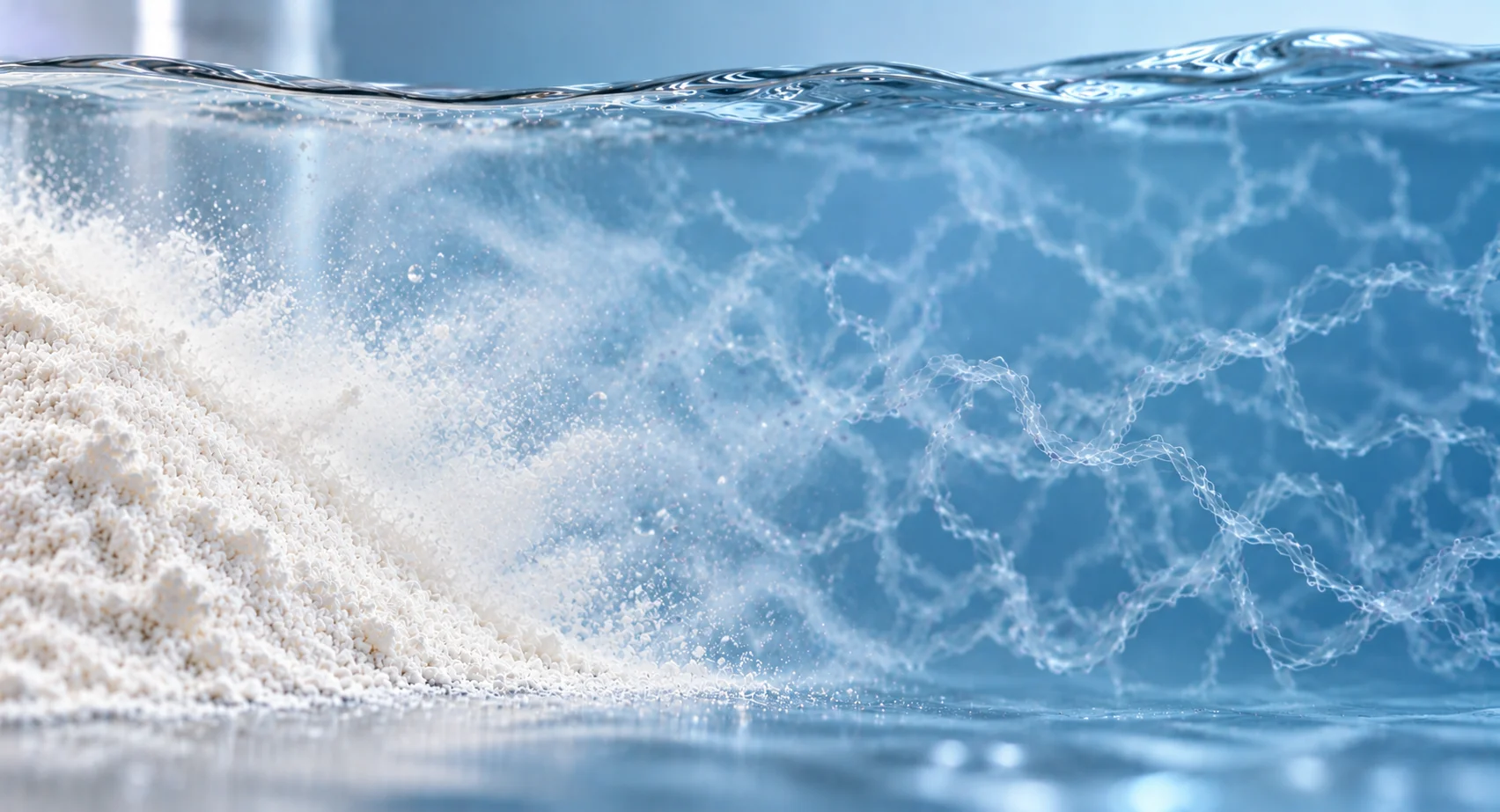
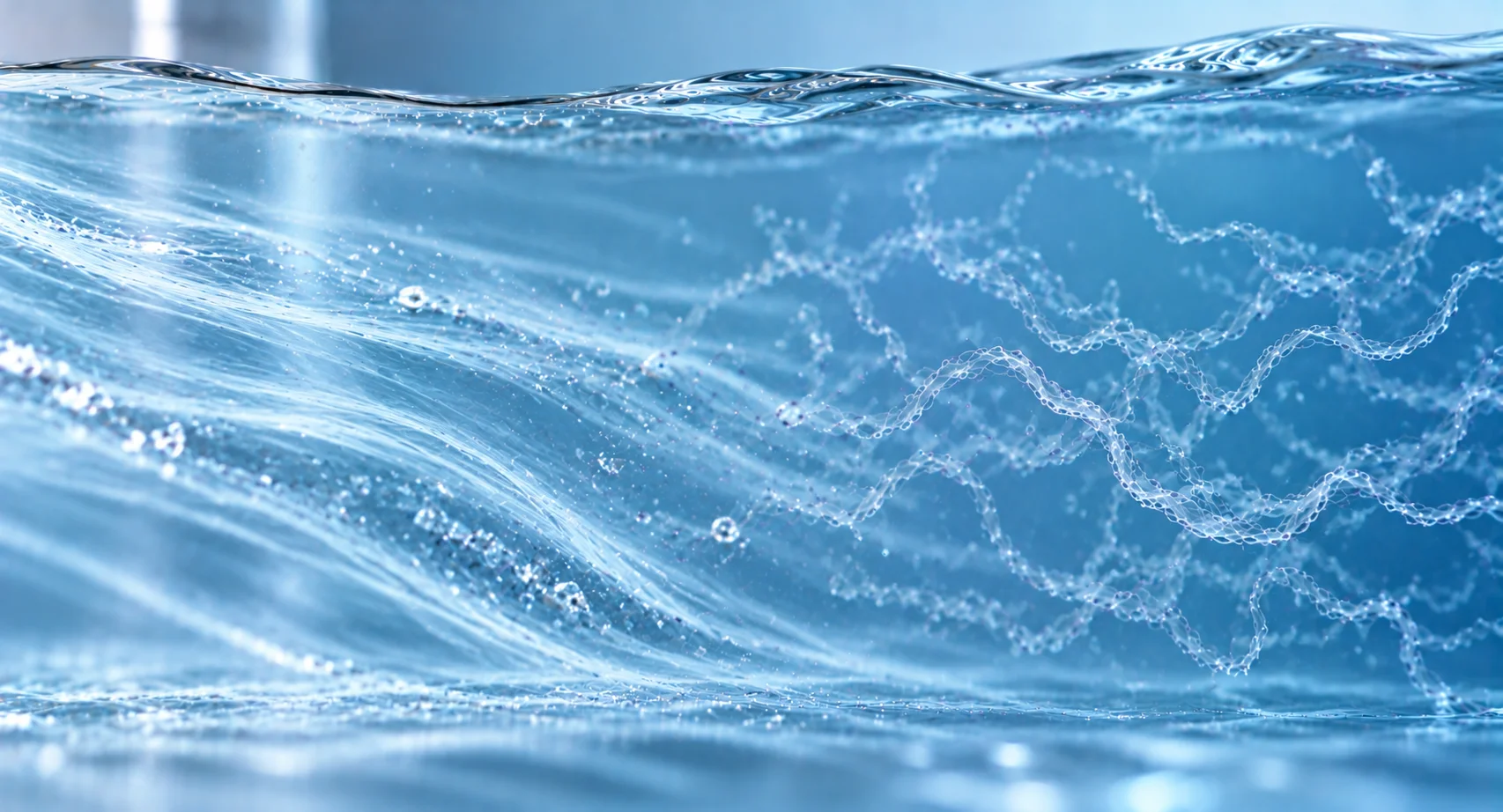
Hydrated PAC modifies fluid viscosity and flow behavior, with thickening performance influenced by polymer grade, concentration and water chemistry.
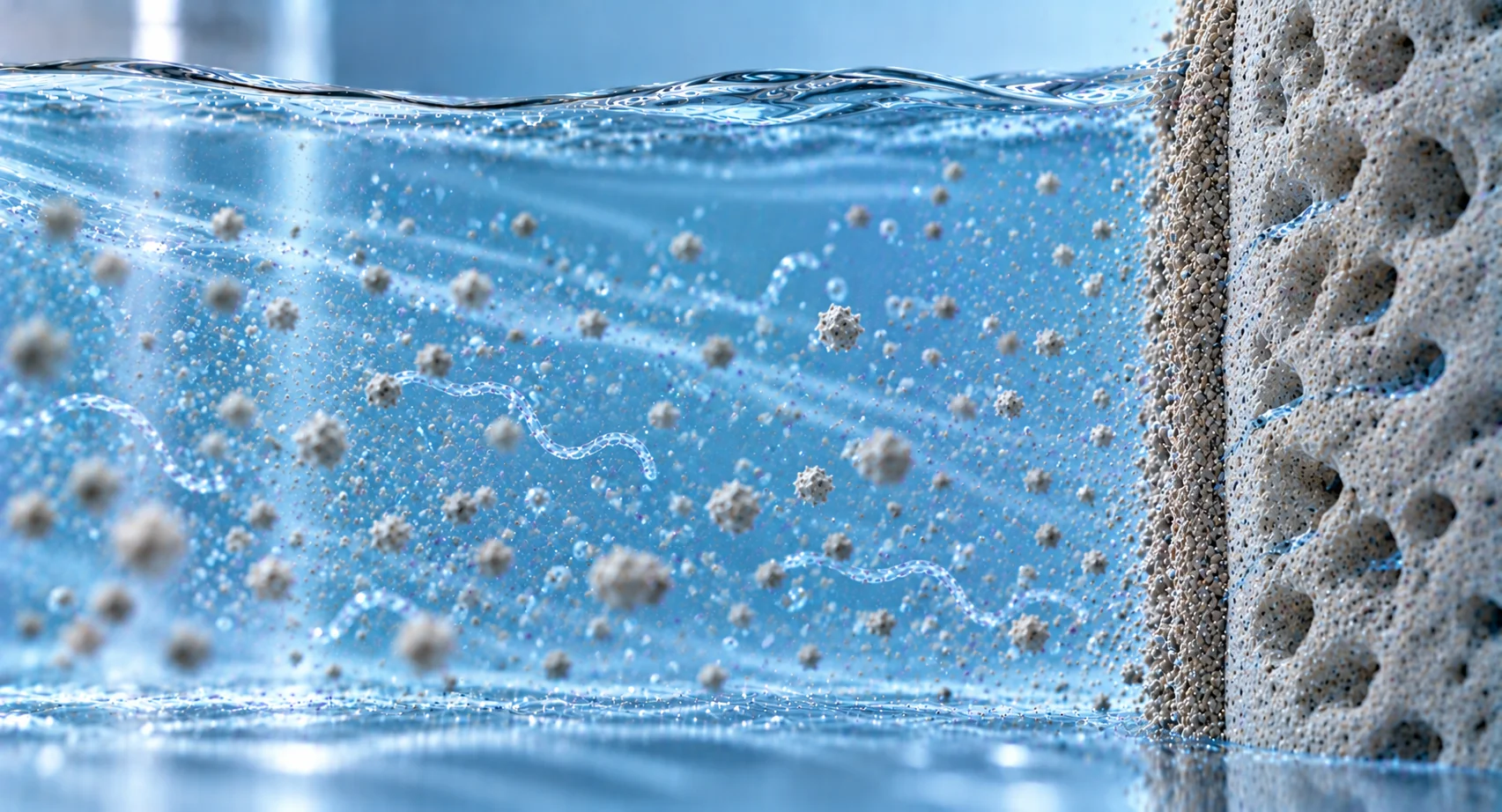
In drilling fluids containing suspended solids, PAC helps reduce fluid loss by influencing filtrate flow and the permeability of the filter cake.
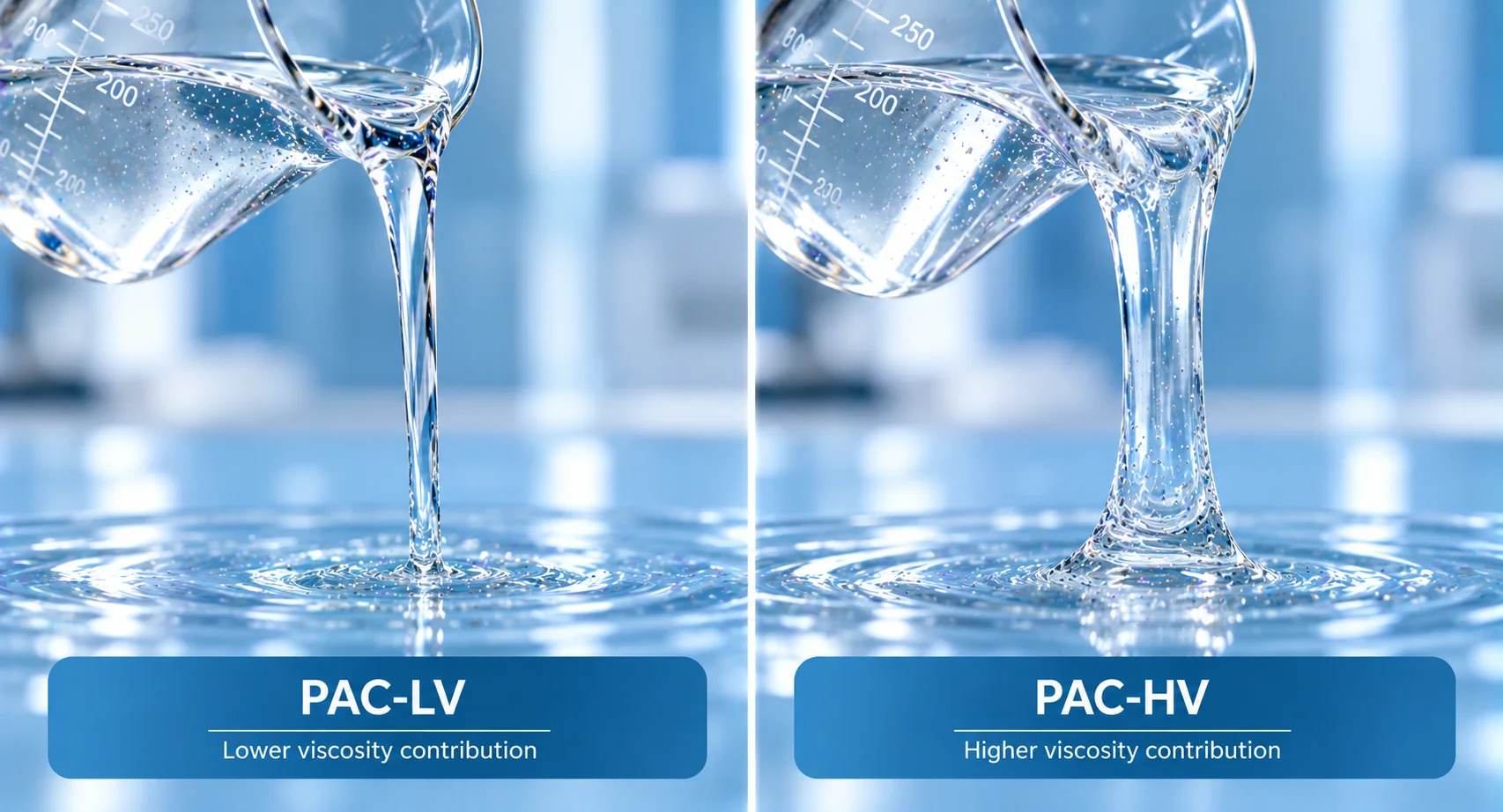
Different PAC grades provide varying balances of viscosity development and filtration control, supporting selection based on specific formulation and application requirements.
Polyanionic Cellulose (PAC) provides filtration control and rheology modification in water-based drilling fluids, with additional uses in compatible construction and industrial formulations.
Controls fluid loss and modifies viscosity in compatible freshwater and saline water-based drilling fluids used in oil and gas operations.
Supports filtration control and fluid rheology in compatible water-based drilling systems for trenchless pipeline and underground utility installations.
Helps manage filtrate loss and fluid viscosity in compatible water-based drilling fluids used for mineral exploration and core drilling.
Supports fluid-loss control and viscosity adjustment in suitable water-based drilling fluids used for water well construction and borehole operations.
Improves filtration and rheological properties in compatible water-based drilling fluids for foundation construction, drilled shafts and geotechnical investigation projects.
Contributes to filtration control in compatible bentonite-based support slurries for diaphragm wall excavation, with performance verified under project-specific conditions.
Offers potential viscosity modification and water retention in selected gypsum-based formulations, with suitability determined through compatibility and application testing.
Provides viscosity adjustment and flow control in compatible aqueous industrial formulations requiring tailored rheological properties for specific processing and application conditions.
Reduces filtrate invasion into permeable formations by controlling fluid loss in properly formulated water-based drilling systems.
Adjusts fluid viscosity and rheological behavior according to PAC grade, concentration and water chemistry.
Contributes to the development of low-permeability filter cakes that restrict filtrate movement into permeable formations.
Improves suspension and transport of drill cuttings through suitable viscosity and rheological properties in water-based drilling fluids.
Limits dispersion of water-sensitive shale and drill cuttings through polymer adsorption and encapsulation under suitable fluid conditions.
Provides filtration-control functionality in compatible freshwater and saline drilling fluids, with performance dependent on salt concentration and fluid chemistry.
PAC performance depends on water chemistry, fluid composition, polymer grade, dosage, temperature and mixing conditions. A structured laboratory evaluation helps establish suitable formulations before field application.
TARGET → WATER → FLUID → GRADE → DOSAGE → TESTING → FIELD
Establish filtration limits, required rheological properties and operating conditions according to the drilling process and specific fluid-system requirements.
Check salinity, hardness, pH and relevant contaminants to identify conditions that influence PAC hydration, compatibility and performance.
Assess clay type, solids content, weighting materials and other additives that influence fluid rheology, filtration and polymer interactions.
Compare available PAC grades based on required viscosity contribution, fluid-loss control, water chemistry and verified product specifications.
Determine effective dosage through controlled trials. Ensure proper powder dispersion, mixing sequence and sufficient hydration before evaluating performance.
Measure filtrate volume, rheological properties and relevant filter-cake characteristics using appropriate test methods under representative fluid conditions.
Confirm mixing behavior, filtration and rheology under actual operating conditions, adjusting the formulation based on observed field performance.
POLYVIA™ provides application-oriented support for PAC selection, including product specifications, test requirements and formulation considerations.
Whether your project involves drilling fluids, infrastructure construction or specialty aqueous formulations, the right PAC selection begins with clear performance targets and representative testing.
Grade-specific specifications, test properties and product information.
Download ↓
Safety, storage, handling and transportation information.
Download ↓
Grade selection, mixing procedures and laboratory trial considerations.
Request Guide ↓
Batch-specific quality information for supplied material.
Request COA ↓Polyanionic Cellulose is a water-soluble, anionic cellulose ether used mainly for filtration control and rheology modification in water-based drilling fluids. Different grades provide different levels of viscosity contribution and fluid-loss performance.
PAC is widely used in oil and gas drilling fluids, geotechnical drilling, horizontal directional drilling and mineral exploration. It may also be evaluated in compatible construction and specialty industrial formulations.
PAC-R is a commercial regular-grade PAC used primarily for fluid-loss control and rheology modification in water-based drilling systems. Its exact viscosity and filtration performance depend on the manufacturer’s product specification.
PAC modifies aqueous-phase rheology and contributes to the filtration characteristics of filter cakes formed by drilling-fluid solids. Together, these effects help reduce liquid invasion into permeable formations.
Certain PAC grades are suitable for salt-containing drilling fluids, including some brine systems. Performance depends on salt concentration, divalent ions, temperature and formulation chemistry, so testing under actual water conditions is necessary.
Yes. PAC may be used in compatible water-based borehole fluids to adjust rheology and manage filtrate loss. Suitability should be evaluated against the drilling method, ground conditions and complete fluid formulation.
PAC should not be considered a direct substitute for HPMC. Their ionic characteristics and interactions with cementitious materials differ. Any substitution requires verification of water retention, workability, setting behavior and final application performance.
Selection should start with the required filtration control, viscosity and fluid compatibility. The effective grade and dosage should then be established through laboratory testing using representative process water, fluid additives and operating conditions.
Share your application, required filtration performance, viscosity targets, water chemistry and operating conditions. POLYVIA™ can help you evaluate suitable Polyanionic Cellulose grades and discuss technical specifications, sample testing and supply requirements.