
Polycarboxylate PCE Superplasticizer for Ready-Mix Concrete
Water Reduction · Slump Retention · Pumpability · Consistent Delivery
Polycarboxylate Ether (PCE) superplasticizer helps ready-mix concrete control water demand and maintain workable concrete from batching through transportation, pumping and placement. POLYVIA™ provides PCE powder, liquid and high-concentration flake technologies for different retention, water-reduction and local formulation requirements.
Ready-Mix Performance Does Not End at the Batching Plant
Concrete Must Perform from Batching to Placement
Ready-mix concrete is not evaluated only at the mixer. The concrete must retain suitable workability through transportation, site arrival, pumping and final placement.
Batching → Mixing → Transportation → Site Arrival → Pumping → Placement
For ready-mix producers, effective concrete admixtures must therefore be evaluated across the complete delivery window.
The key performance variables include:
Water Demand · Initial Workability · Slump Retention · Concrete Temperature · Transport Time · Pumpability · Setting · Strength
As a high-range concrete water reducer, PCE improves cement-particle dispersion and allows the required workability to be achieved at controlled water content. However, ASTM C494 also notes that high-range water-reducing systems can exhibit relatively rapid slump loss depending on concrete materials and conditions, making actual-material testing important.
The Real Challenges in Ready-Mix Concrete
What Ready-Mix Producers Actually Need to Control
Slump Loss During Transportation
Concrete may leave the batching plant at the required slump but lose workability before reaching the jobsite.
This can make unloading, pumping and placement more difficult and may lead to attempts to restore workability by adding water.
For longer delivery windows, PCE selection should therefore consider slump retention over time—not only initial slump.
Hot-Weather Workability
Higher concrete temperatures can make workability retention more demanding, especially where transportation and waiting times are extended.
This is particularly relevant to tropical ready-mix production. Commercial PCE systems from major admixture manufacturers are specifically formulated for ready-mix concrete, hot-weather concreting and long-distance transportation, confirming that these are established selection conditions for PCE technology.
Uncontrolled Water Addition
Adding additional water simply to recover lost slump changes the designed water-to-binder ratio.
A properly selected PCE system should instead help the producer target the required site-arrival workability while maintaining controlled mixing water.
Pumpability at the Jobsite
Concrete that has sufficient initial slump is not automatically pumpable.
Pumpability depends on the complete concrete system:
Paste Volume × Aggregate Grading × Fines × W/B Ratio × PCE × Concrete Rheology × Pumping Conditions
PCE can help control water demand and workability, but it cannot compensate for unsuitable aggregate grading or insufficient paste volume.
Raw-Material Variability
Changes in cement chemistry, supplementary cementitious materials, aggregate moisture, fines and clay can change PCE demand and concrete response.
This is why a dosage established with one cement or mix design should not automatically be transferred to another.
ASTM similarly recommends testing chemical admixtures with the cement, pozzolan, aggregates, mixture proportions, batching sequence and physical conditions intended for the actual work whenever practicable.
Imported Liquid PCE Logistics
For plants importing liquid PCE over long distances, concrete performance is only one part of the total cost.
Liquid PCE also transports water.
Where freight costs are significant, a high-concentration solid PCE format can allow the active PCE material to be shipped internationally while much of the water required for the final liquid formulation is added locally.
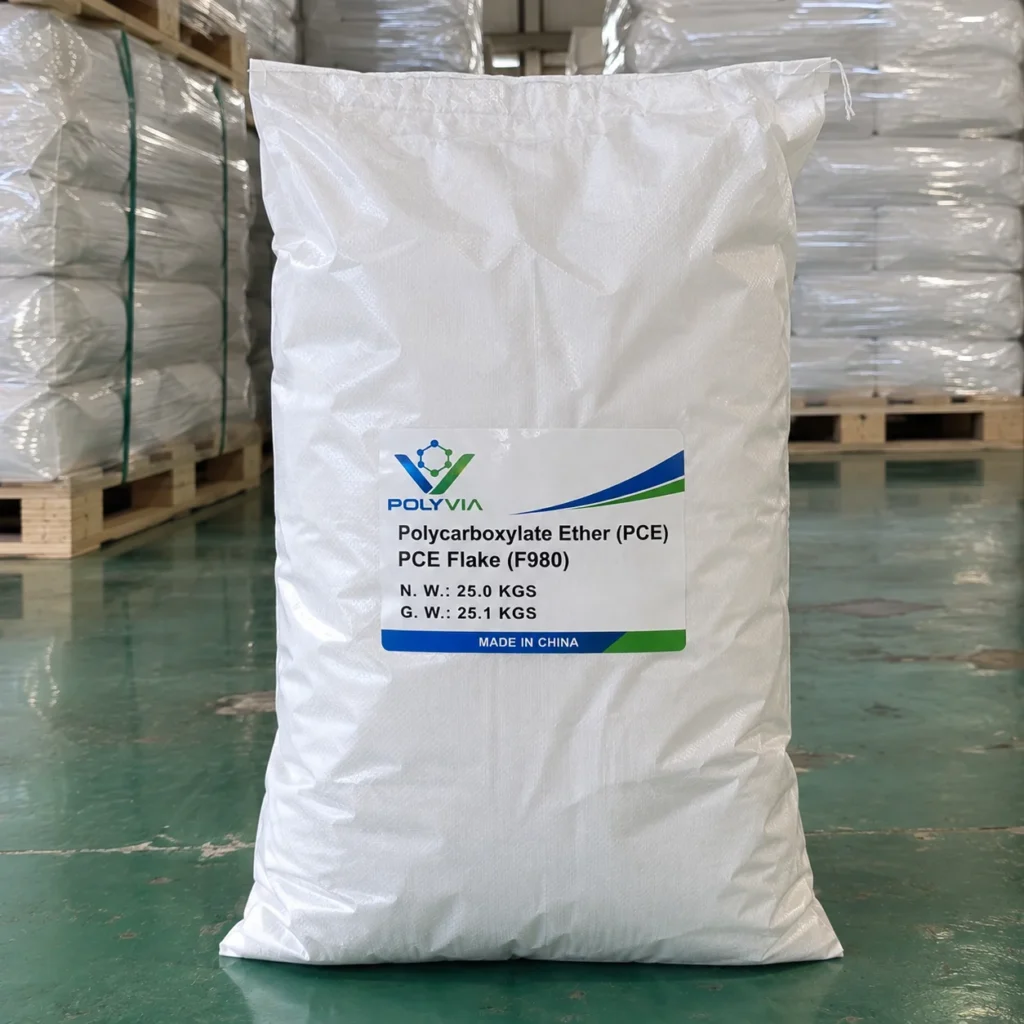
How PCE Works in Ready-Mix Concrete
From Cement Dispersion to Controlled Workability
PCE is a comb-type polymer technology designed to improve the dispersion of cementitious particles.
Its function in ready-mix concrete can be understood through four related stages.
1. Adsorption
PCE molecules interact with and adsorb onto the surfaces of cementitious particles after entering the aqueous concrete system.
2. Particle Dispersion
The molecular architecture of PCE promotes separation of cementitious particles through steric effects, helping reduce particle agglomeration.
3. Controlled Water Demand
Improved dispersion allows concrete to achieve the required workability with controlled mixing water.
This is why PCE is widely used as a high-range water-reducing concrete admixture.
4. Workability Management
Different PCE molecular structures and formulations can provide different balances between initial dispersion, water reduction and workability retention.
For this reason, there is no single PCE chemistry that is automatically optimal for every ready-mix concrete application.
Performance Through the Ready-Mix Delivery Cycle
Evaluate PCE Beyond Initial Slump
PCE performance should be considered at every important stage of ready-mix production and delivery.
At the Batching Plant
The PCE should provide the required initial dispersion and support controlled water demand.
During Mixing
The concrete should develop a sufficiently uniform fresh-mix condition without relying on uncontrolled additional water.
During Transportation
Workability should remain within the required operating window for the planned delivery period.
At Site Arrival
Concrete should retain sufficient workability for efficient discharge and subsequent handling.
During Pumping
The mix should provide an appropriate balance of flow and cohesion for the pumping system.
During Placement
Concrete should remain sufficiently workable and stable for effective placement and finishing.
The key principle is simple:
The right PCE should be evaluated across the complete ready-mix delivery cycle—not only by the initial slump measured at the batching plant.
Select PCE by Ready-Mix Requirement
Different Concrete Conditions Require Different PCE Performance Profiles
POLYVIA™ provides different PCE technologies for different ready-mix performance priorities.
Long Transport & Hot Weather
Recommended Direction: PCE 850 · SR50 · F970
The primary evaluation focus is slump retention and extended workability.
These grades should be considered where the concrete must remain workable through longer transportation, waiting periods or elevated concrete temperatures.
General Ready-Mix Concrete
Recommended Direction: PCE 860 · GP50
The primary requirement is a balanced relationship between water reduction and workability retention.
This direction is suitable for general ready-mix formulations where neither maximum water reduction nor maximum retention is the sole performance objective.
High Water Reduction & Low W/B Concrete
Recommended Direction: PCE 840 · HWR50 · F980
The primary focus is strong cement dispersion and controlled water demand.
These grades can be evaluated where high water reduction, lower water-to-binder ratios or higher-performance concrete formulations are required.
Local Liquid PCE Formulation
Recommended Direction: F970 · F980
PCE Flake can be considered where customers want to transport concentrated PCE internationally and prepare or formulate liquid PCE locally.
Grade selection should be based on the required concrete performance—not simply on the highest water-reduction or slump-retention rating.
Final selection should always be validated with the actual cementitious materials, aggregates, W/B ratio, concrete temperature and required delivery time.
Which PCE Is Suitable for Ready-Mix Concrete?
There is no universal PCE grade for every ready-mix concrete system.
For long transportation or hot-weather concrete, a retention-focused PCE should normally be evaluated first.
For general ready-mix production, a balanced PCE can provide a practical combination of water reduction and workability retention.
For high water reduction or lower W/B concrete, a high-dispersion PCE can be evaluated according to the required fresh- and hardened-concrete performance.
For customers producing liquid admixtures locally, PCE Flake provides another route by combining concentrated international supply with local liquid preparation.
The appropriate solution should ultimately be selected according to the concrete system and required delivery window.
PCE Powder, Liquid or Flake?
Choose the Supply Form That Fits the Production System
PCE chemistry is important, but the physical supply form also influences transportation, storage, formulation and plant handling.
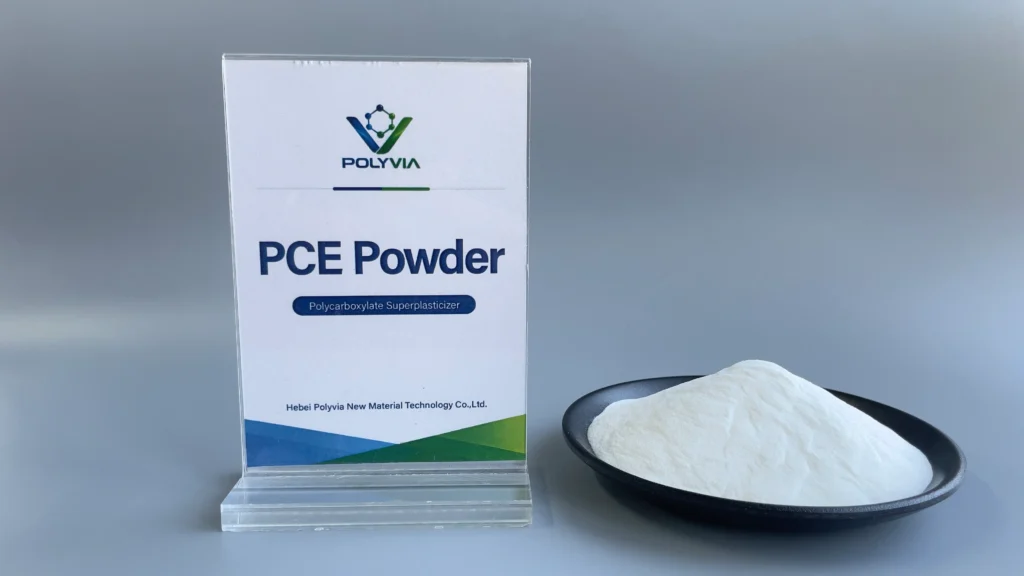
PCE Powder
PCE powder provides a concentrated solid format suitable for customers requiring local dissolution, formulation flexibility or solid PCE supply.
It can be used as a raw material in admixture formulation where appropriate dissolution and formulation facilities are available.
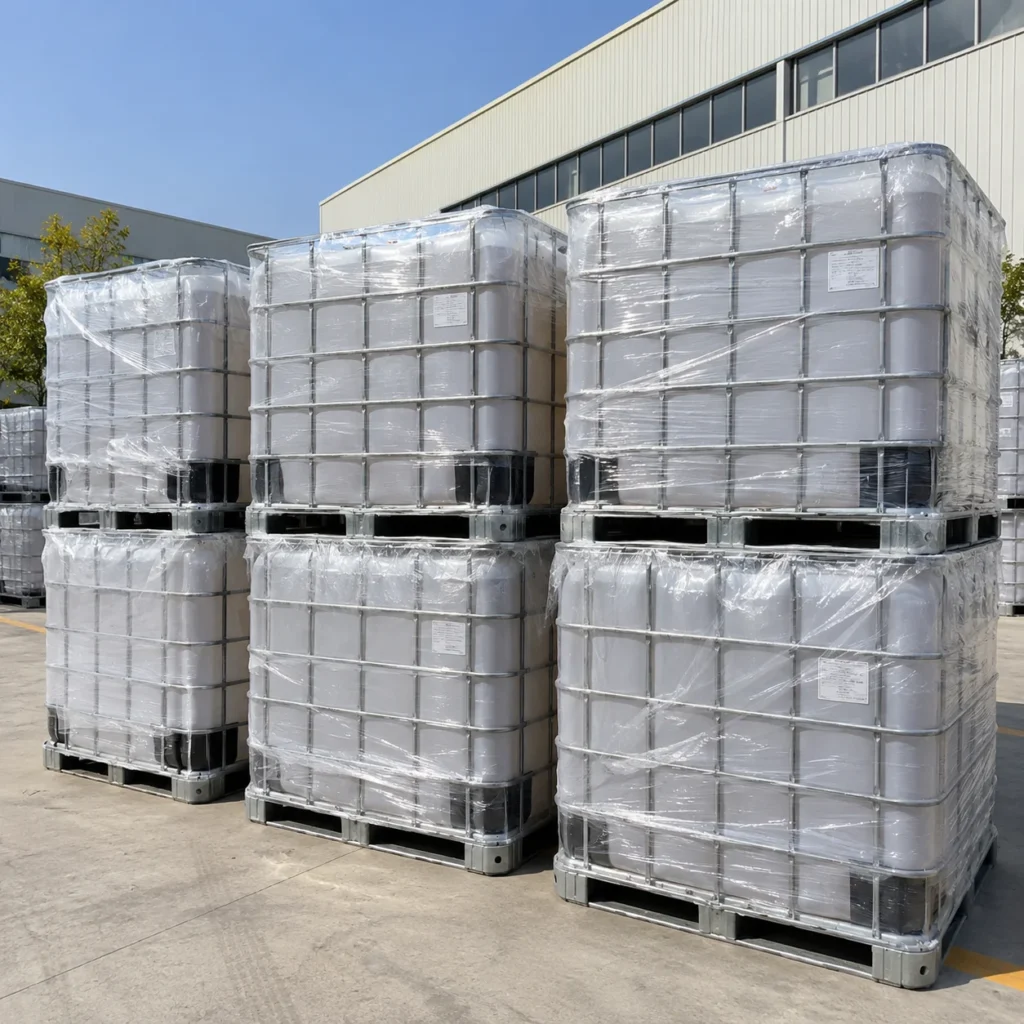
PCE Liquid
Liquid PCE provides convenient handling for ready-mix plants and admixture producers equipped with liquid storage and dosing systems.
It can be directly incorporated into liquid admixture systems without requiring solid-material dissolution.
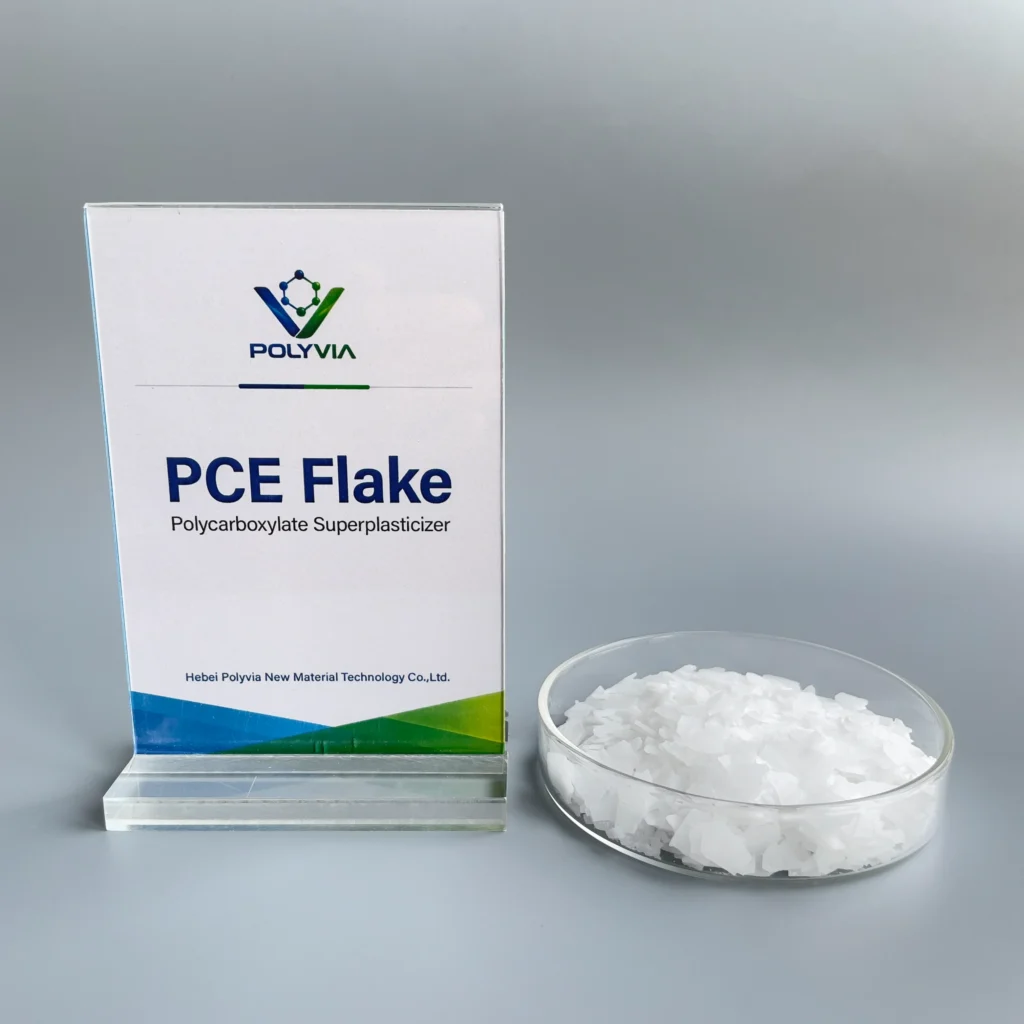
PCE Flake
PCE Flake provides a high-concentration solid supply route designed for efficient transportation and local liquid PCE preparation.
It is particularly relevant where international logistics, local formulation capability and reduced transportation of water are important considerations.
The optimum supply form depends on the complete production and supply system—not only on the physical form of the PCE.
PCE Flake for Ready-Mix Concrete
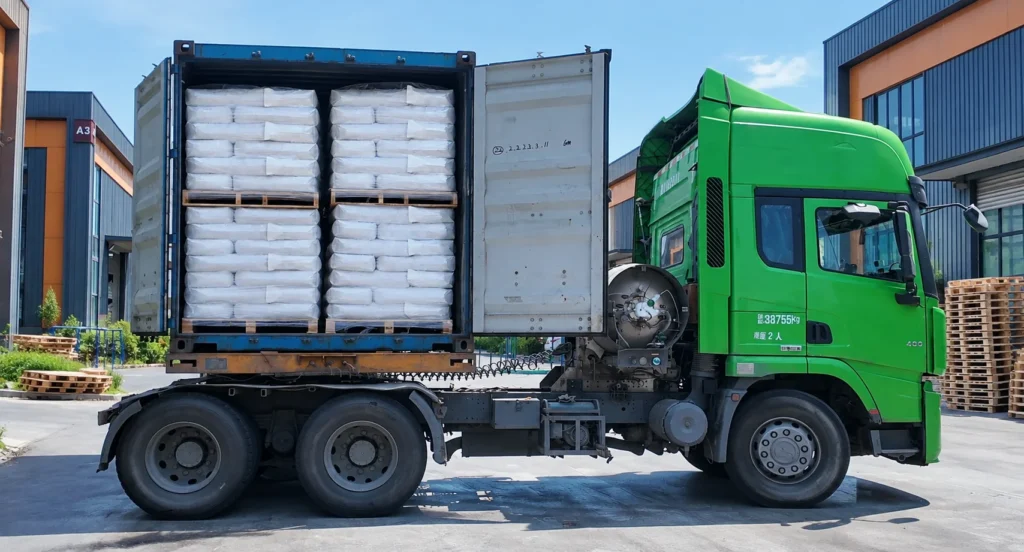
Ship PCE , Not Water
International transportation of liquid PCE means transporting both PCE solids and the water contained in the liquid product.
For customers with suitable local formulation capability, high-concentration PCE Flake provides another approach:
Concentrated PCE → International Shipment → Local Dissolution → Local Formulation → Ready-Mix Production
Reduce Transported Water
Concentrated PCE Flake allows a greater proportion of the transported material to consist of PCE solids rather than water contained in a lower-solids liquid product.
Improve Freight Efficiency
Increasing the concentration of the transported PCE can improve logistics efficiency for long-distance shipments.
Actual savings depend on product concentration, packaging, container loading, freight rates, destination and local processing costs. Freight savings should therefore be evaluated case by case rather than expressed as a universal percentage.
Prepare Liquid PCE Locally
PCE Flake can be dissolved at destination to prepare a liquid PCE base for subsequent admixture formulation.
This moves a significant part of the required water addition from international transportation to local production.
Flexible Local Formulation
POLYVIA™ F980 provides a high-water-reduction direction, while F970 provides a slump-retention direction.
The appropriate grade or formulation can be evaluated according to local cement chemistry, target concrete performance, concrete temperature and required transport time.
Reduce Liquid Packaging & Storage Demand
For an equivalent amount of PCE solids, concentrated solid supply can reduce dependence on the large liquid volumes associated with lower-concentration PCE systems.
This can simplify certain international packaging, handling and storage requirements.
Reduce Liquid-Leakage Exposure
Solid PCE transportation also avoids the leakage exposure associated specifically with drums, IBCs and other liquid PCE packaging.
From PCE Flake to Local Liquid PCE
Local Preparation for Local Ready-Mix Production
The application route can be summarized as:
PCE Flake → Controlled Dissolution → Liquid PCE Base → Local Formulation → Ready-Mix Admixture → Concrete Production
The final liquid concentration and formulation should be established according to the specific PCE grade, local water quality, storage conditions and target concrete performance.
Where multiple PCE technologies are used in a local formulation, the blending ratio should be determined through controlled testing rather than by applying a universal fixed ratio.
Practical PCE Dosage Evaluation
There Is No Universal PCE Dosage for Ready-Mix Concrete
The optimum PCE dosage depends on the complete concrete system.
Important variables include:
Cement Chemistry · Cement Content · SCM Content · W/B Ratio · Aggregate Grading · Fine Materials · Target Slump · Retention Time · Concrete Temperature · Transport Time · Other Concrete Admixtures
For this reason, dosage should be established through controlled laboratory and plant trials using representative materials.
A practical evaluation sequence can include:
Reference Mix → Initial PCE Dosage → Initial Slump → 30 min → 60 min → 90 min → Required Delivery Time → Pumpability → Setting Behavior → Strength → Plant Validation
The 30-, 60- and 90-minute points are evaluation checkpoints rather than guaranteed PCE retention times.
If the actual concrete delivery window is longer, testing should continue to the required delivery time.
How to Evaluate PCE for Slump Retention
Measure the Required Workability Window
A useful slump-retention trial should answer a practical question:
Will the concrete still have the required workability when it reaches the point of use?
The evaluation should therefore record both the initial concrete condition and changes over time.
Important variables include:
Initial Slump
Slump at Defined Time Intervals
Concrete Temperature
PCE Dosage
Water-to-Binder Ratio
Transport or Holding Time
Setting Behavior
Concrete Stability
Where pumping is required, pumpability and cohesion should also be included in the evaluation rather than relying on slump alone.
PCE for Hot-Weather Ready-Mix Concrete
Evaluate Concrete at the Required Delivery Time
Hot-weather concrete requires particular attention to the relationship between temperature and workability retention.
The evaluation should consider:
Concrete Temperature × Transport Time × Initial Slump × Arrival Slump × PCE Dosage × Setting Behavior
A retention-focused PCE can be evaluated where elevated temperature and extended transportation make the workable delivery window more demanding.
However, increasing retention alone is not always the complete solution.
Cement chemistry, aggregate temperature, mixing water, SCMs, other admixtures and the complete concrete formulation should also be considered.
The objective is not simply to achieve a high initial slump.
The more useful question is:
Will the concrete have the required workability when it reaches the jobsite and is ready for placement?
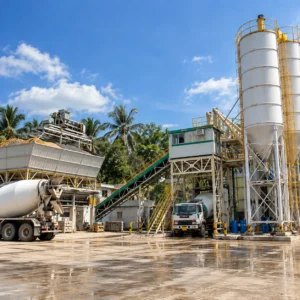
Ready-Mix Concrete Plant in Bangkok, Thailand
Bangkok, Thailand: PCE Flake Application in Ready-Mix Concrete Production
A ready-mix concrete producer in Bangkok, Thailand, has used POLYVIA™ PCE Flake in actual concrete production.
This project demonstrates the practical application of concentrated PCE Flake in ready-mix concrete supply chains, where workability requirements, admixture preparation and transportation efficiency are important considerations.
Project Background
The customer required a suitable PCE admixture solution for ready-mix concrete production, with particular attention to workability retention during concrete transportation and placement.
Admixture supply and transportation were also relevant considerations. Conventional liquid PCE products contain a substantial proportion of water, which contributes to the total transported product mass.
This created an opportunity to evaluate concentrated PCE Flake as an alternative solid raw material for preparing aqueous PCE admixtures.
POLYVIA™ PCE Flake Application
POLYVIA™ PCE Flake was used in the customer's actual ready-mix concrete production.
The application involved using a concentrated solid PCE material as part of the admixture supply and preparation process.
PCE Flake can be dissolved in water to prepare an aqueous PCE solution for subsequent use in concrete production. The preparation concentration and dosage should be established according to the selected grade, actual solid content and concrete formulation.
For applications requiring high slump retention, POLYVIA™ F970 is a relevant grade for evaluation. Final grade selection should be based on the customer's actual material compatibility and concrete performance requirements.
Practical Significance
This project demonstrates that PCE Flake is not limited to laboratory preparation or theoretical formulation. It can also be incorporated into an actual ready-mix production application.
For ready-mix manufacturers, a concentrated solid supply form can provide additional flexibility in admixture preparation and transportation planning.
Compared with transporting an equivalent amount of PCE solids in a lower-solid-content liquid product, PCE Flake can reduce the mass of water transported with the admixture material.
The potential economic benefit depends on the actual shipment quantity, freight rate, local preparation costs, water requirements and production arrangements.
Performance Verification and Data Availability
The project has progressed to actual ready-mix concrete production in Bangkok, Thailand.
However, detailed production records and quantitative test results, including admixture dosage, initial slump, slump retention at different time intervals, concrete temperature and compressive strength, are not currently available for publication.
Therefore, this case does not claim a specific percentage of slump-retention improvement, dosage reduction, strength increase or transportation-cost saving.
These performance indicators should be established through documented concrete testing and production records.
Engineering Perspective
The Bangkok project illustrates an important application direction for concentrated PCE Flake: supplying solid PCE material for use in ready-mix concrete production rather than relying exclusively on the transportation of lower-solid-content liquid admixtures.
For manufacturers with suitable solution-preparation capabilities, this approach provides an alternative way to organize PCE supply and local admixture preparation.
The final product grade, solution concentration and dosage must still be validated using the actual cement, aggregates, concrete formulation and production conditions.
Troubleshooting Ready-Mix Concrete with PCE
Identify the Cause Before Adjusting the Dosage
Rapid Slump Loss
Evaluate:
Concrete Temperature · Cement Compatibility · PCE Chemistry · Dosage · Transport Time · SCMs
Do not automatically increase PCE dosage before identifying the cause.
Insufficient Initial Workability
Evaluate:
Water Demand · PCE Dosage · Binder System · Mixing Efficiency · Addition Sequence
The issue may originate from inadequate dispersion, formulation conditions or the surrounding material system.
Poor Pumpability
Evaluate:
Paste Volume · Aggregate Grading · Fine Materials · W/B Ratio · Rheology · Concrete Stability
Increasing slump alone does not necessarily improve pumpability.
Bleeding
Evaluate:
Water Content · Fine Materials · Aggregate Grading · PCE Dosage · Mix Stability
The objective should be to restore the overall balance of the concrete system.
Segregation
Evaluate:
Paste Stability · Water Content · Aggregate Grading · Excessive Admixture Dosage
High flow without sufficient stability can create segregation risk.
Delayed Setting
Evaluate:
PCE Dosage · Cement Chemistry · Concrete Temperature · Other Admixtures
Compatibility with retarders and other functional admixtures should also be considered.
Batch-to-Batch Variation
Evaluate:
Aggregate Moisture · Cement/SCM Variation · Fine Materials · Dosing Accuracy · Water Control
Inconsistent raw materials or production control can sometimes appear to be an admixture problem.
What PCE Cannot Solve Alone
Ready-Mix Performance Is a Complete System
PCE is an effective concrete water reducer and workability-control technology, but it cannot compensate for every mix-design or production problem.
Poor aggregate grading, insufficient paste volume, uncontrolled water addition, excessive clay contamination, incompatible admixture combinations or inconsistent batching can still contribute to:
Slump Loss · Segregation · Bleeding · Poor Pumpability · Variable Setting
The first question in troubleshooting should therefore not always be:
Should we increase the PCE dosage?
A better question is:
Which part of the concrete system is limiting the required performance?
When the problem originates from PCE chemistry, compatibility or dosage, the admixture system should be adjusted.
When the problem originates from aggregate grading, water control, paste volume or another formulation variable, the concrete system itself should be corrected.
Technical Support for Ready-Mix Concrete
From PCE Selection to Plant Validation
Effective PCE selection should begin with the actual ready-mix production conditions.
For technical evaluation, provide:
Cement Type & Source
SCM Type & Content
Mix Design
Water-to-Binder Ratio
Target Initial Slump
Required Arrival Slump
Required Retention Time
Concrete Temperature
Typical Transport Time
Existing Admixture System
POLYVIA can support PCE grade selection, formulation evaluation, dosage optimization and plant validation according to the customer's actual ready-mix concrete system.
Optimize PCE for Your Ready-Mix Concrete
The most suitable PCE is not simply the grade with the highest water reduction or longest theoretical retention.
It is the PCE system that provides the required concrete performance from batching plant to placement under the customer's actual materials, temperature, transportation and production conditions.
Request a Sample · Discuss Your Mix Design · Contact Technical Support
Frequently Asked Questions
1. What is PCE used for in ready-mix concrete?
PCE is used as a high-range concrete water reducer to improve cementitious-particle dispersion and control water demand while maintaining the workability required for transportation, pumping and placement.
Different PCE technologies can emphasize high water reduction, extended slump retention or balanced performance.
2. Which PCE is suitable for long slump retention?
Retention-focused PCE should be evaluated where concrete must remain workable through extended transportation, waiting or hot-weather conditions.
POLYVIA™ PCE 850, SR50 and retention-focused PCE Flake provide relevant selection directions.
Final selection should be confirmed with the actual concrete materials and required delivery window.
3. Why does ready-mix concrete lose slump during transportation?
Slump loss can be influenced by cement hydration, concrete temperature, transport time, PCE chemistry, cement compatibility, SCMs, aggregate fines, clay contamination, dosage and other formulation variables.
The cause should be identified before simply increasing admixture dosage.
4. Which PCE is suitable for hot-weather ready-mix concrete?
A retention-focused PCE is an important direction to evaluate where higher concrete temperature makes workability retention more demanding.
Final selection should consider concrete temperature, cement chemistry, transport time, target arrival slump and the complete concrete formulation.
5. What is the recommended PCE dosage for ready-mix concrete?
There is no universal dosage.
The optimum dosage should be established through controlled trials using the actual cementitious materials, W/B ratio, aggregates, concrete temperature and required retention time.
6. Is PCE a concrete water reducer?
Yes. PCE is a high-range water-reducing concrete admixture.
Its molecular structure promotes cementitious-particle dispersion, allowing the required concrete workability to be achieved at controlled water content.
7. Should a ready-mix producer use PCE powder, liquid or flake?
The appropriate form depends on the production and supply system.
Liquid PCE is convenient for direct liquid handling and dosing. PCE powder provides concentrated solid material for local formulation. PCE Flake is particularly relevant where high concentration, international transportation and local liquid preparation are important.
8. Can PCE Flake be used to prepare liquid PCE locally?
Yes. Suitable PCE Flake can be dissolved to prepare a liquid PCE base for local admixture formulation.
Final concentration and formulation should follow the specific PCE grade requirements and be validated against the required concrete performance.
9. How can PCE Flake improve international logistics efficiency?
High-concentration PCE Flake reduces the amount of water transported together with the active PCE material and allows much of the water required for the final liquid formulation to be added closer to the point of use.
Actual logistics savings depend on product concentration, packaging, container loading, freight rate, route and local preparation costs.