
What Is Polycarboxylate Ether (PCE) Superplasticizer?
Understanding the Chemistry, Working Mechanism, Selection and Applications in Modern Concrete Technology
Polycarboxylate Ether (PCE) superplasticizer is an advanced concrete admixture technology that improves water reduction, workability retention and concrete performance through molecular-level polymer design
Introduction
Modern concrete production requires increasingly higher performance standards. Beyond achieving compressive strength, concrete producers must also control workability, durability, production efficiency and consistency under different environmental conditions.
Traditional water-reducing agents can no longer fully satisfy the requirements of advanced concrete systems such as high-performance concrete, self-compacting concrete and precast concrete.
Polycarboxylate Ether (PCE) superplasticizer represents the third generation of concrete superplasticizer technology. Through advanced polymer design, PCE provides efficient cement particle dispersion and allows concrete manufacturers to optimize performance according to specific application requirements.
Unlike conventional superplasticizers, PCE is not a single standardized product. Its molecular structure can be adjusted to achieve different performance targets, including:
- High water reduction
- Improved flowability
- Extended slump retention
- Early strength development
- Enhanced concrete production efficiency
Today, PCE technology is widely used in:
- Ready-mix concrete
- Precast concrete
- Prestressed concrete
- PHC spun piles
- Self-compacting concrete (SCC)
- High-performance concrete (HPC)
- Ultra-high-performance concrete (UHPC)
What Is Polycarboxylate Ether (PCE) Superplasticizer?
Polycarboxylate Ether (PCE), also known as polycarboxylate-based superplasticizer, is a high-performance concrete admixture designed to reduce water demand while maintaining or improving concrete workability.
PCE works by dispersing cement particles more effectively. This allows concrete producers to achieve lower water-to-binder ratios while maintaining the required flow and placing characteristics.
A lower water-to-binder ratio generally contributes to:
- Higher compressive strength
- Improved durability
- Reduced permeability
- More stable concrete performance
Compared with traditional superplasticizers, PCE offers greater flexibility because its polymer structure can be optimized for different concrete applications.
Evolution of Concrete Superplasticizer Technology
The development of concrete water-reducing technology has progressed through several generations.
First Generation — Lignosulfonate-Based Water Reducers
Lignosulfonate admixtures were among the earliest widely used water-reducing agents.
Main characteristics:
- Cost-effective
- Basic water reduction capability
- Suitable for general concrete applications
However, their performance was limited in:
- Water reduction level
- High-strength concrete
- Long workability retention
Second Generation — SNF and SMF Superplasticizers
Sulfonated Naphthalene Formaldehyde (SNF) and Sulfonated Melamine Formaldehyde (SMF) represented a significant improvement in water reduction performance.
Advantages:
- Higher water reduction
- Improved concrete strength
- Suitable for high-strength concrete production
However, these technologies mainly rely on electrostatic repulsion between cement particles.
Limitations include:
- Limited slump retention
- Less flexibility for molecular optimization
Third Generation — Polycarboxylate Ether (PCE)
PCE introduced molecular engineering into concrete admixture technology.
Instead of relying only on electrostatic repulsion, PCE uses a comb-shaped polymer structure to provide steric hindrance effects.
This allows manufacturers to optimize PCE performance for different requirements:
- High water reduction
- Slump retention
- Early strength
- Flowability control
- Application-specific performance
PCE Molecular Structure and Working Mechanism
The unique performance of PCE comes from its comb-shaped molecular structure.
A typical PCE polymer consists of two important components:
Polymer Backbone
The backbone contains carboxylate groups that interact with cement particle surfaces.
Main functions:
- Adsorption onto cement particles
- Establish interaction between polymer and cement minerals
Polyether Side Chains
The side chains extend into the surrounding water phase.
Their main function is creating a steric hindrance effect.
This prevents cement particles from coming together again after dispersion.
How PCE Works in Concrete
Without PCE
After water is added to cement:
Cement particles naturally attract each other and form flocculated structures.
↓
Part of the mixing water becomes trapped inside these structures.
↓
Concrete requires additional water to achieve required flowability.
With PCE
PCE molecules adsorb onto cement particle surfaces.
↓
Polyether side chains create spatial separation between particles.
↓
Cement particles become dispersed.
↓
More water remains available for lubrication.
↓
Concrete achieves better workability with reduced water content.
Why PCE Is Different from Traditional Superplasticizers
PCE technology provides greater flexibility compared with previous generations of superplasticizers.
| Performance | SNF Superplasticizer | PCE Superplasticizer |
|---|---|---|
| Water Reduction | Medium | High |
| Molecular Design | Limited | Flexible |
| Slump Retention | Limited | Adjustable |
| Application Optimization | Limited | High |
| Advanced Concrete Systems | Limited | Excellent |
The key advantage of PCE is not only higher water reduction, but also the ability to customize performance according to concrete requirements.
Why Different PCE Products Have Different Performance
Although all PCE products belong to the same technology family, their performance can vary significantly.
PCE is not a single chemical product. It is a technology platform that can be optimized through molecular design.
Important factors include:
Molecular Weight
Molecular weight influences:
- Adsorption behavior
- Dispersion efficiency
- Concrete flow performance
Side Chain Length
Side chain length affects:
- Steric hindrance capability
- Workability retention
- Dispersion stability
Carboxylate Density
Carboxylate groups influence:
- Cement interaction
- Adsorption characteristics
- Water reduction performance
Adsorption Speed
Different applications require different adsorption behaviors.
For example:
- Ready-mix concrete often requires controlled adsorption for slump retention.
- Precast concrete may require faster dispersion and early strength development.
Common Challenges When Using PCE in Concrete
Even with advanced PCE technology, concrete performance depends on the interaction between admixture, cement and production conditions.
Slump Loss After Mixing
Possible causes:
- Cement compatibility issues
- High ambient temperature
- Insufficient retention design
- Long transportation time
Solutions may include:
- Selecting a suitable retention-type PCE
- Optimizing dosage
- Adjusting mix design
Higher Than Expected PCE Dosage
Possible causes:
- Cement mineral composition
- High cement fineness
- Clay contamination in aggregates
- Interaction with supplementary cementitious materials
Proper laboratory evaluation is recommended before production adjustment.
Excessive Air or Surface Defects
Possible causes:
- PCE compatibility
- Mixing conditions
- Concrete placement factors
Air control should be considered together with overall concrete performance requirements.
Selecting the Right PCE for Different Applications
Different concrete systems require different PCE performance characteristics.
Ready-Mix Concrete
Main requirements:
- Stable slump retention
- Good pumpability
- Transportation adaptability
Typical PCE characteristics:
- Balanced dispersion
- Controlled workability retention
Precast Concrete
Main requirements:
- High early strength
- Fast demolding
- Good surface quality
PCE selection focuses on:
- Efficient cement dispersion
- Low water demand
- Production cycle improvement
PHC Spun Pile Concrete
Prestressed spun pile production requires:
- High fluidity
- Fast strength development
- Efficient production cycles
PCE technology helps support:
- Low water-to-binder ratio
- Improved concrete consistency
- Earlier demolding potential
Self-Compacting Concrete (SCC)
SCC requires excellent flowability without mechanical vibration.
PCE contributes to:
- High filling ability
- Passing ability
- Segregation resistance
High-Performance Concrete and UHPC
Advanced concrete systems require extremely low water content.
PCE helps achieve:
- Dense cement matrix
- High flowability
- Superior mechanical performance
PCE Powder, Liquid PCE and PCE Flake
PCE technology can be supplied in different physical forms depending on production requirements.
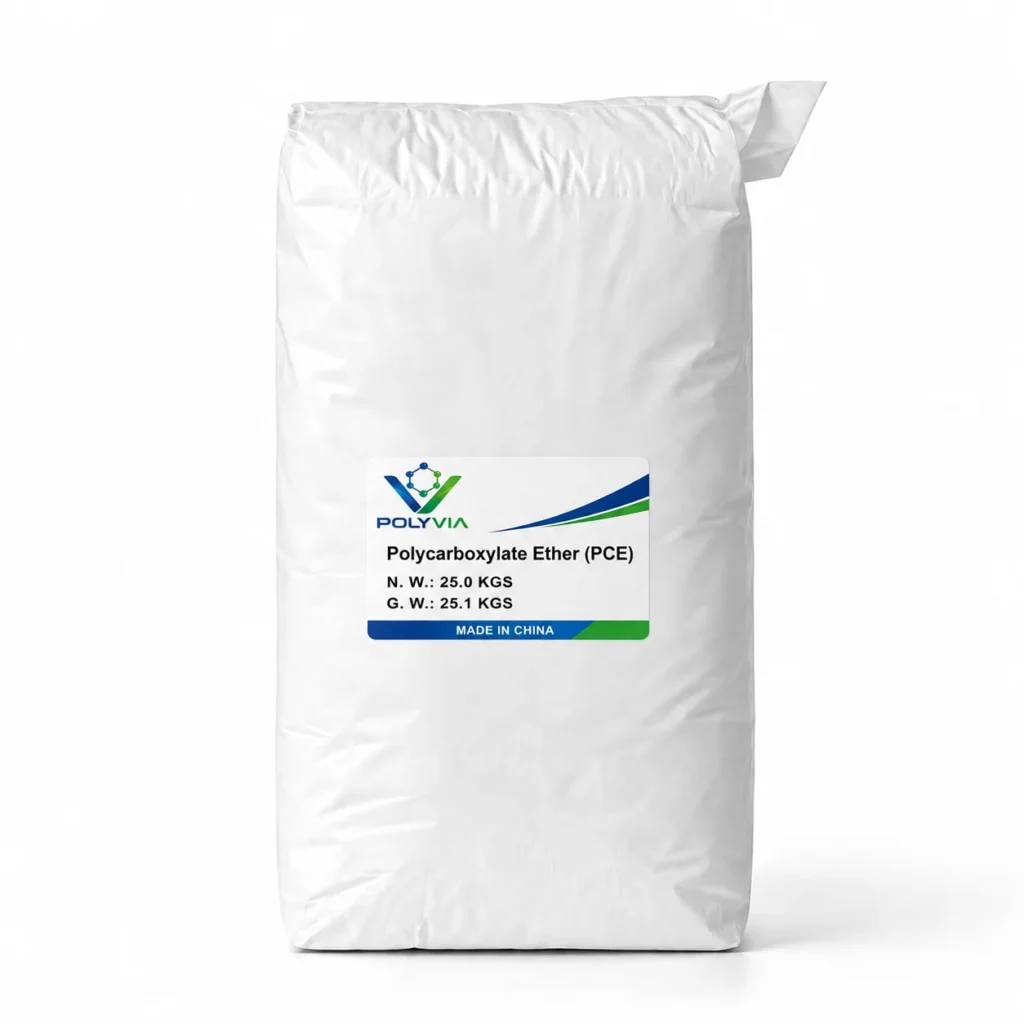
PCE Powder
Common applications:
- Dry-mix mortar
- Self-leveling compounds
- Export markets requiring solid transportation
Advantages:
- High active content
- Easy transportation
- Flexible storage
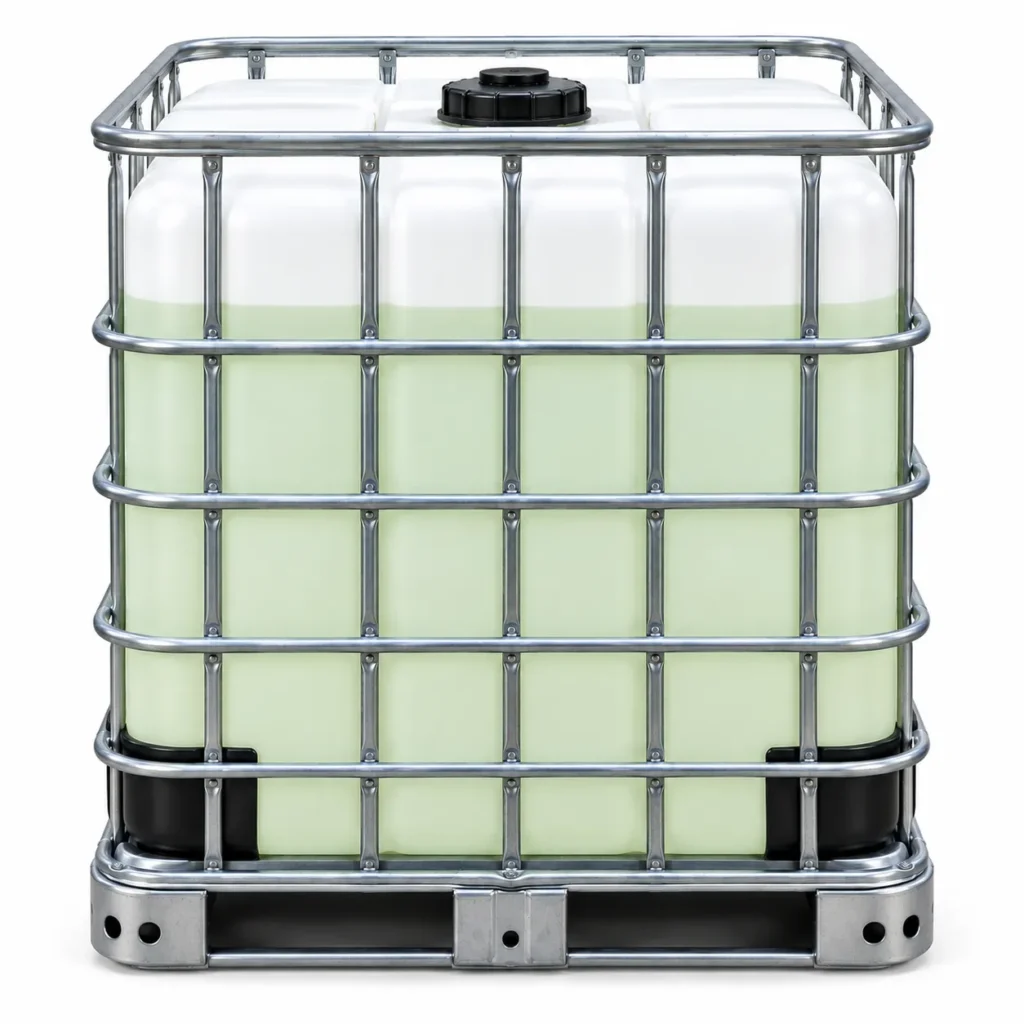
Liquid PCE
Common applications:
- Ready-mix concrete plants
- Precast production
- Large-scale concrete batching
Advantages:
- Direct dosing
- Easy handling
- Fast dispersion
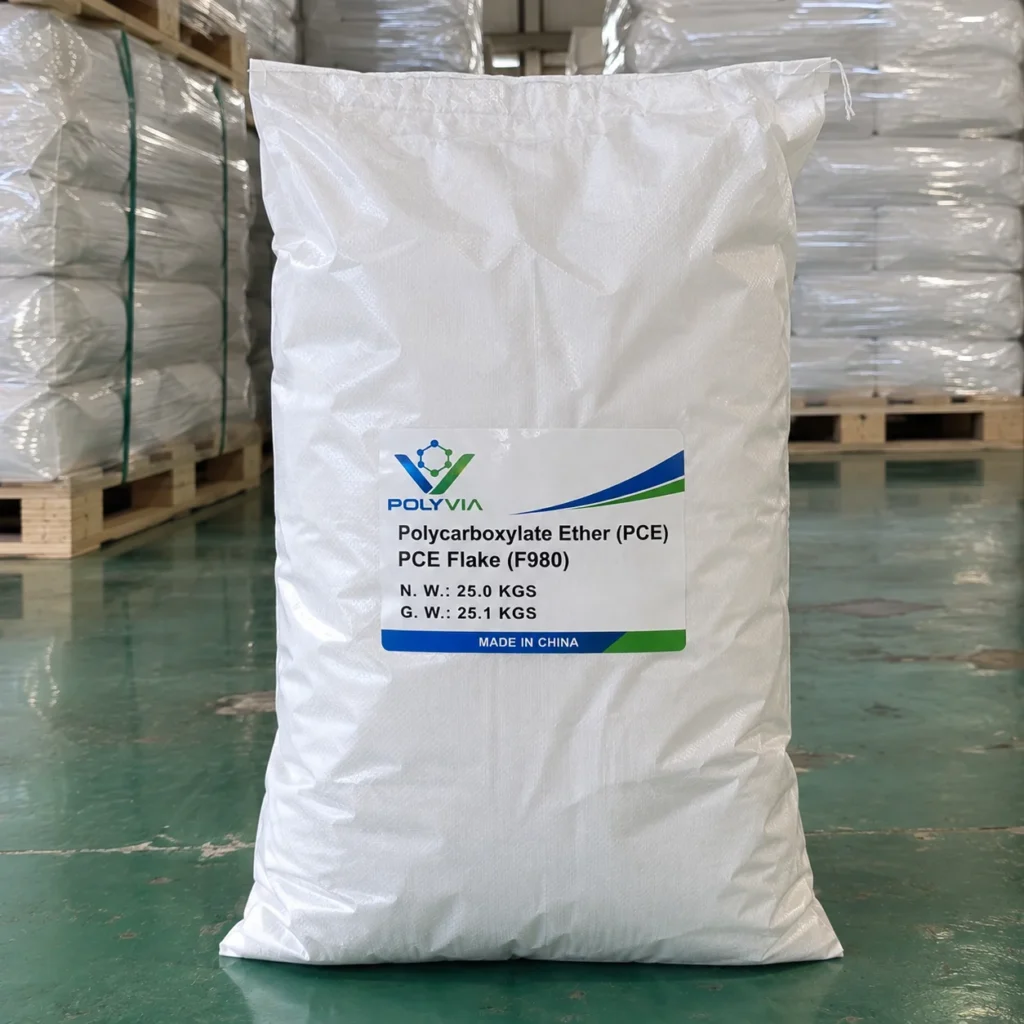
PCE Flake
PCE flake provides a high-solid-content solution for flexible transportation and customized liquid preparation.
Advantages:
- High active content
- Reduced transportation volume
- Flexible solution preparation
Proper dissolution and storage procedures are important to maintain consistent performance.
Factors Affecting PCE Performance
PCE performance depends on the complete concrete system.
Important factors include:
Cement Characteristics
Including:
- Mineral composition
- Fineness
- Alkali content
Supplementary Cementitious Materials
Including:
- Fly ash
- Slag
- Silica fume
These materials may influence adsorption behavior and dosage requirements.
Water-to-Binder Ratio
Lower water-to-binder ratios require more effective dispersion capability.
Temperature and Mixing Conditions
Environmental temperature and mixing procedures can significantly influence workability retention.
How to Select the Right PCE Technology
Successful PCE selection should follow a systematic approach:
Application Requirement
↓
Concrete Performance Target
↓
Cement and Material Evaluation
↓
PCE Grade Selection
↓
Laboratory Trial
↓
Production Optimization
The best PCE solution is not always the product with the highest water reduction. It is the product that provides the right balance between performance, consistency and production requirements.
Frequently Asked Questions
What does PCE stand for in concrete admixtures?
PCE stands for Polycarboxylate Ether, a high-performance polymer technology used in concrete superplasticizers.
Is PCE the same as polycarboxylate superplasticizer?
Yes. PCE is commonly used to describe modern polycarboxylate-based superplasticizer technology.
Why does PCE dosage vary between different concrete mixes?
Because PCE performance depends on cement chemistry, binder materials, water-to-binder ratio and application requirements.
Why does the same PCE perform differently with different cement?
Different cement compositions can influence PCE adsorption and dispersion behavior.
Can PCE be used for precast concrete?
Yes. PCE is widely used in precast concrete because it supports high flowability, low water demand and early strength development.
What is the difference between PCE powder and liquid PCE?
The difference is mainly physical form and application method. Powder PCE is suitable for dry systems and solid transportation, while liquid PCE is commonly used directly in concrete production.
Conclusion
Polycarboxylate Ether (PCE) superplasticizer represents a major advancement in concrete admixture technology.
Its value comes not only from water reduction, but from the ability to optimize concrete performance through molecular design and application-specific selection.
Understanding the relationship between PCE structure, cement interaction and production requirements is essential for achieving consistent concrete performance.
As modern construction continues to demand higher efficiency and durability, PCE technology will remain a key component in advanced concrete development.